Cultic Studies Journal, Vol. 2 No. 1 1985, Page 9
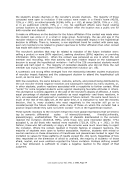
and Richardson‘s attempt te characterize (mainstream) psychotherapies as merely an
alternative form of ―new religion‖ is puzzling to us. In their zealous pursuit of similarities,
they have failed to capture the profound differences that exist between psychotherapy and
the ―new religions.‖
Notes
(Note 1). These ―new religions‖ are consistently referred to as ―cults‖ in this journal and by
many, if not most, other authors. Calling them ―new religions‖ appears to be an attempt to
legitimize them and to put them on an equal footing with an accepted cultural institution,
psychotherapy. In this paper we are referring to the same phenomena when we use the
terms ―new religion‖ or ―cult.‖
(Note 2). ―Mainstream‖ refers to clinical psychotherapy practiced by licensed practitioners
following the guidelines and ethical principles set down by such major organizations as the
American Psychological Association, the American Psychiatric Association, and the National
Association of Social Workers.
(Note 3). We have deliberately chosen Temerlin and Temerlin‘s descriptions of extreme
examples of authoritarian treatment groups. This represents a ―worst case‖ analysis to show
how and under what conditions cult groups and authoritarian treatment groups could be
similar. Moreover, the practices of such authoritarian leaders would be grounds for dismissal
from any major professional organization as well as loss of license. Coincidentally, the day
after we wrote thf last sentence our local daily paper, The Boston Globe (January 13, 1985),
reported that a psychologist was expellee from the American Psychological Association after
a former patient claimed that he ―...maintains a ‗dual relationship with individuals who are
both his patients and practicing therapist-members...‘ of the psychotherapy institute that ht
heads, ―...a practice considered unethical by the (American Psychological) association.‖ The
article also stated that the state licensing board was expected to issue an order asking the
psychologist ―to ‗show cause‘ why his state license t( practice psychology should not be
revoked‖ (p. 36).
(Note 4). For example, there is an active interplay between experimental findings in such
diverse areas as research on infancy and psychopharmacology, all of which have impact on
the nature of clinical theory and practice.
(Note 5). In this regard there appears to be two types of religious cults. One type, for
example, the Divine Light Mission (Guru Maharaj Ji), has an ideology which promotes a view
of the world as divided into camps, the ―ordinary‖ masses and the ―enlightened few with
knowledge‖. Such images may appeal to those recruits who suffer from a sense of shame
and inferiority as an integral part of a narcissistic defect. By contrast, the ideology of such
cult groups as the ―Moonies‖ or Scientologists promotes a view of the world as divided
between ―good‖ and ―evil‖ -those who favor God/Life versus Satan/Death. As Hoffer (1951)
points out, for such groups the strength of their movement ―is proportionate to the
vividness and tangibility of its devil‖ (p. 86). Such images may appeal to recruits who rely
upon more primitive paranoid defenses to cope with their anxiety (Olson, 1980).
References
Ash, S. M. (1984). Avoiding the extremes in defining the extremist cult. Cultic Studies
Journal, 1, 37-62.
Austin, W., &Worchel, S. (1979). The social psychology of intergroup relations. Monterey,
California: Brooks/Cole Publishers.
Beals, R. L., &Hoijer, H. (1971). An introduction to anthropology. New York: The
Macmillan Company.
and Richardson‘s attempt te characterize (mainstream) psychotherapies as merely an
alternative form of ―new religion‖ is puzzling to us. In their zealous pursuit of similarities,
they have failed to capture the profound differences that exist between psychotherapy and
the ―new religions.‖
Notes
(Note 1). These ―new religions‖ are consistently referred to as ―cults‖ in this journal and by
many, if not most, other authors. Calling them ―new religions‖ appears to be an attempt to
legitimize them and to put them on an equal footing with an accepted cultural institution,
psychotherapy. In this paper we are referring to the same phenomena when we use the
terms ―new religion‖ or ―cult.‖
(Note 2). ―Mainstream‖ refers to clinical psychotherapy practiced by licensed practitioners
following the guidelines and ethical principles set down by such major organizations as the
American Psychological Association, the American Psychiatric Association, and the National
Association of Social Workers.
(Note 3). We have deliberately chosen Temerlin and Temerlin‘s descriptions of extreme
examples of authoritarian treatment groups. This represents a ―worst case‖ analysis to show
how and under what conditions cult groups and authoritarian treatment groups could be
similar. Moreover, the practices of such authoritarian leaders would be grounds for dismissal
from any major professional organization as well as loss of license. Coincidentally, the day
after we wrote thf last sentence our local daily paper, The Boston Globe (January 13, 1985),
reported that a psychologist was expellee from the American Psychological Association after
a former patient claimed that he ―...maintains a ‗dual relationship with individuals who are
both his patients and practicing therapist-members...‘ of the psychotherapy institute that ht
heads, ―...a practice considered unethical by the (American Psychological) association.‖ The
article also stated that the state licensing board was expected to issue an order asking the
psychologist ―to ‗show cause‘ why his state license t( practice psychology should not be
revoked‖ (p. 36).
(Note 4). For example, there is an active interplay between experimental findings in such
diverse areas as research on infancy and psychopharmacology, all of which have impact on
the nature of clinical theory and practice.
(Note 5). In this regard there appears to be two types of religious cults. One type, for
example, the Divine Light Mission (Guru Maharaj Ji), has an ideology which promotes a view
of the world as divided into camps, the ―ordinary‖ masses and the ―enlightened few with
knowledge‖. Such images may appeal to those recruits who suffer from a sense of shame
and inferiority as an integral part of a narcissistic defect. By contrast, the ideology of such
cult groups as the ―Moonies‖ or Scientologists promotes a view of the world as divided
between ―good‖ and ―evil‖ -those who favor God/Life versus Satan/Death. As Hoffer (1951)
points out, for such groups the strength of their movement ―is proportionate to the
vividness and tangibility of its devil‖ (p. 86). Such images may appeal to recruits who rely
upon more primitive paranoid defenses to cope with their anxiety (Olson, 1980).
References
Ash, S. M. (1984). Avoiding the extremes in defining the extremist cult. Cultic Studies
Journal, 1, 37-62.
Austin, W., &Worchel, S. (1979). The social psychology of intergroup relations. Monterey,
California: Brooks/Cole Publishers.
Beals, R. L., &Hoijer, H. (1971). An introduction to anthropology. New York: The
Macmillan Company.