Cultic Studies Journal, Vol. 2 No. 1 1985, Page 68
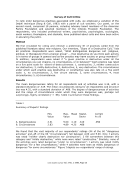
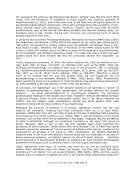
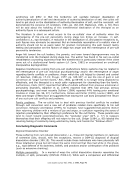
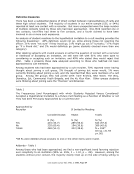
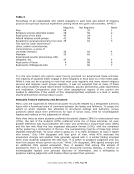
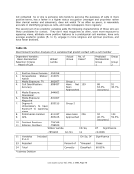
Table 2
Percentage of all respondents who report engaging in each type and extent of religious
practice and spiritual-mystical experience (among those who gave valid answers, N=907)
Regularly Not Regularly Never
Pray 66 33 1
Religious services attended weekly 48 50 2
Read parts of the Bible 45 54 1
Attend religious youth groups 41 58 1
Revelations received personally from God 35 62 3
Felt soaring ―peak experiences‖
(bliss, cosmic consciousness,
transcendence, a sense of
universal oneness) 36 60 4
Meditate 33 65 2
Experienced psychic phenomena, ESP,
telepathy, etc. 37 60 4
Read parts of Koran 4 88 8
Read parts of Bhagavad Gita 7 86 7
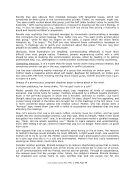
It is the rare student who reports never having practiced nor experienced these activities.
The majority of students either engage in them regularly or have done so in the recent past.
While it may not be surprising to note that most pray regularly and many attend religious
services and religious youth groups regularly, it was not expected that so many of these
high school students would report divine revelations, psychic phenomena, peak experiences
and meditation. Comparative data from other geographical regions of the country are
needed to determine if the extent of this religious/spiritual emphasis is a local or widely
shared phenomenon among today‘s youth.
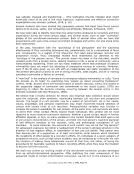
Attitudes Toward Authority and Structure
Many cults are organized as hierarchical power structures headed by a designated authority
figure with a formalized chain of command between the leader and followers. To assess the
extent to which students feel attracted to structured settings and authority, survey
questions asked about their preferences for type of school class, need for knowledgeable
leaders and reliance on the judgments of others.
More than twice as many students preferred structured classes (38%) to unstructured ones
(15%), the rest of the students (47%) preferred some mix of these extremes. An even
greater difference was found between the many who preferred a lecture-type class (48%)
and the few who liked the less organized discussion format (10%) with the remainder
(42%) preferring a combination of the two. The overwhelming majority of these high school
students believed that, ―to know what is going on, it is really necessary to have a leader
who knows.‖ Only 14% disagreed with that point of view, while 41% endorsed the
proposition strongly and another 45% generally agreed with it. A similar finding emerged
when most students supported the idea that, ―it is better to postpone judgment until you
hear from people whose opinion you trust.‖ While 21% disagreed, 24% agreed strongly and
an additional 55% agreed somewhat. Thus, it appears that among this sample of
adolescents there is a marked preference for structured learning settings, a reliance on
knowledgeable leaders over personal discovery of information, and a willingness to
postpone making judgments until trusted others present their opinions.
Table 2
Percentage of all respondents who report engaging in each type and extent of religious
practice and spiritual-mystical experience (among those who gave valid answers, N=907)
Regularly Not Regularly Never
Pray 66 33 1
Religious services attended weekly 48 50 2
Read parts of the Bible 45 54 1
Attend religious youth groups 41 58 1
Revelations received personally from God 35 62 3
Felt soaring ―peak experiences‖
(bliss, cosmic consciousness,
transcendence, a sense of
universal oneness) 36 60 4
Meditate 33 65 2
Experienced psychic phenomena, ESP,
telepathy, etc. 37 60 4
Read parts of Koran 4 88 8
Read parts of Bhagavad Gita 7 86 7
It is the rare student who reports never having practiced nor experienced these activities.
The majority of students either engage in them regularly or have done so in the recent past.
While it may not be surprising to note that most pray regularly and many attend religious
services and religious youth groups regularly, it was not expected that so many of these
high school students would report divine revelations, psychic phenomena, peak experiences
and meditation. Comparative data from other geographical regions of the country are
needed to determine if the extent of this religious/spiritual emphasis is a local or widely
shared phenomenon among today‘s youth.
Attitudes Toward Authority and Structure
Many cults are organized as hierarchical power structures headed by a designated authority
figure with a formalized chain of command between the leader and followers. To assess the
extent to which students feel attracted to structured settings and authority, survey
questions asked about their preferences for type of school class, need for knowledgeable
leaders and reliance on the judgments of others.
More than twice as many students preferred structured classes (38%) to unstructured ones
(15%), the rest of the students (47%) preferred some mix of these extremes. An even
greater difference was found between the many who preferred a lecture-type class (48%)
and the few who liked the less organized discussion format (10%) with the remainder
(42%) preferring a combination of the two. The overwhelming majority of these high school
students believed that, ―to know what is going on, it is really necessary to have a leader
who knows.‖ Only 14% disagreed with that point of view, while 41% endorsed the
proposition strongly and another 45% generally agreed with it. A similar finding emerged
when most students supported the idea that, ―it is better to postpone judgment until you
hear from people whose opinion you trust.‖ While 21% disagreed, 24% agreed strongly and
an additional 55% agreed somewhat. Thus, it appears that among this sample of
adolescents there is a marked preference for structured learning settings, a reliance on
knowledgeable leaders over personal discovery of information, and a willingness to
postpone making judgments until trusted others present their opinions.