Cultic Studies Journal, Vol. 2 No. 1 1985, Page 72
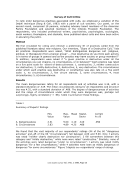
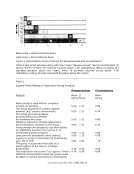
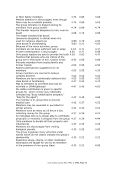
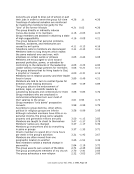
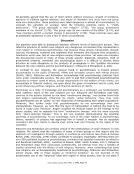
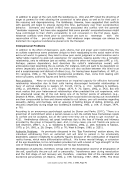
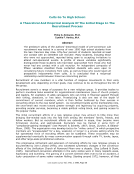
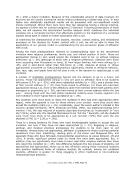
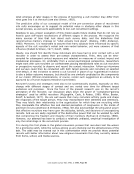
(N =235) a future invitation. Because of the considerable amount of data involved, for
economy we will usually summarize results without presenting a tabled data array. In data
tables only statistically significant results will be presented with non-significant results
merely mentioned. Where there were more than two categories having a natural ordering,
we applied a further test for ordered categories (Z-Gamma). Following presentation of these
data, we will examine the discriminant function analysis which combines the individual
variables into a composite function that effectively predicts to the likelihood of a contacted
student being open or closed to further association with a cult.
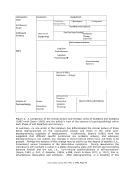
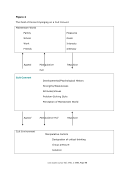
In examining the characteristics of the student, recruiter, contact setting, and mediational
processes on the decision for further contact with a cult, we will be able to show the
applicability of our general model to understanding the pre-conversion phase of affiliation
with a cult.
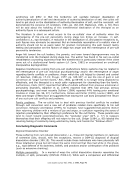
Among the fixed predispositions relevant to accepting/being open to the recruitment
invitation were religious preferences, family size, and ordinal position of birth. Those not
approached (Group 1) who would accept the invitation tend to be: a) without religious
preference (p .05) (although of those with a religious preference, Catholics were much
more accepting than Protestants or Jews), b) from larger families, with more siblings (p
.05), and c) later-borns rather than first-borns (p .05). Analysis of Group 11 (those
approached) uncovered no fixed predispositions significantly related to affiliative behavior.
Sex, race, age, and grade level did not play a role in the decision to reject/accept a cult
invitation.
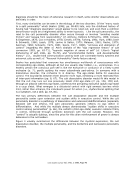
A number of modifiable predispositions figured into the decision to go to a future cult
activity. Those not approached (Group 1) who are open to affiliation tend to be students
with poorer G.P.A. (p .001), with more residential mobility (p .001), and a shorter time
at their current address (p .01) than those closed to affiliation. For those who had been
approached (Group 11), more of the affiliators came from families where both parents were
managers or proprietors (p .05), and had moved to their current address within the last
year. Among those with the most stable residential mobility-never moved--rejection of a
cult invitation is more typical than is acceptance (p .05).
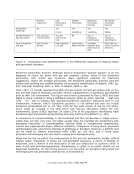
Shy students were more likely to reject the invitation if they had been approached (56%
reject), while the opposite is true for those without prior contact: more shys would then
accept the invitation (62%) (p .05). Incidentally, given the senior author‘s interest in this
shyness variable (Zimbardo, 1977 Zimbardo and Radl, 1981), two additional findings merit
mention. First, the vast majority of students described themselves as ―moderately‖ or ―very
shy‖ (91%), while only 9% reported themselves to be ―not shy.‖ Secondly, not shy students
were much more likely to be approached by a cult recruiter (73%) than were the shy
students (57%) (Z =2.58, p =.001).
There Is a strong tendency for those who need knowledgeable leaders to accept the cult
invitation, but only if they have not been approached (p .01). Engaging in religious,
spiritual, and mystical practices predisposes the students to be more open to cult
invitations. Among those not approached, affiliation is greatest for those receiving personal
revelations from God, meditating, reading parts of the Koran and Bhagavad-Gita, and
especially those who have felt peak, transcendental experiences (p values between .05 and
.001). A similar significant pattern holds for those who have been approached. But, in
addition, they are significantly more likely to have read other religious material than those
who reject the invitation (p .05). One difference between the two groups of students, not
approached and approached, shows up as less affiliation among those contacted students
who practice traditional forms of religious worship. By contrast, among not contacted
students, affiliation is greater for those engaging in either traditional or non-traditional
religious/spiritual practices.
(N =235) a future invitation. Because of the considerable amount of data involved, for
economy we will usually summarize results without presenting a tabled data array. In data
tables only statistically significant results will be presented with non-significant results
merely mentioned. Where there were more than two categories having a natural ordering,
we applied a further test for ordered categories (Z-Gamma). Following presentation of these
data, we will examine the discriminant function analysis which combines the individual
variables into a composite function that effectively predicts to the likelihood of a contacted
student being open or closed to further association with a cult.
In examining the characteristics of the student, recruiter, contact setting, and mediational
processes on the decision for further contact with a cult, we will be able to show the
applicability of our general model to understanding the pre-conversion phase of affiliation
with a cult.
Among the fixed predispositions relevant to accepting/being open to the recruitment
invitation were religious preferences, family size, and ordinal position of birth. Those not
approached (Group 1) who would accept the invitation tend to be: a) without religious
preference (p .05) (although of those with a religious preference, Catholics were much
more accepting than Protestants or Jews), b) from larger families, with more siblings (p
.05), and c) later-borns rather than first-borns (p .05). Analysis of Group 11 (those
approached) uncovered no fixed predispositions significantly related to affiliative behavior.
Sex, race, age, and grade level did not play a role in the decision to reject/accept a cult
invitation.
A number of modifiable predispositions figured into the decision to go to a future cult
activity. Those not approached (Group 1) who are open to affiliation tend to be students
with poorer G.P.A. (p .001), with more residential mobility (p .001), and a shorter time
at their current address (p .01) than those closed to affiliation. For those who had been
approached (Group 11), more of the affiliators came from families where both parents were
managers or proprietors (p .05), and had moved to their current address within the last
year. Among those with the most stable residential mobility-never moved--rejection of a
cult invitation is more typical than is acceptance (p .05).
Shy students were more likely to reject the invitation if they had been approached (56%
reject), while the opposite is true for those without prior contact: more shys would then
accept the invitation (62%) (p .05). Incidentally, given the senior author‘s interest in this
shyness variable (Zimbardo, 1977 Zimbardo and Radl, 1981), two additional findings merit
mention. First, the vast majority of students described themselves as ―moderately‖ or ―very
shy‖ (91%), while only 9% reported themselves to be ―not shy.‖ Secondly, not shy students
were much more likely to be approached by a cult recruiter (73%) than were the shy
students (57%) (Z =2.58, p =.001).
There Is a strong tendency for those who need knowledgeable leaders to accept the cult
invitation, but only if they have not been approached (p .01). Engaging in religious,
spiritual, and mystical practices predisposes the students to be more open to cult
invitations. Among those not approached, affiliation is greatest for those receiving personal
revelations from God, meditating, reading parts of the Koran and Bhagavad-Gita, and
especially those who have felt peak, transcendental experiences (p values between .05 and
.001). A similar significant pattern holds for those who have been approached. But, in
addition, they are significantly more likely to have read other religious material than those
who reject the invitation (p .05). One difference between the two groups of students, not
approached and approached, shows up as less affiliation among those contacted students
who practice traditional forms of religious worship. By contrast, among not contacted
students, affiliation is greater for those engaging in either traditional or non-traditional
religious/spiritual practices.