Cultic Studies Review, Vol. 9, No. 1, 2010, Page 99
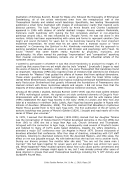
others such as body, instincts, intuition. The ―I‖ that meets the world is this chosen
conglomerate, leaving the other aspects in the dark, as if they were not there at all. The
current hyper-rational postmodern condition of our culture is a vision of ego in its extreme
state.
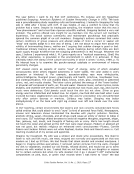
ii Psyche—In Jungian usage, psyche surrounds ego and contains all in its domain. Thus this
includes intuition, acausal events, nonlinear thinking, cyclical time, sensory awareness, and
also ego. Psyche is process, motion. This process is purposive and progressive. It is in this
forward motion that creativity may be found.
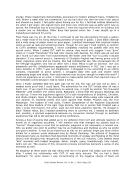
iii Masculine and feminine energy—These terms are a way of describing kinds and qualities of
energy. It is merely a limitation of language that has merged these terms with gender. To
be a whole person, male or female, we are all in need of both masculine and feminine
energy. Masculine energy is direct, penetrating, and assertive in an aggressive mode. Its
thinking is linear, causal, and differentiating often to the point of binary—built upon
either/or, black and white. Feminine energy is round and containing, in contrast to the
either/or, linear system of masculine energy. Feminine aggression is less direct and pointed,
although surely just as powerful, as the ferocity in defending one‘s young will attest.
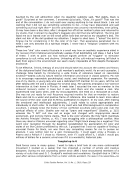
iv Consciousness—In Western culture, we have come to associate all consciousness with ego
consciousness. This description therefore limits consciousness to the purview of ego‘s
attributes thus, the conflation of thinking (rational) and consciousness. Rather than calling
psyche the un-conscious, we might posit that psyche has a different kind of consciousness
that exists outside of ego.
Melinda Haas, L.C.S.W., is a Jungian Analyst in private practice in New York City and
Vermont. Previously, she was a psychotherapist at the Cult Hotline and Clinic of the Jewish
Board of Family Services in New York and prior to that, a professional musician.
This article is an electronic version of an article originally published in Cultic Studies Review, 2010, Volume 9, Number 1,
pages 164-172. Please keep in mind that the pagination of this electronic reprint differs from that of the bound volume.
This fact could affect how you enter bibliographic information in papers that you may write.
others such as body, instincts, intuition. The ―I‖ that meets the world is this chosen
conglomerate, leaving the other aspects in the dark, as if they were not there at all. The
current hyper-rational postmodern condition of our culture is a vision of ego in its extreme
state.
ii Psyche—In Jungian usage, psyche surrounds ego and contains all in its domain. Thus this
includes intuition, acausal events, nonlinear thinking, cyclical time, sensory awareness, and
also ego. Psyche is process, motion. This process is purposive and progressive. It is in this
forward motion that creativity may be found.
iii Masculine and feminine energy—These terms are a way of describing kinds and qualities of
energy. It is merely a limitation of language that has merged these terms with gender. To
be a whole person, male or female, we are all in need of both masculine and feminine
energy. Masculine energy is direct, penetrating, and assertive in an aggressive mode. Its
thinking is linear, causal, and differentiating often to the point of binary—built upon
either/or, black and white. Feminine energy is round and containing, in contrast to the
either/or, linear system of masculine energy. Feminine aggression is less direct and pointed,
although surely just as powerful, as the ferocity in defending one‘s young will attest.
iv Consciousness—In Western culture, we have come to associate all consciousness with ego
consciousness. This description therefore limits consciousness to the purview of ego‘s
attributes thus, the conflation of thinking (rational) and consciousness. Rather than calling
psyche the un-conscious, we might posit that psyche has a different kind of consciousness
that exists outside of ego.
Melinda Haas, L.C.S.W., is a Jungian Analyst in private practice in New York City and
Vermont. Previously, she was a psychotherapist at the Cult Hotline and Clinic of the Jewish
Board of Family Services in New York and prior to that, a professional musician.
This article is an electronic version of an article originally published in Cultic Studies Review, 2010, Volume 9, Number 1,
pages 164-172. Please keep in mind that the pagination of this electronic reprint differs from that of the bound volume.
This fact could affect how you enter bibliographic information in papers that you may write.