Cultic Studies Review, Vol. 9, No. 1, 2010, Page 25
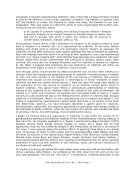
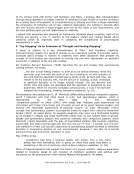
In my clinical work with former cult members and SGAs, I propose that rehumanization
through encouragement of subject creation of meaning through fluidity of symbol formation
be a central focus of treatment. It is heartwarming to witness over time in these individuals
the emergence of metaphor out of near catatonic depression, the writing in journals after
this very activity became a major trigger post-cult as the result of cult requirements, and
the slow building upon pre-cult relationship to creativity.
I submit that observing and studying an individual‘s attitudes about creativity, both at his
joining and leaving a cult, in relation to the leader‘s stated and implied beliefs about
creativity yields an important layer in unpacking the complexities of psychological
manipulation in cults.
5. “Joy Stopping” As an Extension of “Thought and Feeling Stopping”
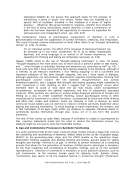
A sense of ecstasy is a key characteristics of ―flow,‖ and therefore creativity.
Csikszentmihalyi speaks of a sense of ecstasy as an experience outside of everyday reality.
Concepts about ecstasy in relation to creativity from other disciplines that predate his
concept of flow extend the discussion to include the one who appreciates an aesthetic
encounter, in addition to the one who creates.
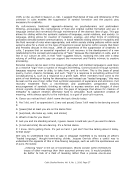
Art Historian Bernard Berenson (1948) describes the joy and ecstasy that accompanies
viewing artwork. He writes,
...the aim is that flitting instant, so brief as to be almost timeless, when the
spectator is at one with the work of art he is looking at, or with actuality of
any kind that the spectator himself sees in terms of art, as form and color. He
ceases to be his ordinary self, and the picture or building, statue, landscape,
or aesthetic actuality is no longer outside himself. The two become one
entity time and space are abolished and the spectator is possessed by one
awareness. When he recovers workaday consciousness, it is as if he had been
initiated into illuminating, exalting, formative mysteries. (p. 93)
Psychoanalyst and pediatrician D. W. Winnicott differentiates between compulsive passion,
which I associate with that often found in cults, and spontaneous passion, which is
represented by the flow state. I link Winnicott‘s
―compulsive passion‖ to Lifton (1961), who states that ―imposed peak experiences—as
contrasted with those more freely and privately arrived at by great religious leaders and
mystics—are essentially experiences of personal closure‖ (p. 436). Winnicott‘s (1971)
concept that spontaneous passion accompanies creativity aligns with creativity researcher
Gruber (1974). As noted above, he suggests creativity may occur as a methodical building
up of insights in steady and small increments rather than as one sudden flash of genius.
Steady and spontaneous passion and creativity contrasts with compulsive passion, which
Winnicott (1936) associates with the play of traumatized children that involves repetitive,
predictable, and often frenzied gestures that lack the joy of ―flow.‖ I wonder how the pre-
cult member‘s or new cult recruit‘s experience of spontaneous passion as artist or otherwise
becomes a compulsive passion as cult entrenchment deepens. I see this as a central
element of the bait-and-switch operation in cults.
May (1994) writes,
...[creativity] may have a religious quality with artists. This is why many
artists feel that something holy is going on when they paint that there is
something in the act of creativity which is like a religious revelation. (p. 69)
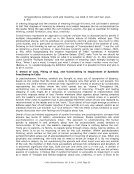
Many of these statements that support the notion of a joyous, ecstatic, religious experience
related to creativity speak to cult violation of members‘ aesthetic and spiritual self-
expression by the phenomenon Lifton named Mystical Manipulation. He states,
In my clinical work with former cult members and SGAs, I propose that rehumanization
through encouragement of subject creation of meaning through fluidity of symbol formation
be a central focus of treatment. It is heartwarming to witness over time in these individuals
the emergence of metaphor out of near catatonic depression, the writing in journals after
this very activity became a major trigger post-cult as the result of cult requirements, and
the slow building upon pre-cult relationship to creativity.
I submit that observing and studying an individual‘s attitudes about creativity, both at his
joining and leaving a cult, in relation to the leader‘s stated and implied beliefs about
creativity yields an important layer in unpacking the complexities of psychological
manipulation in cults.
5. “Joy Stopping” As an Extension of “Thought and Feeling Stopping”
A sense of ecstasy is a key characteristics of ―flow,‖ and therefore creativity.
Csikszentmihalyi speaks of a sense of ecstasy as an experience outside of everyday reality.
Concepts about ecstasy in relation to creativity from other disciplines that predate his
concept of flow extend the discussion to include the one who appreciates an aesthetic
encounter, in addition to the one who creates.
Art Historian Bernard Berenson (1948) describes the joy and ecstasy that accompanies
viewing artwork. He writes,
...the aim is that flitting instant, so brief as to be almost timeless, when the
spectator is at one with the work of art he is looking at, or with actuality of
any kind that the spectator himself sees in terms of art, as form and color. He
ceases to be his ordinary self, and the picture or building, statue, landscape,
or aesthetic actuality is no longer outside himself. The two become one
entity time and space are abolished and the spectator is possessed by one
awareness. When he recovers workaday consciousness, it is as if he had been
initiated into illuminating, exalting, formative mysteries. (p. 93)
Psychoanalyst and pediatrician D. W. Winnicott differentiates between compulsive passion,
which I associate with that often found in cults, and spontaneous passion, which is
represented by the flow state. I link Winnicott‘s
―compulsive passion‖ to Lifton (1961), who states that ―imposed peak experiences—as
contrasted with those more freely and privately arrived at by great religious leaders and
mystics—are essentially experiences of personal closure‖ (p. 436). Winnicott‘s (1971)
concept that spontaneous passion accompanies creativity aligns with creativity researcher
Gruber (1974). As noted above, he suggests creativity may occur as a methodical building
up of insights in steady and small increments rather than as one sudden flash of genius.
Steady and spontaneous passion and creativity contrasts with compulsive passion, which
Winnicott (1936) associates with the play of traumatized children that involves repetitive,
predictable, and often frenzied gestures that lack the joy of ―flow.‖ I wonder how the pre-
cult member‘s or new cult recruit‘s experience of spontaneous passion as artist or otherwise
becomes a compulsive passion as cult entrenchment deepens. I see this as a central
element of the bait-and-switch operation in cults.
May (1994) writes,
...[creativity] may have a religious quality with artists. This is why many
artists feel that something holy is going on when they paint that there is
something in the act of creativity which is like a religious revelation. (p. 69)
Many of these statements that support the notion of a joyous, ecstatic, religious experience
related to creativity speak to cult violation of members‘ aesthetic and spiritual self-
expression by the phenomenon Lifton named Mystical Manipulation. He states,