Cultic Studies Review, Vol. 9, No. 1, 2010, Page 101
self may develop in an oppressive social environment. Sociologists and communication
scholars of SI theory view the self as a socially constructed concept. The SI theory posits
that we form a sense of self through our interaction with others and the meanings we attach
to symbols (e.g., symbols as words, such as ―creative,‖ or ―uncreative‖) (Berger and
Luckmann, 1996 Blumer, 1969 Cooley, 1902 Mead, 1934). Thus, the self is not innate or
an individual attribute, but rather an individual concept that is formed in relation to our
social environment. Moreover, the formation of a sense of self is influenced by power
dynamics present in the social environment (Goffman, 1959, 1961 Lacan, 1977).
Communication perspectives employ concepts drawn from critical theory and cultural
studies that focus on power hierarchies in society, the processes used by those who hold
power, called the ―power elite‖ (Hall, 1997 Foucault, 1980 Mills, 1968), the power
hierarchies of total institutions (Goffman, 1961), hegemony, and meanings provided by
those in power. These theories and concepts share origination in diverse disciplines, most
notably sociology.
According to a basic dictionary definition, creative means ―having the quality or power of
creating,‖ while creativity means ―the ability to transcend traditional ideas, rules, patterns,
relationships, or the like, and to create meaningful new ideas, forms, methods,
interpretations, etc. originality, progressiveness, or imagination‖ (Dictionary.com). Building
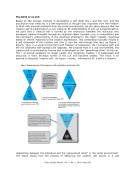
on the power aspect of this definition, we define creativity as a free expression of thought
(i.e., feelings, emotions, and/or philosophies) that originates from the freedom to think with
minimal restraints from the social environment. Complete freedom of thought is nearly
impossible, so it is more useful to think of creativity along a continuum of power dynamics,
from complete freedom of thought in an unconstrained environment on one end to total
restriction of thought within a cultic milieu. Csikszentmihalyi (1996), who identifies the
components of creativity to include domains, fields, and persons, supports this idea. A
domain is ―a set of symbolic rules and procedures,‖ such as writing. Csikszentmihalyi‘s
summary supports our concept of the creative self:
Creativity occurs when a person, using the symbols of a given domain such as
music, business, math … has a new idea or sees a new pattern, and when this
novelty is selected by the appropriate field for inclusion into the relevant
domain. (p. 28)
Creativity, then, is partially dependent on recognition of and acceptance by those who
assign value to one‘s creativity. We posit that a healthy unsuppressed creative self is a self
developed when the social environment fosters the belief that one is creative and allows
expression of this creativity to others. We ask, ―What occurs when an individual is powerless
to create or to express creativity?‖ We aim to examine the process of creativity within a
social environment that suppresses creative thought and expression. In this paper, our
focus is specifically on the aspects of power and the birth of a secret creative self in cults.
Throughout this paper we are referring to the secret creative self and not a sense of
creativity that, for example, may exist in children who engage in any social interaction
unless that creativity is severely suppressed. First, we explain the SI understanding of self.
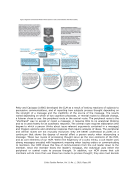
Next, we discuss how the power relationships one finds in cults suppress the expression of
creativity among members. Unless encouraged by those in power, a creative self may be
forced to form as a secret creative self while the individual is in the cult environment.
However, after one leaves the cult environment, the secret creative self can emerge and
develop into a strong creative self that is better able to resist power dynamics and
suppression of creativity. Hereafter, we use acronyms for secret creative self and strong
creative self. The acronym for creative self is CRS, so we use the acronym sCS, with the
secret represented by a lowercase letter, to denote secret creative self, and the acronym
SCS, in all uppercase letters, to denote strong creative self, to distinguish between the two.
self may develop in an oppressive social environment. Sociologists and communication
scholars of SI theory view the self as a socially constructed concept. The SI theory posits
that we form a sense of self through our interaction with others and the meanings we attach
to symbols (e.g., symbols as words, such as ―creative,‖ or ―uncreative‖) (Berger and
Luckmann, 1996 Blumer, 1969 Cooley, 1902 Mead, 1934). Thus, the self is not innate or
an individual attribute, but rather an individual concept that is formed in relation to our
social environment. Moreover, the formation of a sense of self is influenced by power
dynamics present in the social environment (Goffman, 1959, 1961 Lacan, 1977).
Communication perspectives employ concepts drawn from critical theory and cultural
studies that focus on power hierarchies in society, the processes used by those who hold
power, called the ―power elite‖ (Hall, 1997 Foucault, 1980 Mills, 1968), the power
hierarchies of total institutions (Goffman, 1961), hegemony, and meanings provided by
those in power. These theories and concepts share origination in diverse disciplines, most
notably sociology.
According to a basic dictionary definition, creative means ―having the quality or power of
creating,‖ while creativity means ―the ability to transcend traditional ideas, rules, patterns,
relationships, or the like, and to create meaningful new ideas, forms, methods,
interpretations, etc. originality, progressiveness, or imagination‖ (Dictionary.com). Building
on the power aspect of this definition, we define creativity as a free expression of thought
(i.e., feelings, emotions, and/or philosophies) that originates from the freedom to think with
minimal restraints from the social environment. Complete freedom of thought is nearly
impossible, so it is more useful to think of creativity along a continuum of power dynamics,
from complete freedom of thought in an unconstrained environment on one end to total
restriction of thought within a cultic milieu. Csikszentmihalyi (1996), who identifies the
components of creativity to include domains, fields, and persons, supports this idea. A
domain is ―a set of symbolic rules and procedures,‖ such as writing. Csikszentmihalyi‘s
summary supports our concept of the creative self:
Creativity occurs when a person, using the symbols of a given domain such as
music, business, math … has a new idea or sees a new pattern, and when this
novelty is selected by the appropriate field for inclusion into the relevant
domain. (p. 28)
Creativity, then, is partially dependent on recognition of and acceptance by those who
assign value to one‘s creativity. We posit that a healthy unsuppressed creative self is a self
developed when the social environment fosters the belief that one is creative and allows
expression of this creativity to others. We ask, ―What occurs when an individual is powerless
to create or to express creativity?‖ We aim to examine the process of creativity within a
social environment that suppresses creative thought and expression. In this paper, our
focus is specifically on the aspects of power and the birth of a secret creative self in cults.
Throughout this paper we are referring to the secret creative self and not a sense of
creativity that, for example, may exist in children who engage in any social interaction
unless that creativity is severely suppressed. First, we explain the SI understanding of self.
Next, we discuss how the power relationships one finds in cults suppress the expression of
creativity among members. Unless encouraged by those in power, a creative self may be
forced to form as a secret creative self while the individual is in the cult environment.
However, after one leaves the cult environment, the secret creative self can emerge and
develop into a strong creative self that is better able to resist power dynamics and
suppression of creativity. Hereafter, we use acronyms for secret creative self and strong
creative self. The acronym for creative self is CRS, so we use the acronym sCS, with the
secret represented by a lowercase letter, to denote secret creative self, and the acronym
SCS, in all uppercase letters, to denote strong creative self, to distinguish between the two.