Cultic Studies Review, Vol. 9, No. 1, 2010, Page 83
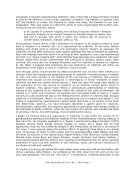
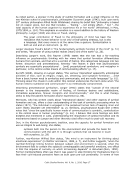
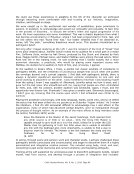
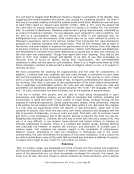
Criteria of Thought Reform Application to the Community
Milieu Control
The purposeful limitation of all forms of
communication with the outside world, sleep
deprivation, a change of diet, control over who
one can see and talk to.
Most members were forced into some creative art
activity, such as exhausting late-night music and
dance practice, sewing, or renovating Community
houses. Appearance, including diet, was strictly
controlled in order to attract new members. Family
contact was discouraged.
Mystical Manipulation
Teaching that the control group has a special
(read ―divine‖) purpose, and that the subject
has been chosen to play a special role in
fulfilling this purpose.
The singing and dancing was called ―ministry‖ and
imbued with importance and spiritual power. These
performances had to be of the highest quality so
that other churches would ―come and bow‖ to their
superior expression of ―God‘s spirit.‖
Demand for Purity
Convincing the subject of his/her former
impurity (before joining the control group) and
the necessity of becoming pure or perfect as
defined by the group.
It was necessary to present a mask of perfection to
advertise the Community, while the reality of
beatings and fear was hidden. Members were
encouraged to reject their former way of thinking
and adopt a new reality.
Cult of Confession
Getting the subject to let down his/her barriers
and openly discuss his/her innermost fears and
anxieties.
Members were expected to expose their ―sin‖ to the
group. This external control and violation of
boundaries precluded the freedom necessary for
creativity.
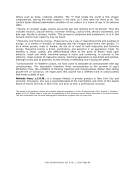
Sacred Science
Convincing the subject that the control group‘s
beliefs are the only logical system of beliefs
and therefore must be accepted and obeyed.
Members were punished if they failed to follow the
dictates of the leadership, which were presented as
God‘s work (including creative arts).
Loading the Language
Creating a new vocabulary, by creating new
words with special meanings understood only
by members of the group, or by giving new and
special meanings to familiar words and
phrases.
Critical thinking was curtailed, leaders‘ particular
biblical interpretation was dictated for example,
―denying yourself‖ implied ―you only do what we
say you do not listen to yourself and do not think
for yourself because that is sin.‖
Doctrine over Person
Convincing the subject that the group and its
doctrine take precedence over any individual in
the group or any other teaching from outside
it.
Personal individuality and goals were abandoned in
favour of the Community‘s requirements and goals
for example, individuals gave up their university
education to promote the Community‘s vision.
Beatings were justified, to cleanse members of their
―sin.‖ Separating husbands and wives was justified
by stating that all members of the Community were
―brothers and sisters in Christ‖ before they were
married couples.
Dispensing of Existence
Teaching the subject that all those who
disagree with the philosophy of the control
group are doomed.
Members were told that God would kill them if they
did not comply with the leaders‘ desire to see the
Community become something great, and that
those outside were either inferior or ―not saved.‖
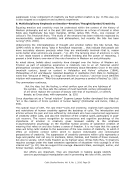
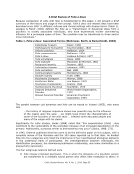
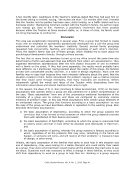
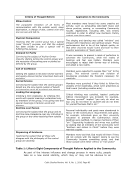
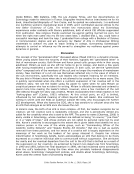
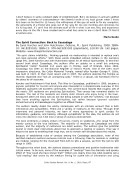
Table 1: Lifton’s Eight Components of Thought Reform Applied to the Community
As part of the intense influence and change process in many cults, people
take on a new social identity, which may or may not be obvious to an
Criteria of Thought Reform Application to the Community
Milieu Control
The purposeful limitation of all forms of
communication with the outside world, sleep
deprivation, a change of diet, control over who
one can see and talk to.
Most members were forced into some creative art
activity, such as exhausting late-night music and
dance practice, sewing, or renovating Community
houses. Appearance, including diet, was strictly
controlled in order to attract new members. Family
contact was discouraged.
Mystical Manipulation
Teaching that the control group has a special
(read ―divine‖) purpose, and that the subject
has been chosen to play a special role in
fulfilling this purpose.
The singing and dancing was called ―ministry‖ and
imbued with importance and spiritual power. These
performances had to be of the highest quality so
that other churches would ―come and bow‖ to their
superior expression of ―God‘s spirit.‖
Demand for Purity
Convincing the subject of his/her former
impurity (before joining the control group) and
the necessity of becoming pure or perfect as
defined by the group.
It was necessary to present a mask of perfection to
advertise the Community, while the reality of
beatings and fear was hidden. Members were
encouraged to reject their former way of thinking
and adopt a new reality.
Cult of Confession
Getting the subject to let down his/her barriers
and openly discuss his/her innermost fears and
anxieties.
Members were expected to expose their ―sin‖ to the
group. This external control and violation of
boundaries precluded the freedom necessary for
creativity.
Sacred Science
Convincing the subject that the control group‘s
beliefs are the only logical system of beliefs
and therefore must be accepted and obeyed.
Members were punished if they failed to follow the
dictates of the leadership, which were presented as
God‘s work (including creative arts).
Loading the Language
Creating a new vocabulary, by creating new
words with special meanings understood only
by members of the group, or by giving new and
special meanings to familiar words and
phrases.
Critical thinking was curtailed, leaders‘ particular
biblical interpretation was dictated for example,
―denying yourself‖ implied ―you only do what we
say you do not listen to yourself and do not think
for yourself because that is sin.‖
Doctrine over Person
Convincing the subject that the group and its
doctrine take precedence over any individual in
the group or any other teaching from outside
it.
Personal individuality and goals were abandoned in
favour of the Community‘s requirements and goals
for example, individuals gave up their university
education to promote the Community‘s vision.
Beatings were justified, to cleanse members of their
―sin.‖ Separating husbands and wives was justified
by stating that all members of the Community were
―brothers and sisters in Christ‖ before they were
married couples.
Dispensing of Existence
Teaching the subject that all those who
disagree with the philosophy of the control
group are doomed.
Members were told that God would kill them if they
did not comply with the leaders‘ desire to see the
Community become something great, and that
those outside were either inferior or ―not saved.‖
Table 1: Lifton’s Eight Components of Thought Reform Applied to the Community
As part of the intense influence and change process in many cults, people
take on a new social identity, which may or may not be obvious to an