Cultic Studies Review, Vol. 9, No. 1, 2010, Page 103
has more contact with others, our sense of self also expands as we encounter a variety of
social influences.
The process of expanding a sense of self is enabled (or hindered) by our social environment.
The enormous influence of the social environment is depicted in Goffman‘s theory on ―the
presentation of self‖ (1959). Here we see how individuals strive to present a self in front of
others that is largely based on their understanding of the ―generalized other‖ (Mead, 1934)
and how they perceive others to see them, or the ―looking-glass self‖ (Cooley, 1902). Later
theorists combined the conceptual work of these earlier theorists into what we know today
as the SI theory, which many disciplinary perspectives use (Blumer, 1969).
Power hierarchies, as explained by conflict theory, develop in society to ensure that some
individuals and groups (usually those holding power) benefit at the expense of others. This
process includes the power to define what is right and wrong, good and bad, legal and
illegal (Goode, 2001). Here we focus on one aspect of power hierarchies—the power to
name what is creative. What does it mean to have the power to name? Charmaz (2006)
writes a provocative article on the power dynamics involved in naming that we can apply to
the process of naming creativity:
As symbolic interactionists have long argued, names classify objects and
events and convey meanings and distinctions. Names carry weight, whether
light or heavy. Names provide ways of knowing—and being. Names construct
and reify human bonds and social divisions. We attach value to some names
and dismiss others. Much of sociology addresses relative power differentials
between individuals or groups to make a name stick—or to resist the name
with its attendant categorization, values, implicit or explicit directives, and
implications for subsequent life. (p. 396)
The process of labeling as developed by Becker (1963) provides insights into why the power
to name is crucial to our discussion of creativity in the context of cults as total institutions.
Becker combined Goffman‘s (1961) understanding of power dynamics and Lemert‘s (1951)
labeling theory to propose a theory of deviance that offers a logical explanation for why
people deviate from the norms of society. In Becker‘s theory of deviance, the actual act of
deviance is unimportant rather, the key to understanding what is called deviant is the rule-
breaking behavior that causes persons in positions of power to label the behavior deviant.
Mills (1956) called those who have this power in society the ―power elite.‖ The power elite in
a group, institution, or society hold the power to label an act as deviant and the individual
as a deviant. As the power elite change, so does deviant behavior vary across time, social
situations, and place. If we substitute the concept of deviance with the concept of creativity,
we can visualize the same process. It is not the creative product that is important, nor the
creative individual, since those in power label creativity. How one sees oneself in the
―looking-glass‖ eyes of others, how influenced one is by the meanings ascribed by the
―generalized other,‖ and how one interprets and internalizes those meanings are what allow
a creative self to develop further. Those with the power to name creativity also have the
power to label a person creative, or, more importantly, noncreative.
In summary, SI theory explains the process of how the creative self (the I) is born or
developed in every individual, when viewed in reaction to the ―generalized other.‖ What we
are adding to this explanation is the effect of a highly suppressive social environment, or
the effect of power dynamics, on the development of the I and the me. Typically, we
propose, the creative self can exist as an I in harmony with the more public me. However,
suppressive environments such as cult environments force the I to be subservient to the
me, which for a cult member is the ―generalized other‖ of the cult. In a cult, the me
overcomes the I and, we propose, the I may become ignored and obscured. Previously we
mentioned that the I is often called the creative self. If others—usually the leader—do not
has more contact with others, our sense of self also expands as we encounter a variety of
social influences.
The process of expanding a sense of self is enabled (or hindered) by our social environment.
The enormous influence of the social environment is depicted in Goffman‘s theory on ―the
presentation of self‖ (1959). Here we see how individuals strive to present a self in front of
others that is largely based on their understanding of the ―generalized other‖ (Mead, 1934)
and how they perceive others to see them, or the ―looking-glass self‖ (Cooley, 1902). Later
theorists combined the conceptual work of these earlier theorists into what we know today
as the SI theory, which many disciplinary perspectives use (Blumer, 1969).
Power hierarchies, as explained by conflict theory, develop in society to ensure that some
individuals and groups (usually those holding power) benefit at the expense of others. This
process includes the power to define what is right and wrong, good and bad, legal and
illegal (Goode, 2001). Here we focus on one aspect of power hierarchies—the power to
name what is creative. What does it mean to have the power to name? Charmaz (2006)
writes a provocative article on the power dynamics involved in naming that we can apply to
the process of naming creativity:
As symbolic interactionists have long argued, names classify objects and
events and convey meanings and distinctions. Names carry weight, whether
light or heavy. Names provide ways of knowing—and being. Names construct
and reify human bonds and social divisions. We attach value to some names
and dismiss others. Much of sociology addresses relative power differentials
between individuals or groups to make a name stick—or to resist the name
with its attendant categorization, values, implicit or explicit directives, and
implications for subsequent life. (p. 396)
The process of labeling as developed by Becker (1963) provides insights into why the power
to name is crucial to our discussion of creativity in the context of cults as total institutions.
Becker combined Goffman‘s (1961) understanding of power dynamics and Lemert‘s (1951)
labeling theory to propose a theory of deviance that offers a logical explanation for why
people deviate from the norms of society. In Becker‘s theory of deviance, the actual act of
deviance is unimportant rather, the key to understanding what is called deviant is the rule-
breaking behavior that causes persons in positions of power to label the behavior deviant.
Mills (1956) called those who have this power in society the ―power elite.‖ The power elite in
a group, institution, or society hold the power to label an act as deviant and the individual
as a deviant. As the power elite change, so does deviant behavior vary across time, social
situations, and place. If we substitute the concept of deviance with the concept of creativity,
we can visualize the same process. It is not the creative product that is important, nor the
creative individual, since those in power label creativity. How one sees oneself in the
―looking-glass‖ eyes of others, how influenced one is by the meanings ascribed by the
―generalized other,‖ and how one interprets and internalizes those meanings are what allow
a creative self to develop further. Those with the power to name creativity also have the
power to label a person creative, or, more importantly, noncreative.
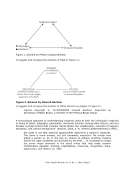
In summary, SI theory explains the process of how the creative self (the I) is born or
developed in every individual, when viewed in reaction to the ―generalized other.‖ What we
are adding to this explanation is the effect of a highly suppressive social environment, or
the effect of power dynamics, on the development of the I and the me. Typically, we
propose, the creative self can exist as an I in harmony with the more public me. However,
suppressive environments such as cult environments force the I to be subservient to the
me, which for a cult member is the ―generalized other‖ of the cult. In a cult, the me
overcomes the I and, we propose, the I may become ignored and obscured. Previously we
mentioned that the I is often called the creative self. If others—usually the leader—do not