Cultic Studies Review, Vol. 9, No. 1, 2010, Page 125
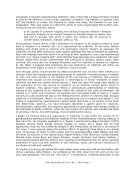
We will act to mimic or own aesthetically pleasing things. We will adapt to what we are
convinced is tastefully correct. We have only to think of the latest fads in clothing and
hairstyles, the latest architectural themes, or an intriguing if revolutionary philosophy. Our
urge to know a transcendent being and the secrets of life draws us to prophets and gurus
that say prophetic things and appear prophetic and aesthetically pleasing. In other words,
prophets and visionaries also have to be convincing actors. That convincing trait we call
charisma and charisma works through aesthetics. Charisma appeals to what we experience,
hear, feel, see, and can touch in a person. There is something about a person, we say, that
sets them apart and makes them attractive to us. That ―about‖ we interpret through an
aesthetic judgment—he or she fits our taste in philosophy, theology, music, looks, or
courage. If we limit our taste or aesthetic to please a guru‘s pleasure we risk excluding
something better. We risk obsession and psychological closure.
Now that we have looked at what I mean by aesthetics, I will turn to a definition of cult, a
word that evokes a variety of responses as well as contains a variety of meanings. Cult is a
ritualistic system of devotion to a person, object or idea and includes ritual behavior that
engages our aesthetic impulses. We fold our hands reverently, bow, make images, write
stories, sit in odd positions quietly, dance in a trance, play instruments and compose music,
and go on long pilgrimages to worship a person, object, or idea. A less accurate but more
common understanding is that a cult is a spurious group. Some of the confusion reflects a
cult‘s irrational and transcendental nature. Forming a cult around something is like falling in
love or becoming infatuated—the sacred or transcendent feeling is the motivation if not the
goal or purpose. A cult is not a factory, a laboratory, or a university although one may
operate through such a matrix. The irrational is an essential feature of a cult. The American
Heritage Dictionary indicates as much—4: A usually nonscientific method or regimen
claimed by its originator to have exclusive or exceptional power in curing a particular
disease 5: Obsessive, especially faddish, devotion to or veneration for a person, principle,
or thing. We can assume that the less reasonable the devotion, the more room for
manipulation and abuse because references and judgments tend to be subjective and
dependent on a leader‘s authoritative interpretation.
It is natural to view a cult with suspicion or as spurious if you are an outsider. The
uninformed outsider will not share the feelings nor appreciate the aesthetic appeal, the
language, and the meaning behind the devotion. The outsider might even experience
revulsion. The scholar and the journalist may strive to appreciate the phenomenon of a cult
aesthetically and historically with no intent to convert or ―go native.‖ However, the natives
or members of a cult experience a range of satisfying sensual and intellectual responses to
ritual and dogma. Satisfying may not always mean entirely pleasurable, for example, in fire
walking or fasting and end times myths or demon attack. Satisfaction comes from knowing
that even unpleasant revelations and practices augment personal enlightenment or
planetary salvation.
Faith provides enjoyment, but suspicion or doubt increases anxiety in the devotee. To
sustain homeostasis in devotion, aesthetic judgment must adjust to the demands of the
faith. If cults have aesthetic features that enhance their attractiveness, then members will
adapt to these features. In other words, to belong to a cult requires certain adaptations and
restrictions of aesthetic judgment in the devotee.
My Cult Passage
This brings me to a personal account of my cult experiences and how my art studies drew
me into occult ideas and the cults that promote them. Ironically, my attraction for the
freewheeling experimentation of modern artists led to the restrictions of a cult. As a young
art student in the late 1960s, I most admired and even imitated the works of Piet Mondrian,
Wassily Kandinsky, Paul Klee, and William Blake. Later, I mimicked the colorful, iconic
We will act to mimic or own aesthetically pleasing things. We will adapt to what we are
convinced is tastefully correct. We have only to think of the latest fads in clothing and
hairstyles, the latest architectural themes, or an intriguing if revolutionary philosophy. Our
urge to know a transcendent being and the secrets of life draws us to prophets and gurus
that say prophetic things and appear prophetic and aesthetically pleasing. In other words,
prophets and visionaries also have to be convincing actors. That convincing trait we call
charisma and charisma works through aesthetics. Charisma appeals to what we experience,
hear, feel, see, and can touch in a person. There is something about a person, we say, that
sets them apart and makes them attractive to us. That ―about‖ we interpret through an
aesthetic judgment—he or she fits our taste in philosophy, theology, music, looks, or
courage. If we limit our taste or aesthetic to please a guru‘s pleasure we risk excluding
something better. We risk obsession and psychological closure.
Now that we have looked at what I mean by aesthetics, I will turn to a definition of cult, a
word that evokes a variety of responses as well as contains a variety of meanings. Cult is a
ritualistic system of devotion to a person, object or idea and includes ritual behavior that
engages our aesthetic impulses. We fold our hands reverently, bow, make images, write
stories, sit in odd positions quietly, dance in a trance, play instruments and compose music,
and go on long pilgrimages to worship a person, object, or idea. A less accurate but more
common understanding is that a cult is a spurious group. Some of the confusion reflects a
cult‘s irrational and transcendental nature. Forming a cult around something is like falling in
love or becoming infatuated—the sacred or transcendent feeling is the motivation if not the
goal or purpose. A cult is not a factory, a laboratory, or a university although one may
operate through such a matrix. The irrational is an essential feature of a cult. The American
Heritage Dictionary indicates as much—4: A usually nonscientific method or regimen
claimed by its originator to have exclusive or exceptional power in curing a particular
disease 5: Obsessive, especially faddish, devotion to or veneration for a person, principle,
or thing. We can assume that the less reasonable the devotion, the more room for
manipulation and abuse because references and judgments tend to be subjective and
dependent on a leader‘s authoritative interpretation.
It is natural to view a cult with suspicion or as spurious if you are an outsider. The
uninformed outsider will not share the feelings nor appreciate the aesthetic appeal, the
language, and the meaning behind the devotion. The outsider might even experience
revulsion. The scholar and the journalist may strive to appreciate the phenomenon of a cult
aesthetically and historically with no intent to convert or ―go native.‖ However, the natives
or members of a cult experience a range of satisfying sensual and intellectual responses to
ritual and dogma. Satisfying may not always mean entirely pleasurable, for example, in fire
walking or fasting and end times myths or demon attack. Satisfaction comes from knowing
that even unpleasant revelations and practices augment personal enlightenment or
planetary salvation.
Faith provides enjoyment, but suspicion or doubt increases anxiety in the devotee. To
sustain homeostasis in devotion, aesthetic judgment must adjust to the demands of the
faith. If cults have aesthetic features that enhance their attractiveness, then members will
adapt to these features. In other words, to belong to a cult requires certain adaptations and
restrictions of aesthetic judgment in the devotee.
My Cult Passage
This brings me to a personal account of my cult experiences and how my art studies drew
me into occult ideas and the cults that promote them. Ironically, my attraction for the
freewheeling experimentation of modern artists led to the restrictions of a cult. As a young
art student in the late 1960s, I most admired and even imitated the works of Piet Mondrian,
Wassily Kandinsky, Paul Klee, and William Blake. Later, I mimicked the colorful, iconic