Cultic Studies Review, Vol. 9, No. 1, 2010, Page 107
environment. We suggest that the birth of an sCS is another option beyond the total
obscuring of the creative self. The birth of an sCS allows the creative self to develop
separately from the ―generalized other‖ of the cult, to remain immune to the power elite‘s
interpreted meaning, and to eventually emerge from the cult as a stronger and more
developed creative self (SCS).
As we explained earlier, the self cannot exist without feedback from others in our social
environment. In a cult, the leader labels members creative or noncreative. Members who do
not express creative thoughts are unlikely to be labeled noncreative. Therefore, an
individual who suppresses creative thoughts will unlikely be labeled noncreative. However,
we propose that the individuals who suppress creativity will eventually stop creating. In
these cases, the creative self is obscured. In contrast, some individuals in total institutions
such as cults continue to think creative thoughts but do not express them to the cult
leaders. Without expression, their creative thoughts are not labeled so these individuals are
free to develop creative thoughts in secret. For them, the interpretation of others‘ reaction
to their creative expressions is a secret interpretation. For example, a cult member might
express the thought or show the symbolic expression of a thought (e.g. a song, story,
drawing)( only to a trusted cult member or to an outside who shows appreciation. In these
cases, a creative self may have to be nurtured in secret by some cult members who do not
want to expose their tangible expressions of creativity to the judgment of cult leaders. This
process leads to the birth of an sCS. When the sCS is freed from the constraint the total
institution imposes, it develops into an SCS. We next turn to the process by which an sCS
develops and grows.
The HCM of Power Dynamics in Cults As Total Institutions That Affect Creativity
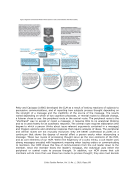
Our HCM posits three processes within a cultic milieu: 1) how cult leaders encode symbols
(perceptions, judgments, naming, and orders) to achieve ascendency in thought and
practice over members 2) how cult members decode (interpret) meanings from leaders
through a route of response and 3) under what conditions an sCS may birth (see Figure 2).
The HCM synthesizes elements of various communication and sociology theories, including
the Elaboration Likelihood Model (ELM) that mass communication researchers Petty and
Cacioppo (1986) developed cultural studies‘ hegemonic encoding and decoding theory
(Hall, 1997) an SI understanding of self, with the addition of our idea of how the creative
self (I) is obscured by the ―generalized other‖ and critical theory on hegemony, power
dynamics, and sovereignty (Mills, 1956 Foucault, 1982 Hall, 1997 Elshtain, 2008
Gramsci, 1935, 1971 Lifton, 1982 Lalich, 2004).
environment. We suggest that the birth of an sCS is another option beyond the total
obscuring of the creative self. The birth of an sCS allows the creative self to develop
separately from the ―generalized other‖ of the cult, to remain immune to the power elite‘s
interpreted meaning, and to eventually emerge from the cult as a stronger and more
developed creative self (SCS).
As we explained earlier, the self cannot exist without feedback from others in our social
environment. In a cult, the leader labels members creative or noncreative. Members who do
not express creative thoughts are unlikely to be labeled noncreative. Therefore, an
individual who suppresses creative thoughts will unlikely be labeled noncreative. However,
we propose that the individuals who suppress creativity will eventually stop creating. In
these cases, the creative self is obscured. In contrast, some individuals in total institutions
such as cults continue to think creative thoughts but do not express them to the cult
leaders. Without expression, their creative thoughts are not labeled so these individuals are
free to develop creative thoughts in secret. For them, the interpretation of others‘ reaction
to their creative expressions is a secret interpretation. For example, a cult member might
express the thought or show the symbolic expression of a thought (e.g. a song, story,
drawing)( only to a trusted cult member or to an outside who shows appreciation. In these
cases, a creative self may have to be nurtured in secret by some cult members who do not
want to expose their tangible expressions of creativity to the judgment of cult leaders. This
process leads to the birth of an sCS. When the sCS is freed from the constraint the total
institution imposes, it develops into an SCS. We next turn to the process by which an sCS
develops and grows.
The HCM of Power Dynamics in Cults As Total Institutions That Affect Creativity
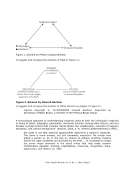
Our HCM posits three processes within a cultic milieu: 1) how cult leaders encode symbols
(perceptions, judgments, naming, and orders) to achieve ascendency in thought and
practice over members 2) how cult members decode (interpret) meanings from leaders
through a route of response and 3) under what conditions an sCS may birth (see Figure 2).
The HCM synthesizes elements of various communication and sociology theories, including
the Elaboration Likelihood Model (ELM) that mass communication researchers Petty and
Cacioppo (1986) developed cultural studies‘ hegemonic encoding and decoding theory
(Hall, 1997) an SI understanding of self, with the addition of our idea of how the creative
self (I) is obscured by the ―generalized other‖ and critical theory on hegemony, power
dynamics, and sovereignty (Mills, 1956 Foucault, 1982 Hall, 1997 Elshtain, 2008
Gramsci, 1935, 1971 Lifton, 1982 Lalich, 2004).