Cultic Studies Review, Vol. 9, No. 1, 2010, Page 58
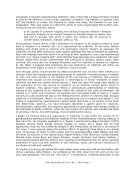
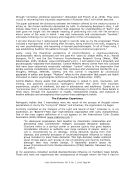
and the music cult discussed in Perlado‘s paper, excessively rigorous rehearsals are
characteristic. Relentless demands, for example for doing exercises and rehearsing, are
often described by former members as abusive, and the resulting exhaustion contributes to
members‘ relinquishing their independent thinking. Leaders justify this approach by
coercively imposing the idea that ―breaking apart‖ old thinking requires adherence to strict
discipline and surrender to enable construction of ―true‖ cult theater or music.
Having initially stated a need for treatment in a previous meeting with Perlado, Alex later
denies that need. The decision whether or not to seek treatment may involve Alex
consciously or unconsciously addressing his fear of loss of the cult that has become his
home and family. This fear is based on indoctrination by the teacher that members cannot
survive the outside world and that end-times come nearer with each abandonment of him
and his word. Alex, like the others, protects the leader, believing the leader's self-
proclaimed transformation did in fact give him the key to ‗musical communion,‘ the
promised state attainable only by following the teacher‘s method. Based on the assumption
of projective identification as a form of communication between Alex and Perlado in his
clinical role, I explore the meaning of the tentative and humorous communication by Alex
that followed and seems to betray his true feelings. In his comment about harm from the
outside, Alex moves from believing that aggression comes from the outside and is directed
to the group, to the possibility of his own aggression, which he then withdraws with humor,
perhaps out of internalized fear of retribution for expressing opposition.
Perlado‘s avoidance of coercive indoctrination as well as his encouragement of Alex‘s
psychic gap remaining unfilled allowed Alex to find the inner freedom to spontaneously joke.
This joke seems to represent Alex‘s recognition in that moment of his own ambivalence
about whether the persecutors that cause him great anxiety are external or internal, as
opposed to the black-and-white position he took when he earlier denied needing help. The
joke ―maybe that was me‖ seems to have burst through unconscious defenses in a moment
of risk-taking and tolerance of uncertainty. Alex first states, ―I thought of leaving, but I also
felt that something could happen if I left. The leader spoke of somebody from the outside
that wanted to harm us.‖ I believe this occurred through Alex‘s total projective identification
with the leader as seen by his transferring his persecutory anxieties onto the leader‘s fear of
persecutory entities. When he then states, ―maybe that was me,‖ I believe this new stance
may express a trial projective identification as he experiences Perlado‘s access to his own
aggression in using his countertransference to mobilize the families to do an intervention.
Alex may be taking partial responsibility for the feeling that perhaps he is the persecutory
entity, prompting him to consider himself as another harmful other. That humorous flash,
―Maybe that was me. I‘m just joking,‖ suggests an unconscious awareness of Alex‘s own
split-off persecutory anxiety and reflects an experience of himself as both a feared entity
and a target of feared ‗entities,‘ both internal and external. His joke that perhaps his
aggression might cause harm to others and it is he who should be feared reflects his
capacity to function, if briefly, within the depressive position, whereby he is able to
simultaneously identify with and differentiate from the leader‘s paranoia and capacity for
aggression. The significance of this relates to the third criterion for creativity delineated
above—i.e., the allowance of opposition. Alex‘s joke illustrates the creative process of
deconstructing and reconstructing opposing elements. I suggest he deconstructs when he
questions the identity of the feared entity and reconstructs when he allows himself to
imagine that it may be either himself or an external other.
I believe it is Perlado‘s willingness to put himself within the field of play in the therapeutic
setting, to use trial projective identification to counter the total projective identification/
folie á deux experience in the cult, and to provide an open environment in which mourning
of loss, allowance of opposition, and tolerance of lack/unfilling of gap and of uncertainty are
affirmed that prompted him at another point in the session to question Alex about how his
and the music cult discussed in Perlado‘s paper, excessively rigorous rehearsals are
characteristic. Relentless demands, for example for doing exercises and rehearsing, are
often described by former members as abusive, and the resulting exhaustion contributes to
members‘ relinquishing their independent thinking. Leaders justify this approach by
coercively imposing the idea that ―breaking apart‖ old thinking requires adherence to strict
discipline and surrender to enable construction of ―true‖ cult theater or music.
Having initially stated a need for treatment in a previous meeting with Perlado, Alex later
denies that need. The decision whether or not to seek treatment may involve Alex
consciously or unconsciously addressing his fear of loss of the cult that has become his
home and family. This fear is based on indoctrination by the teacher that members cannot
survive the outside world and that end-times come nearer with each abandonment of him
and his word. Alex, like the others, protects the leader, believing the leader's self-
proclaimed transformation did in fact give him the key to ‗musical communion,‘ the
promised state attainable only by following the teacher‘s method. Based on the assumption
of projective identification as a form of communication between Alex and Perlado in his
clinical role, I explore the meaning of the tentative and humorous communication by Alex
that followed and seems to betray his true feelings. In his comment about harm from the
outside, Alex moves from believing that aggression comes from the outside and is directed
to the group, to the possibility of his own aggression, which he then withdraws with humor,
perhaps out of internalized fear of retribution for expressing opposition.
Perlado‘s avoidance of coercive indoctrination as well as his encouragement of Alex‘s
psychic gap remaining unfilled allowed Alex to find the inner freedom to spontaneously joke.
This joke seems to represent Alex‘s recognition in that moment of his own ambivalence
about whether the persecutors that cause him great anxiety are external or internal, as
opposed to the black-and-white position he took when he earlier denied needing help. The
joke ―maybe that was me‖ seems to have burst through unconscious defenses in a moment
of risk-taking and tolerance of uncertainty. Alex first states, ―I thought of leaving, but I also
felt that something could happen if I left. The leader spoke of somebody from the outside
that wanted to harm us.‖ I believe this occurred through Alex‘s total projective identification
with the leader as seen by his transferring his persecutory anxieties onto the leader‘s fear of
persecutory entities. When he then states, ―maybe that was me,‖ I believe this new stance
may express a trial projective identification as he experiences Perlado‘s access to his own
aggression in using his countertransference to mobilize the families to do an intervention.
Alex may be taking partial responsibility for the feeling that perhaps he is the persecutory
entity, prompting him to consider himself as another harmful other. That humorous flash,
―Maybe that was me. I‘m just joking,‖ suggests an unconscious awareness of Alex‘s own
split-off persecutory anxiety and reflects an experience of himself as both a feared entity
and a target of feared ‗entities,‘ both internal and external. His joke that perhaps his
aggression might cause harm to others and it is he who should be feared reflects his
capacity to function, if briefly, within the depressive position, whereby he is able to
simultaneously identify with and differentiate from the leader‘s paranoia and capacity for
aggression. The significance of this relates to the third criterion for creativity delineated
above—i.e., the allowance of opposition. Alex‘s joke illustrates the creative process of
deconstructing and reconstructing opposing elements. I suggest he deconstructs when he
questions the identity of the feared entity and reconstructs when he allows himself to
imagine that it may be either himself or an external other.
I believe it is Perlado‘s willingness to put himself within the field of play in the therapeutic
setting, to use trial projective identification to counter the total projective identification/
folie á deux experience in the cult, and to provide an open environment in which mourning
of loss, allowance of opposition, and tolerance of lack/unfilling of gap and of uncertainty are
affirmed that prompted him at another point in the session to question Alex about how his