Cultic Studies Review, Vol. 9, No. 1, 2010, Page 118
Inside Edition, NBC Dateline, CNN, the Los Angeles Times, and two documentaries on
Scientology made for television in France. Biographer Andrew Morton interviewed me for his
book, Unauthorized Biography of Tom Cruise, and he quoted me extensively. I co-authored
one nonfiction women‘s inspirational book in 2005, and I contributed several entries to the
new Baker Dictionary of Cults. I‘ve written two manuscripts about my Scientology
experiences under contracts with literary publishers, both of which CSI officials suppressed
from publication. New religious friends cautioned me against getting married too soon, but
when the right man came into my life two years later, I decided that I, too, could have a
successful marriage and took the leap. I graduated from college with a Bachelor of Science
in Communication degree and am pursuing my Master of Arts in Professional Writing
credentials to achieve my plan to teach writing in college. Overcoming Scientology‘s
attempts to control or influence my life served to strengthen my resilience against power
dynamics in general.
Discussion
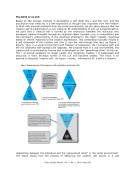
The concept of the ―generalized other‖ discussed above (Mead 1934) is a dynamic process.
When young adults leave the security of their families, typically the ―generalized other‖ is
that of mainstream society. Both Miriam and Karen joined cultic groups while in their young
adulthood: Miriam as soon as she left her home to go to college, and Karen a few years
after having established a career with her husband. In both cults, we see the ―generalized
other‖ composed only of the members of the cult and no longer the members of mainstream
society. New members of a cult can see themselves reflected only in the views of others in
the cult environment, specifically the cult leaders who interpret meaning for all members.
We see this in Miriam‘s story when she is not allowed to be creative for so many years. She
is publicly reprimanded when she offers a symbolic expression of her creative self in the
children‘s story. We see the leader using his power to name when he calls Miriam an
unspiritual person who has no talent for writing. Miriam is officially demoted and ordered to
spend more time reading the leader‘s letters. However, since a few members of the cult
(the editors) thought her story was creative, Miriam incorporates their initial reaction in her
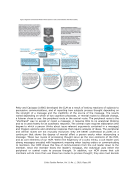
―looking-glass self‖ (Cooley, 1902) reflection. At this critical point, an sCS is birthed,
influenced by her selected meaning of others beyond the cult leader. She continues her
writing in secret until she finds an audience outside the COG, who encourages her further
sCS development. When she leaves the COG, she is less sensitive to criticism since she has
an sCS that emerges as an SCS once she leaves the cult.
In Karen‘s case, the birth of an sCS is more complex. At first, her leaders recognize her as
creative yet her creative work is repeatedly criticized, and she is periodically denied any
outlet for her creativity when she is sent to the RPF. The power to name (Charmaz, 2006) is
easily visible in Scientology, whose members are defined as being ―on source,‖ ―pre-Clear‖
or in a ―state of Clear,‖ and whose workers are not called by personal name but by post
title. Karen‘s creativity is encouraged to the extent she is given labels that identify her as a
creative person in the view of the whole group, such as ―Commanding Officer of the
Celebrity Centre Network‖ and ―Deputy Events Art Director.‖ But she is just as quickly
removed from these positions, and her sense of a creative self is largely dependent on the
meanings of her work as the leaders of her group interpret it. Despite her intense
indoctrination in Scientology beliefs, Karen acknowledges an sCS that desires to be freely
expressed as a creative individual able to communicate without suppression. She attributes
her sanity and her eventual departure from the cult to the sCS that is birthed as a result of
the suppression on her creativity. As evidenced by Karen‘s two departures from Scientology
in 1990 and 1993, before her final departure in 1998, she had reclaimed some sovereignty
from the cult‘s leadership. During the time when she privately harbored disagreements
about abuse, Scientology management policies, and doubts about Scientology technology,
Karen used the central route of processing thought.
Inside Edition, NBC Dateline, CNN, the Los Angeles Times, and two documentaries on
Scientology made for television in France. Biographer Andrew Morton interviewed me for his
book, Unauthorized Biography of Tom Cruise, and he quoted me extensively. I co-authored
one nonfiction women‘s inspirational book in 2005, and I contributed several entries to the
new Baker Dictionary of Cults. I‘ve written two manuscripts about my Scientology
experiences under contracts with literary publishers, both of which CSI officials suppressed
from publication. New religious friends cautioned me against getting married too soon, but
when the right man came into my life two years later, I decided that I, too, could have a
successful marriage and took the leap. I graduated from college with a Bachelor of Science
in Communication degree and am pursuing my Master of Arts in Professional Writing
credentials to achieve my plan to teach writing in college. Overcoming Scientology‘s
attempts to control or influence my life served to strengthen my resilience against power
dynamics in general.
Discussion
The concept of the ―generalized other‖ discussed above (Mead 1934) is a dynamic process.
When young adults leave the security of their families, typically the ―generalized other‖ is
that of mainstream society. Both Miriam and Karen joined cultic groups while in their young
adulthood: Miriam as soon as she left her home to go to college, and Karen a few years
after having established a career with her husband. In both cults, we see the ―generalized
other‖ composed only of the members of the cult and no longer the members of mainstream
society. New members of a cult can see themselves reflected only in the views of others in
the cult environment, specifically the cult leaders who interpret meaning for all members.
We see this in Miriam‘s story when she is not allowed to be creative for so many years. She
is publicly reprimanded when she offers a symbolic expression of her creative self in the
children‘s story. We see the leader using his power to name when he calls Miriam an
unspiritual person who has no talent for writing. Miriam is officially demoted and ordered to
spend more time reading the leader‘s letters. However, since a few members of the cult
(the editors) thought her story was creative, Miriam incorporates their initial reaction in her
―looking-glass self‖ (Cooley, 1902) reflection. At this critical point, an sCS is birthed,
influenced by her selected meaning of others beyond the cult leader. She continues her
writing in secret until she finds an audience outside the COG, who encourages her further
sCS development. When she leaves the COG, she is less sensitive to criticism since she has
an sCS that emerges as an SCS once she leaves the cult.
In Karen‘s case, the birth of an sCS is more complex. At first, her leaders recognize her as
creative yet her creative work is repeatedly criticized, and she is periodically denied any
outlet for her creativity when she is sent to the RPF. The power to name (Charmaz, 2006) is
easily visible in Scientology, whose members are defined as being ―on source,‖ ―pre-Clear‖
or in a ―state of Clear,‖ and whose workers are not called by personal name but by post
title. Karen‘s creativity is encouraged to the extent she is given labels that identify her as a
creative person in the view of the whole group, such as ―Commanding Officer of the
Celebrity Centre Network‖ and ―Deputy Events Art Director.‖ But she is just as quickly
removed from these positions, and her sense of a creative self is largely dependent on the
meanings of her work as the leaders of her group interpret it. Despite her intense
indoctrination in Scientology beliefs, Karen acknowledges an sCS that desires to be freely
expressed as a creative individual able to communicate without suppression. She attributes
her sanity and her eventual departure from the cult to the sCS that is birthed as a result of
the suppression on her creativity. As evidenced by Karen‘s two departures from Scientology
in 1990 and 1993, before her final departure in 1998, she had reclaimed some sovereignty
from the cult‘s leadership. During the time when she privately harbored disagreements
about abuse, Scientology management policies, and doubts about Scientology technology,
Karen used the central route of processing thought.