Cultic Studies Review, Vol. 9, No. 1, 2010, Page 143
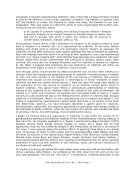
disappear into a realm of unearthly beauty. That particular image was the creation of an unnamed
Indian artist, and was of an order far beyond the common poster and calendar art one sees
everywhere in India, and far beyond the work of ISKCON artists of the time, which in comparison
appears coarse and cartoonish. The Krishna tradition in India is an ancient and culturally rich one, with
deep and broad traditions in art, music, dance, and drama. But here I would make a distinction
between art forms grown organically in original cultural soil, expressive of a profound and deep-rooted
spiritual sensibility, and those that have been transplanted to foreign ground in attenuated,
repackaged forms with a strong Western imprint.
[v] See ―On Leaving ISKCON,‖ in Edwin F. Bryant &Maria L. Ekstrand, eds., The Hare Krishna
Movement: The Postcharismatic Fate of a Religious Transplant (New York: Columbia University Press,
2004). (An earlier version can be found online at
http://surrealist.org/betrayalofthespirit/gelberg.html)
See also ―Some Things I Learned During My Seventeen Years in the Hare Krishna Movement,‖ ICSA e-
newsletter, Vol. 6, No. 3, 2007 (http://www.icsahome.com/infoserv_articles/gelberg_steven_
thingslearned_en0603.htm). A revised, expanded version of the above will be presented at the 2010
annual meeting of the International Cultic Studies Association in New York.
[vi] See Steven J. Gelberg, ed., Hare Krishna, Hare Krishna: Five Distinguished Scholars on the Krishna
Movement in the West (New York: Grove Press, 1983).
[vii] Much of that project of re-inhabitation had, of course, been accomplished during the seven years
between my leaving ISKCON and entering photography. I‘d made significant progress in breaching the
thick wall of ideology that separated me from the lived-in world. I‘d learned to trust my own sense of
reality, to explore my own thoughts and perceptions, to rediscover and reclaim immediacy and
spontaneity. These freedoms are, as I discussed earlier, necessary for a truly creative life, and they
were greatly aided by my immersion in an art based upon careful visual observation.
[viii] ―Variations on El Greco,‖ in Morris Philipson, ed., Aldous Huxley on Art and Artists (New York:
Meridian Books, 1960), p. 235.
[ix] Some of this language is adapted from my artist‘s Statement in my Website ―Steven Gelberg Fine
Art Photography‖ (www.stevengelberg.com).
[x] Charles H. Caffin, Photography as a Fine Art (Hastings-on-Hudson, N.Y.: Morgan &Morgan, Inc.,
1971 (1901), pp. 165–166:
When the artist has entered into nature and allowed it to enter into him, his work,
however simple, becomes impregnated with a sincerity that is unmistakable to any
careful observer. … It is this sincerity that leads the artist to eschew the trivial and
seek for the large qualities in a landscape to feel so deeply the meaning of these that
he can communicate the feeling to us and, so, recreate the emotion we might have
received if ourselves in the presence of the scene. For the lover of nature can never be
satisfied with a mere record of the physical facts to him there is, as it were, a soul
within them, and he looks to pictures for its interpretation. It would not be far wrong
to say that landscape art is the real religious art of the present age.
[xi] Dreaming the Landscape (Heliograph Editions, 2007) and Pictures from the Earth: Things Seen on
the Surface of a Strange Planet (also Heliograph Editions, 2007).
[xii] Steven J. Gelberg, Consorting with Anima: Portraits, Nudes, Dream-sightings (Heliograph Editions,
2007), p. 7.
[xiii] Hymne in Honour of Beautie, line 132 (1596).
[xiv] Consorting with Anima (op. cit.).
[xv] Frantisek Drtikol, Art-Deco Photographer (Munich: Schirmer Art Books, 1993), p. 24.
[xvi] From [artist‘s] Statement, Website of ―Steven Gelberg Fine Art Photography‖
(www.stevengelberg.com).
disappear into a realm of unearthly beauty. That particular image was the creation of an unnamed
Indian artist, and was of an order far beyond the common poster and calendar art one sees
everywhere in India, and far beyond the work of ISKCON artists of the time, which in comparison
appears coarse and cartoonish. The Krishna tradition in India is an ancient and culturally rich one, with
deep and broad traditions in art, music, dance, and drama. But here I would make a distinction
between art forms grown organically in original cultural soil, expressive of a profound and deep-rooted
spiritual sensibility, and those that have been transplanted to foreign ground in attenuated,
repackaged forms with a strong Western imprint.
[v] See ―On Leaving ISKCON,‖ in Edwin F. Bryant &Maria L. Ekstrand, eds., The Hare Krishna
Movement: The Postcharismatic Fate of a Religious Transplant (New York: Columbia University Press,
2004). (An earlier version can be found online at
http://surrealist.org/betrayalofthespirit/gelberg.html)
See also ―Some Things I Learned During My Seventeen Years in the Hare Krishna Movement,‖ ICSA e-
newsletter, Vol. 6, No. 3, 2007 (http://www.icsahome.com/infoserv_articles/gelberg_steven_
thingslearned_en0603.htm). A revised, expanded version of the above will be presented at the 2010
annual meeting of the International Cultic Studies Association in New York.
[vi] See Steven J. Gelberg, ed., Hare Krishna, Hare Krishna: Five Distinguished Scholars on the Krishna
Movement in the West (New York: Grove Press, 1983).
[vii] Much of that project of re-inhabitation had, of course, been accomplished during the seven years
between my leaving ISKCON and entering photography. I‘d made significant progress in breaching the
thick wall of ideology that separated me from the lived-in world. I‘d learned to trust my own sense of
reality, to explore my own thoughts and perceptions, to rediscover and reclaim immediacy and
spontaneity. These freedoms are, as I discussed earlier, necessary for a truly creative life, and they
were greatly aided by my immersion in an art based upon careful visual observation.
[viii] ―Variations on El Greco,‖ in Morris Philipson, ed., Aldous Huxley on Art and Artists (New York:
Meridian Books, 1960), p. 235.
[ix] Some of this language is adapted from my artist‘s Statement in my Website ―Steven Gelberg Fine
Art Photography‖ (www.stevengelberg.com).
[x] Charles H. Caffin, Photography as a Fine Art (Hastings-on-Hudson, N.Y.: Morgan &Morgan, Inc.,
1971 (1901), pp. 165–166:
When the artist has entered into nature and allowed it to enter into him, his work,
however simple, becomes impregnated with a sincerity that is unmistakable to any
careful observer. … It is this sincerity that leads the artist to eschew the trivial and
seek for the large qualities in a landscape to feel so deeply the meaning of these that
he can communicate the feeling to us and, so, recreate the emotion we might have
received if ourselves in the presence of the scene. For the lover of nature can never be
satisfied with a mere record of the physical facts to him there is, as it were, a soul
within them, and he looks to pictures for its interpretation. It would not be far wrong
to say that landscape art is the real religious art of the present age.
[xi] Dreaming the Landscape (Heliograph Editions, 2007) and Pictures from the Earth: Things Seen on
the Surface of a Strange Planet (also Heliograph Editions, 2007).
[xii] Steven J. Gelberg, Consorting with Anima: Portraits, Nudes, Dream-sightings (Heliograph Editions,
2007), p. 7.
[xiii] Hymne in Honour of Beautie, line 132 (1596).
[xiv] Consorting with Anima (op. cit.).
[xv] Frantisek Drtikol, Art-Deco Photographer (Munich: Schirmer Art Books, 1993), p. 24.
[xvi] From [artist‘s] Statement, Website of ―Steven Gelberg Fine Art Photography‖
(www.stevengelberg.com).