Cultic Studies Review, Vol. 9, No. 1, 2010, Page 96
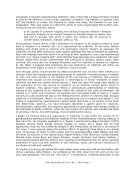
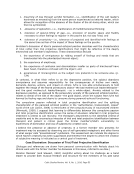
Containing that fosters expansiveness means collecting the various aspects of ourselves,
striving toward wholeness and uniqueness. For Jung, this is individuation.
There is a profound irony in this cultural/psychological situation. The cult promises to
expand consciousness while at the same time providing a containing and ―belonging‖
function. On the surface this sounds like the very antidote to our ego-driven culture. It
promises a connection to psyche, for doesn‘t consciousness-expanding imply a place outside
of the directed, logical, linear life of the ego? And further, doesn‘t the promise of containing
and belonging imply the all-inclusive nature of psyche? The problem is that cult mentality is
by definition limiting, and riddled with binary thinking. This binary perspective is
judgmental, motivated by black/white, either/or, good/bad, inclusive/exclusive. Even
though the cult sounds like an antidote, the fact is, cult thinking itself is trapped inside ego.
It is unable to see things from a non-ego perspective of openness or all-inclusiveness. It
leaves nothing to intuition or instinct. It must control at all costs. Cults erect walls that hold
people in group houses, dismantle former belief systems, cut ties to families, change the
meaning of language, and ultimately break the member‘s will, through the sheer force of a
stronger will—through domination by a leader. This process systematically cuts off or
excludes entire portions of the personality.
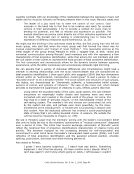
In cults we see an extreme version of late 20th century Western culture. While the cult is
containing, its energy is far too masculine—i.e., penetrating and judgmental (right/wrong),
to allow room for real feminine energy.iii What feminine energy does exist is encapsulated
within ego‘s controlling grasp. Although a cult may be collective, it does not foster authentic
relationship, with oneself or with other. Neither does it support feeling. In our culture and
especially in a cult, one has little experience of the deep intuitive impulses of psyche, and
our experiences of psyche are collapsed into the either/or logic of the ego. In other words,
our ―creativity‖ has become co-opted by ego and is thus not true creativity. C. G. Jung
writes, ―The creative process has a feminine quality‖ (Jung, 1922, par. 159). To touch into
one‘s creativity is to submit to psyche, and to be willing to stand outside the safety of ego‘s
logic, outside its causal and directed thinking. True creativity lies in the deep and dark
corners of our own uniqueness. It is the place where our uniqueness becomes expansive—
free to mine the precious metal hidden way beneath the surface.
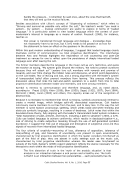
When we talk, then, about inclusion and containment at the psychic level, we are speaking
of the way psyche holds the parts of ourselves together. When we speak of relatedness, we
are in part referring to how these parts relate to one another. Gustav Mahler once wrote,
―The symphony is the world. It must contain everything within it‖ (Greenberg, 2001). He is
telling us about psyche. Our definition reminds us that psyche contains everything, including
ego. Surely one cannot produce a ―creation‖ without using ego functions. Where would the
artist be without technique without tools, instruments, rules, rights and wrongs without
relying on what he or she knows? But if the creator stops there, the result will be a
commodity, an ego product that has not been allowed to make the intuitive leap into the
unknown.
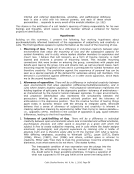
In 1940, the French composer Olivier Messiaen was captured by the Germans and sent to a
prisoner-of-war camp in Silesia. While imprisoned, he composed his Quartet for the End of
Time, and premiered it in Stalag VIII-A (POW camp) on January 15, 1941, with a cello that
had only three strings, and a piano whose keys stuck when played. Messiaen was thirty-
three years old and already an established composer. He was a devout Catholic and
fascinated with mysticism. Thus, when he entered this confinement, he had a pre-existent
relationship with psyche‘s guiding importance, and with his own creative impulses. Although
he was imprisoned by the one-sidedness of Nazi mentality, and although he was in enforced
―retainment‖ rather than containment, surrounded by depression and suicide, he was able
to ―escape‖ into his own creative, generative world. ―Attesting to the eternal freedom of the
Containing that fosters expansiveness means collecting the various aspects of ourselves,
striving toward wholeness and uniqueness. For Jung, this is individuation.
There is a profound irony in this cultural/psychological situation. The cult promises to
expand consciousness while at the same time providing a containing and ―belonging‖
function. On the surface this sounds like the very antidote to our ego-driven culture. It
promises a connection to psyche, for doesn‘t consciousness-expanding imply a place outside
of the directed, logical, linear life of the ego? And further, doesn‘t the promise of containing
and belonging imply the all-inclusive nature of psyche? The problem is that cult mentality is
by definition limiting, and riddled with binary thinking. This binary perspective is
judgmental, motivated by black/white, either/or, good/bad, inclusive/exclusive. Even
though the cult sounds like an antidote, the fact is, cult thinking itself is trapped inside ego.
It is unable to see things from a non-ego perspective of openness or all-inclusiveness. It
leaves nothing to intuition or instinct. It must control at all costs. Cults erect walls that hold
people in group houses, dismantle former belief systems, cut ties to families, change the
meaning of language, and ultimately break the member‘s will, through the sheer force of a
stronger will—through domination by a leader. This process systematically cuts off or
excludes entire portions of the personality.
In cults we see an extreme version of late 20th century Western culture. While the cult is
containing, its energy is far too masculine—i.e., penetrating and judgmental (right/wrong),
to allow room for real feminine energy.iii What feminine energy does exist is encapsulated
within ego‘s controlling grasp. Although a cult may be collective, it does not foster authentic
relationship, with oneself or with other. Neither does it support feeling. In our culture and
especially in a cult, one has little experience of the deep intuitive impulses of psyche, and
our experiences of psyche are collapsed into the either/or logic of the ego. In other words,
our ―creativity‖ has become co-opted by ego and is thus not true creativity. C. G. Jung
writes, ―The creative process has a feminine quality‖ (Jung, 1922, par. 159). To touch into
one‘s creativity is to submit to psyche, and to be willing to stand outside the safety of ego‘s
logic, outside its causal and directed thinking. True creativity lies in the deep and dark
corners of our own uniqueness. It is the place where our uniqueness becomes expansive—
free to mine the precious metal hidden way beneath the surface.
When we talk, then, about inclusion and containment at the psychic level, we are speaking
of the way psyche holds the parts of ourselves together. When we speak of relatedness, we
are in part referring to how these parts relate to one another. Gustav Mahler once wrote,
―The symphony is the world. It must contain everything within it‖ (Greenberg, 2001). He is
telling us about psyche. Our definition reminds us that psyche contains everything, including
ego. Surely one cannot produce a ―creation‖ without using ego functions. Where would the
artist be without technique without tools, instruments, rules, rights and wrongs without
relying on what he or she knows? But if the creator stops there, the result will be a
commodity, an ego product that has not been allowed to make the intuitive leap into the
unknown.
In 1940, the French composer Olivier Messiaen was captured by the Germans and sent to a
prisoner-of-war camp in Silesia. While imprisoned, he composed his Quartet for the End of
Time, and premiered it in Stalag VIII-A (POW camp) on January 15, 1941, with a cello that
had only three strings, and a piano whose keys stuck when played. Messiaen was thirty-
three years old and already an established composer. He was a devout Catholic and
fascinated with mysticism. Thus, when he entered this confinement, he had a pre-existent
relationship with psyche‘s guiding importance, and with his own creative impulses. Although
he was imprisoned by the one-sidedness of Nazi mentality, and although he was in enforced
―retainment‖ rather than containment, surrounded by depression and suicide, he was able
to ―escape‖ into his own creative, generative world. ―Attesting to the eternal freedom of the