Cultic Studies Review, Vol. 9, No. 1, 2010, Page 43
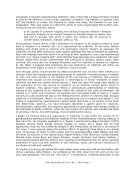
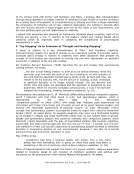
the psychotic personality are intolerance of frustration, the predominance of destructive
impulses, the undermining of perceptive reality, and the ability to form bonds the
fundamental mechanism of the psychotic part of the personality is precisely pathological
projective identification.
In general terms, this division between the psychotic and nonpsychotic parts of the
personality coexists in everyone as a primordial mental partition. The nonpsychotic part of
the personality is capable of tolerating ambivalence and frustration, and can progressively
readjust itself to reality. The psychotic part of the personality denies anguish and
frustration such denial leads to the need to find solutions to eliminate any psychological
discomfort. In the situation we have been examining, the psychotic part of the personality
was exacerbated by the progressive isolation of the group members, in a frantic attempt to
negate separation anxiety.
As for experiences shared on an unconscious level (difficulties in separating from the family
of origin, fear of emotional loss), both the Teacher and his pupils entered a closed loop of
mutual projective identifications that protected them against their own separation anxieties,
although the ultimate outcome in group terms was intensified malignant regression.
I suggest that the manner in which both leader and member regress is in part via folie
caused by mutual projective identification. Although this mechanism is found in normative
functioning, it is used excessively within the delusional exchange, where identification
serves as a defense against anxiety over potential separation between leader and member.
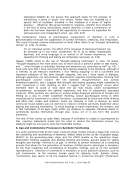
In her response to my clinical presentation (included in this journal), Dana Wehle focuses on
the association of the mechanism of projective identification with cultic functioning she
draws heavily on Grotstein, who suggests that, with the unconscious use of what he calls
―total projective identification,‖ we see others as the same as ourselves in order to erase
the experience of separateness. In this sense, we can understand the suppression of
creativity in this music cult by combining Lifton‘s and other criteria of thought reform with
the unconscious processes defined within psychoanalytic thinking as folie, malignant
regression, and total projective identification.
Given these unconscious processes, attention to transferential/countertransferential
reactions is essential to prevent inappropriate action and increased folie on the part of the
group, which submerges its members in a spiral from which it is difficult for them to escape.
Folie à deux, based on mutual projective identification and intense malignant regression,
leaves the member in a state of pathological dependency, which we have described
elsewhere (Perlado, 2003). This excessive, unlimited dependency may be the reflection of a
longing that is deeply embedded in all of us, with its roots in the early mother-baby
relationship where the desire is to create an ambience or atmosphere of complete and
undifferentiated fusion, or, in the words of Balint,
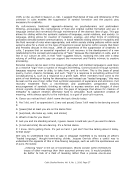
...the re-establishment of the harmonious interpenetrating mix-up, between
the individual and the most important parts of his environment, his love
objects, is the desire of all humanity. [...]In adult life there are a few more
possibilities for achieving this ultimate aim, all of them requiring considerable
skills and talents. These comprise religious ecstasy, the sublime moments of
artistic creation, and lastly, though perhaps more for patients, certain
regressive periods during analytic treatment. Although in all these states the
individual is on his own, creating the impression of narcissistic withdrawal, all
of them have in common the fundamental characteristic that for these very
brief moments the individual may truly and really experience that every
disharmony has been dispelled, he and his whole world are now united in
undisturbed understanding, in completely harmonious interpenetrating mix-
up. (Balint, 1979: 74–75)
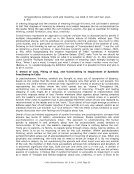
the psychotic personality are intolerance of frustration, the predominance of destructive
impulses, the undermining of perceptive reality, and the ability to form bonds the
fundamental mechanism of the psychotic part of the personality is precisely pathological
projective identification.
In general terms, this division between the psychotic and nonpsychotic parts of the
personality coexists in everyone as a primordial mental partition. The nonpsychotic part of
the personality is capable of tolerating ambivalence and frustration, and can progressively
readjust itself to reality. The psychotic part of the personality denies anguish and
frustration such denial leads to the need to find solutions to eliminate any psychological
discomfort. In the situation we have been examining, the psychotic part of the personality
was exacerbated by the progressive isolation of the group members, in a frantic attempt to
negate separation anxiety.
As for experiences shared on an unconscious level (difficulties in separating from the family
of origin, fear of emotional loss), both the Teacher and his pupils entered a closed loop of
mutual projective identifications that protected them against their own separation anxieties,
although the ultimate outcome in group terms was intensified malignant regression.
I suggest that the manner in which both leader and member regress is in part via folie
caused by mutual projective identification. Although this mechanism is found in normative
functioning, it is used excessively within the delusional exchange, where identification
serves as a defense against anxiety over potential separation between leader and member.
In her response to my clinical presentation (included in this journal), Dana Wehle focuses on
the association of the mechanism of projective identification with cultic functioning she
draws heavily on Grotstein, who suggests that, with the unconscious use of what he calls
―total projective identification,‖ we see others as the same as ourselves in order to erase
the experience of separateness. In this sense, we can understand the suppression of
creativity in this music cult by combining Lifton‘s and other criteria of thought reform with
the unconscious processes defined within psychoanalytic thinking as folie, malignant
regression, and total projective identification.
Given these unconscious processes, attention to transferential/countertransferential
reactions is essential to prevent inappropriate action and increased folie on the part of the
group, which submerges its members in a spiral from which it is difficult for them to escape.
Folie à deux, based on mutual projective identification and intense malignant regression,
leaves the member in a state of pathological dependency, which we have described
elsewhere (Perlado, 2003). This excessive, unlimited dependency may be the reflection of a
longing that is deeply embedded in all of us, with its roots in the early mother-baby
relationship where the desire is to create an ambience or atmosphere of complete and
undifferentiated fusion, or, in the words of Balint,
...the re-establishment of the harmonious interpenetrating mix-up, between
the individual and the most important parts of his environment, his love
objects, is the desire of all humanity. [...]In adult life there are a few more
possibilities for achieving this ultimate aim, all of them requiring considerable
skills and talents. These comprise religious ecstasy, the sublime moments of
artistic creation, and lastly, though perhaps more for patients, certain
regressive periods during analytic treatment. Although in all these states the
individual is on his own, creating the impression of narcissistic withdrawal, all
of them have in common the fundamental characteristic that for these very
brief moments the individual may truly and really experience that every
disharmony has been dispelled, he and his whole world are now united in
undisturbed understanding, in completely harmonious interpenetrating mix-
up. (Balint, 1979: 74–75)