Cultic Studies Review, Vol. 9, No. 1, 2010, Page 54
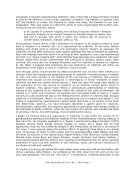
cogently contrasts with our knowledge of the relationship between the oppressive music cult
leader and his musician followers as Perlado presents them in this issue. Marsalis states that
The leader of a jazz band has to exert the control of non control. Each
musician in the band has to feel free to be creative and reach for unusual
corners in their personalities. I try to provide a context for every man to
develop his potential, and feel as relaxed and expressive as possible. The
musical directions we pursue come directly out of the collective experience of
the band. The hardest part of leading is understanding how to make the
expression of differing viewpoints sound harmonious. (p. 20)
We might see this thinking in the comments made by Alex, the first young man who left the
music group, who said that when the music group was first formed the intent was for
musical experimentation and ―merger of novel rhythms.‖ This reasonable premise at the
initial stages of the group brings Marsalis to mind. I suggest that, at best, verbal and
nonverbal communication among Marsalis‘ band members and with him represents a flow
characteristic of trial projective identification, while that among the cult members and with
the cult leader in time comes to represent the fixed process of total projective identification.
The first consciously and unconsciously allows for the dynamic tension between opposing
experiences, while the latter consciously and unconsciously demands rigid mirroring.
We can assume that a variety of individual differences and circumstances might lead a
member to develop relationships with the music teacher/leader that are characterized by
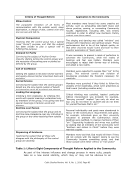
total projective identification. I draw upon Lalich, who suggests (2004) that four dimensions
interact within an ―authoritarian, transcendent, closed group‖ to lead a person to make a
―bounded choice‖ to be a devoted member. The social system and structure of such groups,
she states, are characterized by ―charismatic authority, a transcendent belief system,
systems of control, and systems of influence.‖ The case of the music cult, which Perlado
provides to illuminate the suppression of creativity in cults, reflects Lalich‘s idea that
Living within the bounded reality of the cultic social system, the cult member
encounters no meaningful reality checks and becomes more and more
enmeshed with and invested in the closed world of the group. For some, this
may lead to a state of ‗personal closure,‘ or the individualized version of the
self-sealing system. The member‘s life and choices are constrained not only
by the system but also, and perhaps even more powerfully, by the close-
mindedness of the individual him- or herself who is functioning in alliance with
that system. Now the dedicated adherent has entered a social-psychological
state of being that I am calling bounded choice: in essence, life outside the
cult has become impossible to imagine. (p. 228)
We see in Perlado‘s paper that the members‘ joining with the leader‘s transcendent belief
that only he holds the key to the members‘ achievement of ―musical communion‖ deepened
over a period of time. The initial free musical exchange reminiscent of Marsalis‘ words
reflect the reciprocal flow of projective identifications characteristic of creative living and
activity. This becomes replaced by the increasing demand for self-renunciation and
commitment to what Lalich terms the leader‘s transcendent belief system (2004), and I add
reflective of total projective identification and the paranoid schizoid position, whereby
splitting, polarization, and black-and-white thinking defines all.
Alex states to Perlado,
I guess I have become suspicious … I wasn‘t that way before. Something
happened. I don‘t feel like playing. It‘s been months since I played. What if I
can‘t play again? I don‘t know what‘s going on lately. I left because I couldn‘t
cogently contrasts with our knowledge of the relationship between the oppressive music cult
leader and his musician followers as Perlado presents them in this issue. Marsalis states that
The leader of a jazz band has to exert the control of non control. Each
musician in the band has to feel free to be creative and reach for unusual
corners in their personalities. I try to provide a context for every man to
develop his potential, and feel as relaxed and expressive as possible. The
musical directions we pursue come directly out of the collective experience of
the band. The hardest part of leading is understanding how to make the
expression of differing viewpoints sound harmonious. (p. 20)
We might see this thinking in the comments made by Alex, the first young man who left the
music group, who said that when the music group was first formed the intent was for
musical experimentation and ―merger of novel rhythms.‖ This reasonable premise at the
initial stages of the group brings Marsalis to mind. I suggest that, at best, verbal and
nonverbal communication among Marsalis‘ band members and with him represents a flow
characteristic of trial projective identification, while that among the cult members and with
the cult leader in time comes to represent the fixed process of total projective identification.
The first consciously and unconsciously allows for the dynamic tension between opposing
experiences, while the latter consciously and unconsciously demands rigid mirroring.
We can assume that a variety of individual differences and circumstances might lead a
member to develop relationships with the music teacher/leader that are characterized by
total projective identification. I draw upon Lalich, who suggests (2004) that four dimensions
interact within an ―authoritarian, transcendent, closed group‖ to lead a person to make a
―bounded choice‖ to be a devoted member. The social system and structure of such groups,
she states, are characterized by ―charismatic authority, a transcendent belief system,
systems of control, and systems of influence.‖ The case of the music cult, which Perlado
provides to illuminate the suppression of creativity in cults, reflects Lalich‘s idea that
Living within the bounded reality of the cultic social system, the cult member
encounters no meaningful reality checks and becomes more and more
enmeshed with and invested in the closed world of the group. For some, this
may lead to a state of ‗personal closure,‘ or the individualized version of the
self-sealing system. The member‘s life and choices are constrained not only
by the system but also, and perhaps even more powerfully, by the close-
mindedness of the individual him- or herself who is functioning in alliance with
that system. Now the dedicated adherent has entered a social-psychological
state of being that I am calling bounded choice: in essence, life outside the
cult has become impossible to imagine. (p. 228)
We see in Perlado‘s paper that the members‘ joining with the leader‘s transcendent belief
that only he holds the key to the members‘ achievement of ―musical communion‖ deepened
over a period of time. The initial free musical exchange reminiscent of Marsalis‘ words
reflect the reciprocal flow of projective identifications characteristic of creative living and
activity. This becomes replaced by the increasing demand for self-renunciation and
commitment to what Lalich terms the leader‘s transcendent belief system (2004), and I add
reflective of total projective identification and the paranoid schizoid position, whereby
splitting, polarization, and black-and-white thinking defines all.
Alex states to Perlado,
I guess I have become suspicious … I wasn‘t that way before. Something
happened. I don‘t feel like playing. It‘s been months since I played. What if I
can‘t play again? I don‘t know what‘s going on lately. I left because I couldn‘t