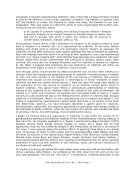
Cultic Studies Review, Vol. 9, No. 1, 2010, Page 36
these cases, the delusions of the latter disappear after separating from the psychotic
inducer
2) folie simultanée (simultaneous psychosis). This is the simultaneous but independent
appearance of paranoid or depressive delusions in two persons who are morbidly
predisposed
3) folie communiquée (communicated psychosis). This is the development of psychotic
symptoms in a second subject after a variable period of resistance to the first
subject after adopting the content of the delusion, the recipient then goes on to
develop delusions that are independent of the first subject and
4) folie induite (induced psychosis). This refers to an already-psychotic patient who is
influenced by another psychotic, which enriches the influenced patient‘s delusions.
Dewhurst and Todd (1956) stated three criteria for the folie à deux diagnosis: 1) the
partners should have a very close association 2) the content of delusions should be
identical or very similar and 3) the partners should accept, share, and support each other‘s
delusions. The folie à deux has been categorized in DSM-III and DSM-III-R as a ―shared
paranoid disorder‖ in DSM-IV the title was changed to ―shared psychotic disorder.‖
Although the DSM emphasizes the paranoid nature of delusions (which will be prominent in
this case), other clinicians ha e suggested the significance of religious and hypochondriacal
delusions (Sanjurjo-Hartman, Weitzner, &Santana, 2001) or severe individual obsessive-
compulsive pathology that emerge as a shared process (Yaryura-Tobias, Toro-Martinez, &
Spinetto, 2001 Grover &Gupta, 2006).
For cultic studies, it is striking to note that suicide pacts and criminal acts have been
described as occurring frequently in shared psychotic disorder. The factors that predispose
persons to suicide pacts strongly parallel those factors that predispose them to folie (Tishler
&Meltzer, 2004 Noyes, Frye &Hartford, 1977). As a result of group regression, isolation
and persecutory delusions can lead to group suicide pacts whose nature may be contagious,
religious, or based on personal loyalty (Brennan, 1989). This idea did develop in the group
presented here, as will be noted in the clinical material.
Mentjox, van Houten, and Koolman (1993) conducted the second important review of the
literature. Reviewing the studies published between 1974 and 1991, they found 76
descriptions compatible with a shared psychotic disorder. According to these authors, 59 of
the cases were folie à deux, in another 17 cases, the delirious conviction was shared by
more than two people and the last 4 cases demonstrated a complete family contagion.
Waeltzer (1963) recorded a psychotic family folie à douze. Dewhurst and Todd (1956) have
suggested the term folie collective as being appropriate in a number of such cases. Evans
and Merskey (1972) have coined the term folie partagée (shared folie), suggesting that
each participant of a folie contributes to the folie although not necessarily with the same
degree of conviction. Lloyd (1973) applied these ideas to the analysis of a religious group
(eight to fifteen people) with a leader who claimed to have the power to heal illness through
the use of prayer further, he suggests that folie partagée may also be applied to cases not
religious in nature.
From a psychoanalytic perspective, various authors have raised ideas that deserve some
attention. For example, Helene Deutsch wrote on the subject of folie that
...processes such as we have seen here in individuals can also affect large
groups of men, entire nations, and generations. We must, however,
distinguish here as with individuals between hysterical, libidinally determined
mass influences, and schizophrenic ideas held in common likewise between
mass liberation of instincts under the guise of ideals, and paranoid projections
...many things have their place in these folies en masse and the approval or
these cases, the delusions of the latter disappear after separating from the psychotic
inducer
2) folie simultanée (simultaneous psychosis). This is the simultaneous but independent
appearance of paranoid or depressive delusions in two persons who are morbidly
predisposed
3) folie communiquée (communicated psychosis). This is the development of psychotic
symptoms in a second subject after a variable period of resistance to the first
subject after adopting the content of the delusion, the recipient then goes on to
develop delusions that are independent of the first subject and
4) folie induite (induced psychosis). This refers to an already-psychotic patient who is
influenced by another psychotic, which enriches the influenced patient‘s delusions.
Dewhurst and Todd (1956) stated three criteria for the folie à deux diagnosis: 1) the
partners should have a very close association 2) the content of delusions should be
identical or very similar and 3) the partners should accept, share, and support each other‘s
delusions. The folie à deux has been categorized in DSM-III and DSM-III-R as a ―shared
paranoid disorder‖ in DSM-IV the title was changed to ―shared psychotic disorder.‖
Although the DSM emphasizes the paranoid nature of delusions (which will be prominent in
this case), other clinicians ha e suggested the significance of religious and hypochondriacal
delusions (Sanjurjo-Hartman, Weitzner, &Santana, 2001) or severe individual obsessive-
compulsive pathology that emerge as a shared process (Yaryura-Tobias, Toro-Martinez, &
Spinetto, 2001 Grover &Gupta, 2006).
For cultic studies, it is striking to note that suicide pacts and criminal acts have been
described as occurring frequently in shared psychotic disorder. The factors that predispose
persons to suicide pacts strongly parallel those factors that predispose them to folie (Tishler
&Meltzer, 2004 Noyes, Frye &Hartford, 1977). As a result of group regression, isolation
and persecutory delusions can lead to group suicide pacts whose nature may be contagious,
religious, or based on personal loyalty (Brennan, 1989). This idea did develop in the group
presented here, as will be noted in the clinical material.
Mentjox, van Houten, and Koolman (1993) conducted the second important review of the
literature. Reviewing the studies published between 1974 and 1991, they found 76
descriptions compatible with a shared psychotic disorder. According to these authors, 59 of
the cases were folie à deux, in another 17 cases, the delirious conviction was shared by
more than two people and the last 4 cases demonstrated a complete family contagion.
Waeltzer (1963) recorded a psychotic family folie à douze. Dewhurst and Todd (1956) have
suggested the term folie collective as being appropriate in a number of such cases. Evans
and Merskey (1972) have coined the term folie partagée (shared folie), suggesting that
each participant of a folie contributes to the folie although not necessarily with the same
degree of conviction. Lloyd (1973) applied these ideas to the analysis of a religious group
(eight to fifteen people) with a leader who claimed to have the power to heal illness through
the use of prayer further, he suggests that folie partagée may also be applied to cases not
religious in nature.
From a psychoanalytic perspective, various authors have raised ideas that deserve some
attention. For example, Helene Deutsch wrote on the subject of folie that
...processes such as we have seen here in individuals can also affect large
groups of men, entire nations, and generations. We must, however,
distinguish here as with individuals between hysterical, libidinally determined
mass influences, and schizophrenic ideas held in common likewise between
mass liberation of instincts under the guise of ideals, and paranoid projections
...many things have their place in these folies en masse and the approval or