Cultic Studies Review, Vol. 9, No. 1, 2010, Page 80
factor in the individual‘s ability to experience ―true self‖ and the spontaneity necessary for
creativity (p. 139).
The cultic group described in this paper exemplifies an environment in which creativity as
defined by Winnicott, Rogers, and Gestalt psychotherapy is grossly impeded.
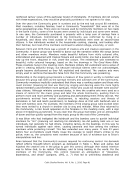
The Love of God Community
The Community was formed in 1970 and disbanded in 1980. It did not begin as a cult, but
over time grew to fit Langone‘s definition (see ―Langone‘s Definition of a Cult Applied‖ later
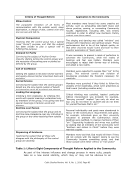
in this article), and to show evidence of Lifton‘s (1961) eight components of ‗thought
reform‘ (see ―Lifton‘s Eight Components of Thought Reform Applied to the Community‖ later
in this article).
The Community was founded by James, who was studying at the local School of Music. He
believed God had called him to bring a revival of his brand of fundamentalist Christianity to
the area. James had a beautiful singing voice, and his charisma drew a good number of
young people to him, all under the age of 25, as he brought his passion for Christianity
together with classical music, singing, and song writing.
James remained the only leader of the Community until Brian joined in 1974. Brian had
been loosely connected and had attended occasionally from the early days but later set
himself up as a ―Prophet,‖ a messenger from God. Brian said he had had a ―word from God‖
regarding a dubious and harmful preacher who was visiting the Community, information
that turned out to be accurate and caused Brian to be seen as a saviour and Community
leader. It was Brian‘s influence, over time, that changed the Community from a ―fringe
church‖ii to a cult.
The Community was committed to growth, and a good deal of energy was put into recruiting
other members (―evangelising‖). The main attraction for others to join was the so-called
radical return to New Testament Christian principles based on St Paul‘s writings. For
example, houses and cars were ―shared in common‖ many handed over all their earnings
and savings into the ―common purse‖ outsiders were told that members were living
together in love and commitment to Christ and biblical principles. The early realisation of
―green‖ issues was discussed, and a number of high-profile, radical Christian speakers came
to the Community, including from the United States of America, and expressed their delight
at the way this radical biblical ―vision‖ was being lived out.
The Community never had a church building as such and all activities, including services,
took place in the Community houses, especially one with a large living room. To ―save the
world,‖ the ideology was to be lived in all aspects of life and by all together as much as
possible.
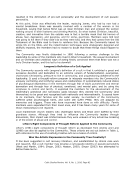
The type of Christianity that was taught within the Community was evangelical, charismatic,
and fundamentalist. The teaching said that man is fundamentally sinful and therefore
alienated from God, and that to restore the relationship with God requires trust in Jesus
Christ. This mainstream evangelical theology included an additional twist, and the
implication was that trust in Jesus Christ for salvation was insufficient or illusory unless it
included total compliance with the Community leadership, who were proclaimed to be
―God‘s chosen and anointed leaders.‖
So, whilst they were teaching trust in Jesus Christ for salvation from the consequences of
sin, the Community leadership actually expected total compliance as a route to salvation.
This expectation was not explicitly stated it was implicit within the teaching and the way
individuals were treated. For example, at one time members had to read 10 chapters of the
Bible a day and were expected to read Christian books, including Puritan writings that
factor in the individual‘s ability to experience ―true self‖ and the spontaneity necessary for
creativity (p. 139).
The cultic group described in this paper exemplifies an environment in which creativity as
defined by Winnicott, Rogers, and Gestalt psychotherapy is grossly impeded.
The Love of God Community
The Community was formed in 1970 and disbanded in 1980. It did not begin as a cult, but
over time grew to fit Langone‘s definition (see ―Langone‘s Definition of a Cult Applied‖ later
in this article), and to show evidence of Lifton‘s (1961) eight components of ‗thought
reform‘ (see ―Lifton‘s Eight Components of Thought Reform Applied to the Community‖ later
in this article).
The Community was founded by James, who was studying at the local School of Music. He
believed God had called him to bring a revival of his brand of fundamentalist Christianity to
the area. James had a beautiful singing voice, and his charisma drew a good number of
young people to him, all under the age of 25, as he brought his passion for Christianity
together with classical music, singing, and song writing.
James remained the only leader of the Community until Brian joined in 1974. Brian had
been loosely connected and had attended occasionally from the early days but later set
himself up as a ―Prophet,‖ a messenger from God. Brian said he had had a ―word from God‖
regarding a dubious and harmful preacher who was visiting the Community, information
that turned out to be accurate and caused Brian to be seen as a saviour and Community
leader. It was Brian‘s influence, over time, that changed the Community from a ―fringe
church‖ii to a cult.
The Community was committed to growth, and a good deal of energy was put into recruiting
other members (―evangelising‖). The main attraction for others to join was the so-called
radical return to New Testament Christian principles based on St Paul‘s writings. For
example, houses and cars were ―shared in common‖ many handed over all their earnings
and savings into the ―common purse‖ outsiders were told that members were living
together in love and commitment to Christ and biblical principles. The early realisation of
―green‖ issues was discussed, and a number of high-profile, radical Christian speakers came
to the Community, including from the United States of America, and expressed their delight
at the way this radical biblical ―vision‖ was being lived out.
The Community never had a church building as such and all activities, including services,
took place in the Community houses, especially one with a large living room. To ―save the
world,‖ the ideology was to be lived in all aspects of life and by all together as much as
possible.
The type of Christianity that was taught within the Community was evangelical, charismatic,
and fundamentalist. The teaching said that man is fundamentally sinful and therefore
alienated from God, and that to restore the relationship with God requires trust in Jesus
Christ. This mainstream evangelical theology included an additional twist, and the
implication was that trust in Jesus Christ for salvation was insufficient or illusory unless it
included total compliance with the Community leadership, who were proclaimed to be
―God‘s chosen and anointed leaders.‖
So, whilst they were teaching trust in Jesus Christ for salvation from the consequences of
sin, the Community leadership actually expected total compliance as a route to salvation.
This expectation was not explicitly stated it was implicit within the teaching and the way
individuals were treated. For example, at one time members had to read 10 chapters of the
Bible a day and were expected to read Christian books, including Puritan writings that