Cultic Studies Review, Vol. 9, No. 1, 2010, Page 76
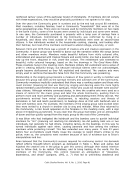
I am grateful to my loving husband with whom I‘ve had a more fulfilling life than I ever
imagined possible. Our relationship has helped us each grow individually, and together we
have formed a genuinely intimate partnership, one in which we can truly be ourselves. In
our marriage, disconfirmation of pathogenic beliefs included the three avenues described
earlier, as the following examples illustrate:
17. Acquisition of insight evolved through a collision and meshing of our cultural
worlds, including personal values family of origin roles and rules my spiritual
beliefs and his atheism, which led to many thought-provoking and spirited
discussions. On issues in which we were highly polarized, we have become more
integrated in our perspectives. For example, my spiritual beliefs aren‘t associated
with an organization my husband now considers himself an agnostic.
18. We were champions of interpersonal testing. In the first decade of our relationship,
especially, we sought to know whether asserting ourselves would lead to
abandonment or rejection. Our strong strivings and determination to resolve
difficult issues related to our love for each other and our commitment to individual
adult development.
19. Regarding exposure to attitudes and atmospheres that counter the pathogenic
beliefs, we had mutual respect and strove to maintain a relationship based on equal
power, with no one dominating the other. We worked on creating a home,
establishing our careers, starting our family, and connecting with our community.
I am also dedicated to helping others as I have been helped by those who appeared at
significant times in my life. One of these is JoAnn, a psychotherapist with whom I worked
while I was on inactive status and after I had terminated my membership. She was a major
reparative influence who supported my autonomy and development helped me trust and
value myself, heal from trauma, understand the origin and nature of my challenges, and
learn the skills (especially those related to critical thinking) essential for reconnecting to
society-at-large. About six years after I had become inactive in Eckankar and had left the
acting studio, JoAnn was the first person to say to me, ―I think Eckankar might be a cult.‖
My initial reaction was shock, disbelief, and laughter. Even though years had passed since I
had become inactive, I hadn‘t yet become educated about high-demand groups or cults,
researched the literature, or made such a connection with Eckankar.
JoAnn‘s intervention led to a major corrective emotional experience in therapy, as she
passed tests related to protecting my self-interests, expressing criticism of Eckankar,
defying and surviving covert and overt rules that such statements would lead to cosmic
punishment, validating my instincts, and acting in a collaborative, not authoritarian way
throughout our work together. When I revealed to JoAnn some aspects of the supposedly
―secret teaching‖ in Eckankar‘s monthly written discourses, I was filled with fear and guilt
that interfered with my ability to express myself. I was also aware of mildly dissociating or
―spacing out.‖ As we explored what was occurring, I realized I was violating one of the
―spiritual laws‖ in revealing this information and in criticizing the ―Living Eck Master.‖ I later
learned I was again challenging deeply-held pathogenic beliefs that basically something
terrible would happen if I exposed Eckankar‘s ideology. Instead, I was to learn more about
the deep and enduring nature of thought reform from my own personal experience, in a
safe environment with someone I trusted. In my opinion, covert and overt rules of Eckankar
paralleled an addictive family system‘s three primary rules for children in such families:
―don‘t talk, don‘t trust, and don‘t feel‖ (Black, 1987, p. 24). It became impossible to freely
function in these basic ways while conforming to the ideology of the leader.
I learned about the beneficial aspects of healthy groups from respected members of the
Northern California Group Psychotherapy Society, who informed me through experiential
I am grateful to my loving husband with whom I‘ve had a more fulfilling life than I ever
imagined possible. Our relationship has helped us each grow individually, and together we
have formed a genuinely intimate partnership, one in which we can truly be ourselves. In
our marriage, disconfirmation of pathogenic beliefs included the three avenues described
earlier, as the following examples illustrate:
17. Acquisition of insight evolved through a collision and meshing of our cultural
worlds, including personal values family of origin roles and rules my spiritual
beliefs and his atheism, which led to many thought-provoking and spirited
discussions. On issues in which we were highly polarized, we have become more
integrated in our perspectives. For example, my spiritual beliefs aren‘t associated
with an organization my husband now considers himself an agnostic.
18. We were champions of interpersonal testing. In the first decade of our relationship,
especially, we sought to know whether asserting ourselves would lead to
abandonment or rejection. Our strong strivings and determination to resolve
difficult issues related to our love for each other and our commitment to individual
adult development.
19. Regarding exposure to attitudes and atmospheres that counter the pathogenic
beliefs, we had mutual respect and strove to maintain a relationship based on equal
power, with no one dominating the other. We worked on creating a home,
establishing our careers, starting our family, and connecting with our community.
I am also dedicated to helping others as I have been helped by those who appeared at
significant times in my life. One of these is JoAnn, a psychotherapist with whom I worked
while I was on inactive status and after I had terminated my membership. She was a major
reparative influence who supported my autonomy and development helped me trust and
value myself, heal from trauma, understand the origin and nature of my challenges, and
learn the skills (especially those related to critical thinking) essential for reconnecting to
society-at-large. About six years after I had become inactive in Eckankar and had left the
acting studio, JoAnn was the first person to say to me, ―I think Eckankar might be a cult.‖
My initial reaction was shock, disbelief, and laughter. Even though years had passed since I
had become inactive, I hadn‘t yet become educated about high-demand groups or cults,
researched the literature, or made such a connection with Eckankar.
JoAnn‘s intervention led to a major corrective emotional experience in therapy, as she
passed tests related to protecting my self-interests, expressing criticism of Eckankar,
defying and surviving covert and overt rules that such statements would lead to cosmic
punishment, validating my instincts, and acting in a collaborative, not authoritarian way
throughout our work together. When I revealed to JoAnn some aspects of the supposedly
―secret teaching‖ in Eckankar‘s monthly written discourses, I was filled with fear and guilt
that interfered with my ability to express myself. I was also aware of mildly dissociating or
―spacing out.‖ As we explored what was occurring, I realized I was violating one of the
―spiritual laws‖ in revealing this information and in criticizing the ―Living Eck Master.‖ I later
learned I was again challenging deeply-held pathogenic beliefs that basically something
terrible would happen if I exposed Eckankar‘s ideology. Instead, I was to learn more about
the deep and enduring nature of thought reform from my own personal experience, in a
safe environment with someone I trusted. In my opinion, covert and overt rules of Eckankar
paralleled an addictive family system‘s three primary rules for children in such families:
―don‘t talk, don‘t trust, and don‘t feel‖ (Black, 1987, p. 24). It became impossible to freely
function in these basic ways while conforming to the ideology of the leader.
I learned about the beneficial aspects of healthy groups from respected members of the
Northern California Group Psychotherapy Society, who informed me through experiential