Cultic Studies Review, Vol. 9, No. 1, 2010, Page 82
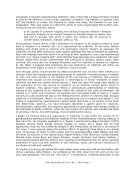
resulted in the diminution of pre-cult personality and the development of cult pseudo-
personality.
At this point, Brian was effectively the leader, replacing James, who had by now had a
mental breakdown. Brian was sexually involved with a number of the women in his
household, saying that James Bond was an ideal Christian man and enjoyed the women
walking around in bikini bottoms and drinking Martinis. So what looked Christian, beautiful,
creative, and innovative from the outside was in fact a terrible mask that hid horrors of
abuse, fear, depression, and paranoia, and for some, psychosis. Members were told God
was going to kill them if they didn‘t do as they were told, and they had curses from the Old
Testament of the Bible read to them to reinforce this. Because the Community based its
whole life on the Bible, and the indoctrination techniques were strategically designed and
skillfully imposed, the members had no reason to doubt that these things would happen to
them.
The Community was finally disbanded in 1980 following a serious challenge to the
leadership by some of the members who lived in Brian‘s household. The sexual involvement
and un-Christian and unbiblical ways of acting finally convinced them that Brian was not a
truly Christian leader, and this led to his downfall.
Langone’s Definition of a Cult Applied
The Community accords with Langone‘s definition of a cult in that it exhibited a great and
excessive devotion and dedication to an extreme version of fundamentalist, evangelical,
charismatic Christianity pressure to live in community and unquestioning obedience to the
leadership. It used a thought-reform program to integrate members into the Community‘s
uniquely controlling and terrifying values and relationships. It systematically induced states
of psychological dependency in the members through fear of God‘s punishment and eternal
damnation and through fear of physical, emotional, and mental pain, and by using the
scriptures to control and terrify. It exploited the members for the advancement of the
leadership‘s grandiose and narcissistic goals because they wanted the Community (and
themselves) to be great and recognised both nationally and internationally. It caused harm
to its members, their families and the wider society. Ex-members of the Community
suffered great psychological harm, and some still suffer PTSD they are plagued by
memories and triggers. Those who have recovered have done so with difficulty. Family
members were separated from their loved ones, and it has taken many years for some of
those relationships to be repaired.
Local mainstream church leaders who challenged James and Brian were baffled by their
grandiose stance. Although they tried to influence the Community leaders through
discussions, their impact was limited because they were unaware of any actual law-breaking
or of the extent of abuse and control.
Lifton’s Eight Components of Thought Reform Applied to the Community
Lifton‘s (1961) eight components of thought reform as developed from Andres and Lane
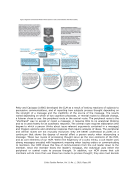
(1988) can also be applied to the Community. These criteria are set out below in Table 1,
with reference to the use of creativity/creative arts as a means of control.
Was the Artistic Expression in the Community True Creativity?
It has been suggested in cult recovery literature, and substantiated by clinical case work
and research, that a cult member may develop a cult pseudo-identity or pseudo-personality
(West and Martin, 1994 Singer, 2003 Hassan, 2000). Singer (2003) has attempted to
define these terms:
resulted in the diminution of pre-cult personality and the development of cult pseudo-
personality.
At this point, Brian was effectively the leader, replacing James, who had by now had a
mental breakdown. Brian was sexually involved with a number of the women in his
household, saying that James Bond was an ideal Christian man and enjoyed the women
walking around in bikini bottoms and drinking Martinis. So what looked Christian, beautiful,
creative, and innovative from the outside was in fact a terrible mask that hid horrors of
abuse, fear, depression, and paranoia, and for some, psychosis. Members were told God
was going to kill them if they didn‘t do as they were told, and they had curses from the Old
Testament of the Bible read to them to reinforce this. Because the Community based its
whole life on the Bible, and the indoctrination techniques were strategically designed and
skillfully imposed, the members had no reason to doubt that these things would happen to
them.
The Community was finally disbanded in 1980 following a serious challenge to the
leadership by some of the members who lived in Brian‘s household. The sexual involvement
and un-Christian and unbiblical ways of acting finally convinced them that Brian was not a
truly Christian leader, and this led to his downfall.
Langone’s Definition of a Cult Applied
The Community accords with Langone‘s definition of a cult in that it exhibited a great and
excessive devotion and dedication to an extreme version of fundamentalist, evangelical,
charismatic Christianity pressure to live in community and unquestioning obedience to the
leadership. It used a thought-reform program to integrate members into the Community‘s
uniquely controlling and terrifying values and relationships. It systematically induced states
of psychological dependency in the members through fear of God‘s punishment and eternal
damnation and through fear of physical, emotional, and mental pain, and by using the
scriptures to control and terrify. It exploited the members for the advancement of the
leadership‘s grandiose and narcissistic goals because they wanted the Community (and
themselves) to be great and recognised both nationally and internationally. It caused harm
to its members, their families and the wider society. Ex-members of the Community
suffered great psychological harm, and some still suffer PTSD they are plagued by
memories and triggers. Those who have recovered have done so with difficulty. Family
members were separated from their loved ones, and it has taken many years for some of
those relationships to be repaired.
Local mainstream church leaders who challenged James and Brian were baffled by their
grandiose stance. Although they tried to influence the Community leaders through
discussions, their impact was limited because they were unaware of any actual law-breaking
or of the extent of abuse and control.
Lifton’s Eight Components of Thought Reform Applied to the Community
Lifton‘s (1961) eight components of thought reform as developed from Andres and Lane
(1988) can also be applied to the Community. These criteria are set out below in Table 1,
with reference to the use of creativity/creative arts as a means of control.
Was the Artistic Expression in the Community True Creativity?
It has been suggested in cult recovery literature, and substantiated by clinical case work
and research, that a cult member may develop a cult pseudo-identity or pseudo-personality
(West and Martin, 1994 Singer, 2003 Hassan, 2000). Singer (2003) has attempted to
define these terms: