Cultic Studies Review, Vol. 9, No. 1, 2010, Page 74
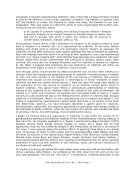
She opens her eyes and looks at him. His face is sallow with hatred, and black
rings have sunk in deep under his eyes. ―Don‘t look at me, for Christ‘s sake,‖
he mutters in a thick voice, laying his right hand over her face. Then he says
some words in a foreign language. It sounds frightening. His mouth opens
and the lips are drawn aside, baring the teeth his body contracts violently
and out of his throat comes a sound which is either a sob or a smothered
scream of pain. Then they lie silent and remote, their clothes and the
bedclothes in a heap, their bodies heavy with disgust and loneliness. The
morning light is harsh and gray outside the big window with its torn curtains.
(p.22)
Karin doesn‘t enter willingly into this brutal, repugnant sexual experience with David
anymore than normal people intend to join a cult. I‘ve found that misunderstandings exist in
conceptualizing sexual rape, which reminds me of what is referred to as ―spiritual rape‖ in
cults. As described in their book, Take Back Your Life (Lalich and Tobias, 2006), significant
power imbalances exist (often unknown to the victims) in abusive relationships wherein the
dominant partner controls, manipulates, and exploits the subordinate one.
Karin‘s traumatic incident, preceded by the death of her mother, leaves her in a wounded
state that, according to Jungian interpretation, sets her on a course of adult individuation.
Through the tension of opposite forces, she is touched by David‘s ―nocturnal terrors,‖
foreign to her sunny garden. Karin is manipulated by David as I, an impressionable 19-year-
old, was manipulated by a high-demand group. We were each ―touched‖ by chaotic forces in
which we temporarily lost ourselves, until finally we found our way.
Loss or a fear of loss increases one‘s vulnerability to cult recruitment (Goldberg, 1988, P.
242). Langone lists other possible factors:
dependency (the desire to belong lack of self-confidence)
unassertiveness (inability to say no or express criticism or doubt)
gullibility (impaired capacity to question critically what one is told, observes, thinks,
etc.)
low tolerance for ambiguity (need for absolute answers, impatience to obtain
answers)
cultural disillusionment (alienation, dissatisfaction with status quo)
naive idealism
desire for spiritual meaning and
ignorance of the ways in which groups can manipulate individuals. (Langone,
Questions and Answers, Retrieved July 28, 2007. International Cultic Studies
Association (ICSA) Website:
http://www.culticstudies.org/studyindex/studycult/cultqa.htm ).
It appears that Karin and I (in young adulthood) shared some of these characteristics.
Karin becomes entrenched in an abusive relationship with David, sacrificing and betraying
herself to please him, in a process similar to that of an abusive relationship with the cult
leader. She‘s smoking cigarettes and drinking excessively, trying to numb her painful
feelings. She rationalizes, denies, and blames herself for David‘s abusive behavior. She‘s
leading a split life, alienated from previous values, lying to her husband, lying to herself,
feeling guilty and ashamed. She doesn‘t recognize herself, and neither do her husband and
children.
Karin meets with David and responds to his accusation that she‘s been drinking a lot:
She opens her eyes and looks at him. His face is sallow with hatred, and black
rings have sunk in deep under his eyes. ―Don‘t look at me, for Christ‘s sake,‖
he mutters in a thick voice, laying his right hand over her face. Then he says
some words in a foreign language. It sounds frightening. His mouth opens
and the lips are drawn aside, baring the teeth his body contracts violently
and out of his throat comes a sound which is either a sob or a smothered
scream of pain. Then they lie silent and remote, their clothes and the
bedclothes in a heap, their bodies heavy with disgust and loneliness. The
morning light is harsh and gray outside the big window with its torn curtains.
(p.22)
Karin doesn‘t enter willingly into this brutal, repugnant sexual experience with David
anymore than normal people intend to join a cult. I‘ve found that misunderstandings exist in
conceptualizing sexual rape, which reminds me of what is referred to as ―spiritual rape‖ in
cults. As described in their book, Take Back Your Life (Lalich and Tobias, 2006), significant
power imbalances exist (often unknown to the victims) in abusive relationships wherein the
dominant partner controls, manipulates, and exploits the subordinate one.
Karin‘s traumatic incident, preceded by the death of her mother, leaves her in a wounded
state that, according to Jungian interpretation, sets her on a course of adult individuation.
Through the tension of opposite forces, she is touched by David‘s ―nocturnal terrors,‖
foreign to her sunny garden. Karin is manipulated by David as I, an impressionable 19-year-
old, was manipulated by a high-demand group. We were each ―touched‖ by chaotic forces in
which we temporarily lost ourselves, until finally we found our way.
Loss or a fear of loss increases one‘s vulnerability to cult recruitment (Goldberg, 1988, P.
242). Langone lists other possible factors:
dependency (the desire to belong lack of self-confidence)
unassertiveness (inability to say no or express criticism or doubt)
gullibility (impaired capacity to question critically what one is told, observes, thinks,
etc.)
low tolerance for ambiguity (need for absolute answers, impatience to obtain
answers)
cultural disillusionment (alienation, dissatisfaction with status quo)
naive idealism
desire for spiritual meaning and
ignorance of the ways in which groups can manipulate individuals. (Langone,
Questions and Answers, Retrieved July 28, 2007. International Cultic Studies
Association (ICSA) Website:
http://www.culticstudies.org/studyindex/studycult/cultqa.htm ).
It appears that Karin and I (in young adulthood) shared some of these characteristics.
Karin becomes entrenched in an abusive relationship with David, sacrificing and betraying
herself to please him, in a process similar to that of an abusive relationship with the cult
leader. She‘s smoking cigarettes and drinking excessively, trying to numb her painful
feelings. She rationalizes, denies, and blames herself for David‘s abusive behavior. She‘s
leading a split life, alienated from previous values, lying to her husband, lying to herself,
feeling guilty and ashamed. She doesn‘t recognize herself, and neither do her husband and
children.
Karin meets with David and responds to his accusation that she‘s been drinking a lot: