Cultic Studies Review, Vol. 9, No. 1, 2010, Page 144
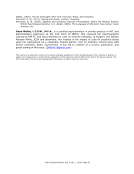
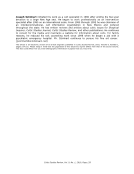
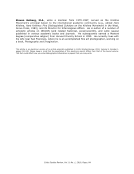
Steven Gelberg, M.A., while a member from 1970-1987, served as the Krishna
Movement's principal liaison to the international academic community (e.g., edited Hare
Krishna, Hare Krishna: Five Distinguished Scholars on the Krishna Movement in the West,
Grove Press, 1983), and its Director for Interreligious Affairs. He is author of a number of
scholarly articles on ISKCON (and related historical, social-scientific, and cultic issues)
published in various academic books and journals. He subsequently earned a Masters
degree (comparative religion) from Harvard Divinity School in 1990. He currently lives with
his wife near San Francisco, where he is an accomplished fine art photographer, working on
a book, Photography and Imagination.
This article is an electronic version of an article originally published in Cultic Studies Review, 2010, Volume 9, Number 1,
pages 232-249. Please keep in mind that the pagination of this electronic reprint differs from that of the bound volume.
This fact could affect how you enter bibliographic information in papers that you may write.
Steven Gelberg, M.A., while a member from 1970-1987, served as the Krishna
Movement's principal liaison to the international academic community (e.g., edited Hare
Krishna, Hare Krishna: Five Distinguished Scholars on the Krishna Movement in the West,
Grove Press, 1983), and its Director for Interreligious Affairs. He is author of a number of
scholarly articles on ISKCON (and related historical, social-scientific, and cultic issues)
published in various academic books and journals. He subsequently earned a Masters
degree (comparative religion) from Harvard Divinity School in 1990. He currently lives with
his wife near San Francisco, where he is an accomplished fine art photographer, working on
a book, Photography and Imagination.
This article is an electronic version of an article originally published in Cultic Studies Review, 2010, Volume 9, Number 1,
pages 232-249. Please keep in mind that the pagination of this electronic reprint differs from that of the bound volume.
This fact could affect how you enter bibliographic information in papers that you may write.