Cultic Studies Review, Vol. 9, No. 1, 2010, Page 55
handle the pressure… I remember he said once, about the ones that had left,
that they will end up like musical failures.
Besides associations with Lifton‘s concept of ―dispensing of existence,‖ which refers to
―thriving and survival as possible only within the cult,‖ the teacher‘s words ―you need a
system… my system ...musical communion‖ are useful to explore in terms of ―loaded
language.‖ It is particularly salient to view loaded language within the context of post-
modernism‘s interest in language as a means of control. Foucault (1980), for instance,
teaches us
that power is transferred through language and dialogue … knowledge does
not necessarily have to be true, but it only needs to be passed on as true for
the statement to have an effect on the speakers in the discourse.
Within this post-modern understanding of language, I suggest that loaded language clearly
illustrates control of communication via total projective identification. This interchange
between Alex and Perlado highlights the importance of exit counseling and post-cult
treatment as venues for one to reflect upon the persistence of deeply internalized loaded
language even after leaving the cult.
The former members describe the language in the music cult as very restrictive, and quote
the teacher as saying, ―My system goes beyond the military. We need to protect ourselves
because they will attack us!‖ Leaders lure cult members with rewards and promise of
rewards, and over time change the hidden rules and discourse, at which point dependency
on the cult leader, fear of leaving and loss, and a strong alignment with the leader‘s system
of transcendent belief often prevent members from leaving. This process reflects the
discussion above that links the bait-and-switch operation to a switch from trial to total
projective identification between leader and members, and even among members.
Symbol is intrinsic to communication and therefore language, and, as noted above,
according to Freud (1920), Klein (1930), Bion (1950), Segal, (1952, 1957), Deri (1984),
Winnicott (1968), Lacan (2002) and others, this capacity arises out of the recognition of
absence/loss.
Because it is necessary to represent that which is missing, symbols unconsciously emerge to
create a mental image, which bridges split-off, dissociated experiences. Cult leaders
notoriously coerce members to cut ties from the past, and to deny loss. In this way the cult
member is lured toward unconscious splitting, which yields black-and-white thinking and
obstructs symbolic language, resulting in a sense of deadness. Lalich notes that within the
bounded-choice theory, fully aligning with the leader‘s transcendent belief system includes a
―total explanation of past, present, and future, including a path to salvation‖ (2004, p 227).
Cults use loaded language to achieve conformity, which results in desubjectivization—i.e.,
loss of striving to create subjective meaning through the use of self-generated symbolic
expression. I suggest that free use of language and emergence of subjective voice are thus
signals of recovery from internalized loaded language.
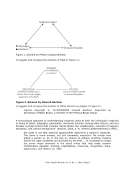
The four criteria of creativity—mourning of loss, allowance of opposition, tolerance of
lack/unfilling of gap, and tolerance of uncertainty—are present in open environments,
characterized by trial projective identification in which the leader considers him/herself as
part of the field of play they are absent in cultic settings such as the music cult,
characterized by total projective identification wherein the leader sees him/herself as
outside of the field. Racker‘s (1968) cogent statement reflects the stance necessary for the
therapist to work within the mode of trial projective identification.
The first distortion of truth in the ‗myth of the analytic situation‘ is that
analysis is an interaction between a sick person and a healthy one. The truth
is that it is an interaction between two personalities … each personality has its
handle the pressure… I remember he said once, about the ones that had left,
that they will end up like musical failures.
Besides associations with Lifton‘s concept of ―dispensing of existence,‖ which refers to
―thriving and survival as possible only within the cult,‖ the teacher‘s words ―you need a
system… my system ...musical communion‖ are useful to explore in terms of ―loaded
language.‖ It is particularly salient to view loaded language within the context of post-
modernism‘s interest in language as a means of control. Foucault (1980), for instance,
teaches us
that power is transferred through language and dialogue … knowledge does
not necessarily have to be true, but it only needs to be passed on as true for
the statement to have an effect on the speakers in the discourse.
Within this post-modern understanding of language, I suggest that loaded language clearly
illustrates control of communication via total projective identification. This interchange
between Alex and Perlado highlights the importance of exit counseling and post-cult
treatment as venues for one to reflect upon the persistence of deeply internalized loaded
language even after leaving the cult.
The former members describe the language in the music cult as very restrictive, and quote
the teacher as saying, ―My system goes beyond the military. We need to protect ourselves
because they will attack us!‖ Leaders lure cult members with rewards and promise of
rewards, and over time change the hidden rules and discourse, at which point dependency
on the cult leader, fear of leaving and loss, and a strong alignment with the leader‘s system
of transcendent belief often prevent members from leaving. This process reflects the
discussion above that links the bait-and-switch operation to a switch from trial to total
projective identification between leader and members, and even among members.
Symbol is intrinsic to communication and therefore language, and, as noted above,
according to Freud (1920), Klein (1930), Bion (1950), Segal, (1952, 1957), Deri (1984),
Winnicott (1968), Lacan (2002) and others, this capacity arises out of the recognition of
absence/loss.
Because it is necessary to represent that which is missing, symbols unconsciously emerge to
create a mental image, which bridges split-off, dissociated experiences. Cult leaders
notoriously coerce members to cut ties from the past, and to deny loss. In this way the cult
member is lured toward unconscious splitting, which yields black-and-white thinking and
obstructs symbolic language, resulting in a sense of deadness. Lalich notes that within the
bounded-choice theory, fully aligning with the leader‘s transcendent belief system includes a
―total explanation of past, present, and future, including a path to salvation‖ (2004, p 227).
Cults use loaded language to achieve conformity, which results in desubjectivization—i.e.,
loss of striving to create subjective meaning through the use of self-generated symbolic
expression. I suggest that free use of language and emergence of subjective voice are thus
signals of recovery from internalized loaded language.
The four criteria of creativity—mourning of loss, allowance of opposition, tolerance of
lack/unfilling of gap, and tolerance of uncertainty—are present in open environments,
characterized by trial projective identification in which the leader considers him/herself as
part of the field of play they are absent in cultic settings such as the music cult,
characterized by total projective identification wherein the leader sees him/herself as
outside of the field. Racker‘s (1968) cogent statement reflects the stance necessary for the
therapist to work within the mode of trial projective identification.
The first distortion of truth in the ‗myth of the analytic situation‘ is that
analysis is an interaction between a sick person and a healthy one. The truth
is that it is an interaction between two personalities … each personality has its