Cultic Studies Review, Vol. 9, No. 1, 2010, Page 8
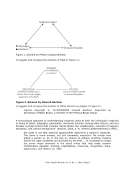
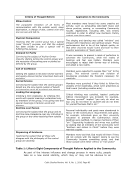
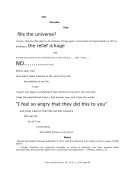
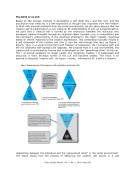
Figure 1. Schema by Mihaly Csikszentmihalyi
(I suggest Cult occupies the position of Field in Figure 1.)
Figure 2. Schema by Howard Gardner
(I suggest Cult occupies the position of Other Persons as judges in Figure 2.)
Figures Copyright © 757400400000 Howard Gardner. Reprinted by
permission of Basic Books, a member of the Perseus Books Group.
A sociocultural approach to understanding creativity looks at both the individual‘s creativity
in terms of talent, biography, personality, and brain function, among other factors, and at a
broader societal context that includes ―social factors like collaboration, networks of support,
education, and cultural background‖ (Sawyer, 2006, p. 4). Writes Csikszentimihalyi (1996),
the point is not that external opportunities determine a person‘s creativity.
The claim is more modest, but still extremely important: No matter how
gifted a person is, he or she has no chance to achieve anything creative
unless the right conditions are provided by the field. … It is possible to single
out seven major elements in the social milieu that help make creative
contributions possible: training, expectations, resources, recognition, hope,
opportunity, and reward. (p. 330)
Figure 1. Schema by Mihaly Csikszentmihalyi
(I suggest Cult occupies the position of Field in Figure 1.)
Figure 2. Schema by Howard Gardner
(I suggest Cult occupies the position of Other Persons as judges in Figure 2.)
Figures Copyright © 757400400000 Howard Gardner. Reprinted by
permission of Basic Books, a member of the Perseus Books Group.
A sociocultural approach to understanding creativity looks at both the individual‘s creativity
in terms of talent, biography, personality, and brain function, among other factors, and at a
broader societal context that includes ―social factors like collaboration, networks of support,
education, and cultural background‖ (Sawyer, 2006, p. 4). Writes Csikszentimihalyi (1996),
the point is not that external opportunities determine a person‘s creativity.
The claim is more modest, but still extremely important: No matter how
gifted a person is, he or she has no chance to achieve anything creative
unless the right conditions are provided by the field. … It is possible to single
out seven major elements in the social milieu that help make creative
contributions possible: training, expectations, resources, recognition, hope,
opportunity, and reward. (p. 330)