Cultic Studies Review, Vol. 9, No. 1, 2010, Page 84
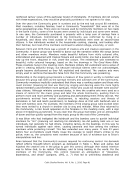
outsider. When groups refer to this new identity they speak of members who
are transformed, reborn, enlightened, empowered, re-birthed, or cleared [my
addition: saved, surrendered]. The group-approved behaviour is reinforced
and reinterpreted as demonstrating the emergence of ―the new person.‖
Members are expected to display this new social identity. (ibid., p. 77)
It is the cult environment that produces and keeps in place the cult identity.
(ibid., p. 79)
This self or identity often falls away quite quickly when the individual leaves
the group. (ibid., p. 78)
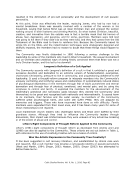
It has been suggested that the cult pseudo-personality is a dissociated personality
(Langone, 1993 Hassan, 2000) but I have argued elsewhere (Jenkinson, 2008) that
instead it is an introjected personality that overlays the pre-cult personality, unintegrated
and undigested. A number of ex-members have described the cult pseudo-personality as
overlaying their pre-cult personality, and I quote one: ―I feel as if my real self was like a
little dot, like a seed that was buried in deep soil and then a layer of tarmac (asphalt) laid
over me.‖ [ex-member quotation]
In Gestalt theory (Perls et al., 1951, p. 189) introjection may be thought of as
―....material—a way of acting, feeling, evaluating—which you have taken into your system
of behaviour but which you have not assimilated in such fashion as to make it a genuine
part of your organism—your self.‖ Further,
Physical food, properly digested and assimilated, becomes part of the
organism but food which ―rests heavy on the stomach‖ is an introject. You
are aware of it and want to throw it up. If you do so you get it ―out of the
system.‖ Suppose, instead, you suppress your discomfort, nausea and
tendency to spew it forth. Then you ―keep it down‖ and either succeed,
finally, in painfully digesting it or else it poisons you.
I suggest that with the cult pseudo-personality the individual is unaware of the poison and
discomfort that is suppressed within the pre-cult personality (Jenkinson, 2008).
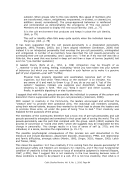
With respect to creativity in the Community, the leaders encouraged and enforced the
―creative arts‖ to promote their grandiose aims. The individual cult members complied,
using their natural talents, because they wanted to do their best to please the leaders and
to promote those aims, all under the guise of being ―true to God.‖ Their creativity was
hijacked for the purposes of the group.
The members of the Community therefore had a toxic mix of pre-cult personality and cult
pseudo-personality entangled and enmeshed in their great task of saving the world. The cult
pseudo-personality was the part that complied with the group. Lalich (2004) explains the
process of conversion or ―world view shift,‖ which she suggests may be responsible for this
change in personality. This change results in a loss of sense of self (p. 270) and the
individual, in a sense, becomes the organisation (p. 15–17).
The possible psychological consequences of this process are well documented in the
literature and include depression, adjustment disorder, dissociation, PTSD, and relationship
and family difficulties, amongst others (Martin, 1993 Singer, 2003 Hassan, 2000 Lalich
and Tobias, 2006).
This raises the question: Is it true creativity if it is coming from the pseudo-personality? If
psychological safety and freedom are necessary for creativity, and if the most fundamental
condition of creativity is that the source or locus of evaluative judgment is internal (Rogers,
1967, p.355), then I suggest this is not creativity in the true meaning because none of
these conditions is likely to be present in a cult. If it is not true creativity, then what is it
outsider. When groups refer to this new identity they speak of members who
are transformed, reborn, enlightened, empowered, re-birthed, or cleared [my
addition: saved, surrendered]. The group-approved behaviour is reinforced
and reinterpreted as demonstrating the emergence of ―the new person.‖
Members are expected to display this new social identity. (ibid., p. 77)
It is the cult environment that produces and keeps in place the cult identity.
(ibid., p. 79)
This self or identity often falls away quite quickly when the individual leaves
the group. (ibid., p. 78)
It has been suggested that the cult pseudo-personality is a dissociated personality
(Langone, 1993 Hassan, 2000) but I have argued elsewhere (Jenkinson, 2008) that
instead it is an introjected personality that overlays the pre-cult personality, unintegrated
and undigested. A number of ex-members have described the cult pseudo-personality as
overlaying their pre-cult personality, and I quote one: ―I feel as if my real self was like a
little dot, like a seed that was buried in deep soil and then a layer of tarmac (asphalt) laid
over me.‖ [ex-member quotation]
In Gestalt theory (Perls et al., 1951, p. 189) introjection may be thought of as
―....material—a way of acting, feeling, evaluating—which you have taken into your system
of behaviour but which you have not assimilated in such fashion as to make it a genuine
part of your organism—your self.‖ Further,
Physical food, properly digested and assimilated, becomes part of the
organism but food which ―rests heavy on the stomach‖ is an introject. You
are aware of it and want to throw it up. If you do so you get it ―out of the
system.‖ Suppose, instead, you suppress your discomfort, nausea and
tendency to spew it forth. Then you ―keep it down‖ and either succeed,
finally, in painfully digesting it or else it poisons you.
I suggest that with the cult pseudo-personality the individual is unaware of the poison and
discomfort that is suppressed within the pre-cult personality (Jenkinson, 2008).
With respect to creativity in the Community, the leaders encouraged and enforced the
―creative arts‖ to promote their grandiose aims. The individual cult members complied,
using their natural talents, because they wanted to do their best to please the leaders and
to promote those aims, all under the guise of being ―true to God.‖ Their creativity was
hijacked for the purposes of the group.
The members of the Community therefore had a toxic mix of pre-cult personality and cult
pseudo-personality entangled and enmeshed in their great task of saving the world. The cult
pseudo-personality was the part that complied with the group. Lalich (2004) explains the
process of conversion or ―world view shift,‖ which she suggests may be responsible for this
change in personality. This change results in a loss of sense of self (p. 270) and the
individual, in a sense, becomes the organisation (p. 15–17).
The possible psychological consequences of this process are well documented in the
literature and include depression, adjustment disorder, dissociation, PTSD, and relationship
and family difficulties, amongst others (Martin, 1993 Singer, 2003 Hassan, 2000 Lalich
and Tobias, 2006).
This raises the question: Is it true creativity if it is coming from the pseudo-personality? If
psychological safety and freedom are necessary for creativity, and if the most fundamental
condition of creativity is that the source or locus of evaluative judgment is internal (Rogers,
1967, p.355), then I suggest this is not creativity in the true meaning because none of
these conditions is likely to be present in a cult. If it is not true creativity, then what is it