Cultic Studies Review, Vol. 9, No. 1, 2010, Page 15
Melinda Haas, a Jungian analyst, addresses how contemporary Western culture limits
creativity and increases vulnerability to the appeal of cults. She identifies a one-sidedness in
Western culture in which the rational and logical are privileged. People today yearn for both
spiritual expansiveness and its contrast of containment, and they often turn to groups they
later discover to be cults. Haas suggests that it may be the creative person who is more
deprived of finding what she needs in the culture and is thus more inclined to seek answers
that might lead to cults. She notes that these and other individual ―cult seekers‖ are
themselves caught in this one-sidedness and asks how to move the culture and society to
more wholeness. Haas presents two examples of composers (Ludwig van Beethoven and
Olivier Messiaen) for whom confinement did not restrict their previously established
connection to the Jungian concept of ―psyche,‖ and who were therefore still able to
compose. Distinguishing between Jung‘s concepts of ―ego‖ vs. ―psyche,‖ Haas writes,
Gustav Mahler once wrote, ―The symphony is the world. It must contain
everything within it‖ (Greenberg, 2001). He is telling us about psyche. Our
definition reminds us that psyche contains everything, including ego. Surely
one cannot produce a ―creation‖ without using ego functions. Where would
the artist be without technique without tools, instruments, rules, rights and
wrongs without relying on what he or she knows? But if the creator stops
there, the result will be a commodity, an ego product that has not been
allowed to make the intuitive leap into the unknown.
Thus, for both Beethoven and Messiaen, intimate relationship with their own self-identities
provided a degree of protection from the destructive impact of their confining or controlling
conditions and even propelled greater creativity.
Miriam Boeri, a sociologist, and Karen Pressley, a graduate student in professional writing,
and both former cult members, use concepts from the fields of sociology and
communication to examine the ways that cults suppress the natural human inclination to
make meaning—i.e., to create. They give examples from their own experience of harsh
punishment from leadership directly related to creative endeavors. Pressley was demoted by
the leader, Miscavige, from prominent art-related positions within Scientology, while Boeri‘s
writing of a children‘s book while a member of Children of God became the theme of one of
David Berg‘s very critical ―Mo letters.‖ Their theoretical view begins with the symbolic
interactionist perspective that a sense of self develops in a social context. This context is
shaped by power dynamics that offer more or less freedom of thought, with cults considered
total institutions and located at the more controlling end of the continuum. The power
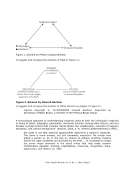
hierarchies of cults deprive members of sovereignty over their creative selves, as described
in the authors‘ Hegemonic Communication Model and illustrated by two figures in their
article. Both Boeri in The Children of God and Pressley in Scientology were initially
controlled by these hierarchies, but over time managed the creative solution of developing
what the authors call a ―secret creative self‖ that eventually enabled their departures. For
each, the process of recovery was based on reclaiming self-sovereignty and, further, led to
increased resilience in the face of power demands and increased confidence in her
creativity.
Joseph Szimhart, an exit counselor, painter, and former cult member, presents his view of
the aesthetic impulse as an effort to make meaning and to make special, and thus as
intrinsically related to the spiritual. He shares the view of Ellen Dissanayake that the
aesthetic impulse is an evolutionary given, part of an impulse to survive. Developing his
own art work, Szimhart followed a number of artists, particularly Nicholas Roerich, in
pursuing the teachings of Theosophy, including Blavatsky, a connection that led him to
Elizabeth Prophet and Church Universal and Triumphant. He examines his own intense
personality change through the process of embracing a path, recognizing its restrictions,
and finding a way out, illustrated by colorful examples. While in these groups, he was told
Melinda Haas, a Jungian analyst, addresses how contemporary Western culture limits
creativity and increases vulnerability to the appeal of cults. She identifies a one-sidedness in
Western culture in which the rational and logical are privileged. People today yearn for both
spiritual expansiveness and its contrast of containment, and they often turn to groups they
later discover to be cults. Haas suggests that it may be the creative person who is more
deprived of finding what she needs in the culture and is thus more inclined to seek answers
that might lead to cults. She notes that these and other individual ―cult seekers‖ are
themselves caught in this one-sidedness and asks how to move the culture and society to
more wholeness. Haas presents two examples of composers (Ludwig van Beethoven and
Olivier Messiaen) for whom confinement did not restrict their previously established
connection to the Jungian concept of ―psyche,‖ and who were therefore still able to
compose. Distinguishing between Jung‘s concepts of ―ego‖ vs. ―psyche,‖ Haas writes,
Gustav Mahler once wrote, ―The symphony is the world. It must contain
everything within it‖ (Greenberg, 2001). He is telling us about psyche. Our
definition reminds us that psyche contains everything, including ego. Surely
one cannot produce a ―creation‖ without using ego functions. Where would
the artist be without technique without tools, instruments, rules, rights and
wrongs without relying on what he or she knows? But if the creator stops
there, the result will be a commodity, an ego product that has not been
allowed to make the intuitive leap into the unknown.
Thus, for both Beethoven and Messiaen, intimate relationship with their own self-identities
provided a degree of protection from the destructive impact of their confining or controlling
conditions and even propelled greater creativity.
Miriam Boeri, a sociologist, and Karen Pressley, a graduate student in professional writing,
and both former cult members, use concepts from the fields of sociology and
communication to examine the ways that cults suppress the natural human inclination to
make meaning—i.e., to create. They give examples from their own experience of harsh
punishment from leadership directly related to creative endeavors. Pressley was demoted by
the leader, Miscavige, from prominent art-related positions within Scientology, while Boeri‘s
writing of a children‘s book while a member of Children of God became the theme of one of
David Berg‘s very critical ―Mo letters.‖ Their theoretical view begins with the symbolic
interactionist perspective that a sense of self develops in a social context. This context is
shaped by power dynamics that offer more or less freedom of thought, with cults considered
total institutions and located at the more controlling end of the continuum. The power
hierarchies of cults deprive members of sovereignty over their creative selves, as described
in the authors‘ Hegemonic Communication Model and illustrated by two figures in their
article. Both Boeri in The Children of God and Pressley in Scientology were initially
controlled by these hierarchies, but over time managed the creative solution of developing
what the authors call a ―secret creative self‖ that eventually enabled their departures. For
each, the process of recovery was based on reclaiming self-sovereignty and, further, led to
increased resilience in the face of power demands and increased confidence in her
creativity.
Joseph Szimhart, an exit counselor, painter, and former cult member, presents his view of
the aesthetic impulse as an effort to make meaning and to make special, and thus as
intrinsically related to the spiritual. He shares the view of Ellen Dissanayake that the
aesthetic impulse is an evolutionary given, part of an impulse to survive. Developing his
own art work, Szimhart followed a number of artists, particularly Nicholas Roerich, in
pursuing the teachings of Theosophy, including Blavatsky, a connection that led him to
Elizabeth Prophet and Church Universal and Triumphant. He examines his own intense
personality change through the process of embracing a path, recognizing its restrictions,
and finding a way out, illustrated by colorful examples. While in these groups, he was told