Cultic Studies Review, Vol. 9, No. 1, 2010, Page 128
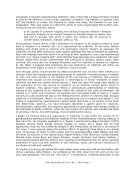
energy. These insipid harp instrumentals, precursors to modern ambient music, irritated my
wife. Within a week after the conference I cut my hair short (for the first time in ten years)
and shaved my beard. I felt guilty about having sex for fun. I felt that entities attached to
me when I got angry. We argued more and more over what she saw as petty and I saw as
sacred. We interacted less to avoid disputes. I wore the required white shirt on Sundays and
a purple one on Saturdays. Other days had special colors too. I was caught up in a
metaphysical demand for purity.
Then there was my art. At the time, I continued to sell the odd painting through a gallery
but I made most of my living sketching portraits of tourists in public. I used black charcoal
and a wide range of pastel colors on gray paper. I painted landscapes that required muddy
colors as well as reds and sometimes black. Though for one year I tried mightily to conform
to CUT‘s aesthetic requirements, I never completely resolved my palette with only the
sacred colors. When I asked CUT staff for advice, they would only suggest I use ―pure‖
colors or I could ―transmute‖ the bad color energy with decrees. So, there was an out and
(as I found out years later from eyewitnesses) the leader used this ―out‖ to justify a double
standard: If you cannot avoid it, transmute it! Elizabeth Prophet was having prime cuts of
meat, expensive wines and ice creams. She had extramarital sex. She encouraged one of
her teenage daughters who had an affair with a black fellow to get an abortion. CUT was
adamantly pro-life. Enlightenment apparently meant entitlement in CUT, but I was yet a
naïve devotee in 1979. I was not enlightened. I struggled to live according to an utterly
complex, impossible to prove system. I struggled daily with guilt and shame while
suppressing anger and doubt. How could anyone ever be pure enough to make this work? I
could not especially as an artist. I continued to make pastel portraits that required many of
the forbidden colors because I had to make a living.
Once I finally admitted that this path was not for me, the way out was not so easy. I
needed some proof that I could leave. The admonition for the CUT initiate after all was a
harsh one: If you reject this opportunity to ascend now, it might be another ―ten thousand
lifetimes‖ until another one comes along. Rationally I knew that the group‘s teachings did
not add up. I knew the arguments against CUT‘s odd interpretations of Buddhist, Christian,
and Hindu religion. None of the Ascended Master or Great White Lodge cults squared with
one another on essential points and none agreed that Mother Prophet was the true
Messenger. Two leaders of rival sects, Torkom Saraydarian of the Aquarian Educational
Group and Sina Fosdick of the Agni Yoga Society, told me in person that Prophet was a
fake. I knew that Roerich, the artist, used red and black pigments liberally. He dressed in
black Tibetan robes. But I needed something more to convince me. I needed an aesthetic
and, possibly, a spiritual experience because my conversion started through an aesthetic
experience that led to the spiritual one at the conference.
Among a host of events that added up to my defection from CUT and ultimate rejection of
nearly all of organized occultism, I will mention two that changed my palette back to
―normal.‖ Please keep in mind that an aesthetic judgment is not necessarily a rational one.
Why we prefer one color to another may be as mysterious and mystical as why we prefer
one god to another. It may be as mysterious as why an art collector might pay three million
dollars for a ceramic urinal displayed once by Marcel Duchamp. The authors of Snapping
interviewed many ex-members that described moments of ecstasy and flooding of the mind
(brain) with thoughts that reorganized impressions of the cult instantly. Cults labeled these
―aha‖ moments with loaded language: Satori, insight, grace, breakthrough, holy instant,
God‘s will, etc. The reverse of this conversion process sometimes demands a series of aha
moments as well.
My daughter at three years old was riding with me in my green Fiat sedan just one month
after I ended my relationship with CUT. It was early autumn. The car had a black
dashboard. For some reason I was concentrating on the negative charge of black yet
energy. These insipid harp instrumentals, precursors to modern ambient music, irritated my
wife. Within a week after the conference I cut my hair short (for the first time in ten years)
and shaved my beard. I felt guilty about having sex for fun. I felt that entities attached to
me when I got angry. We argued more and more over what she saw as petty and I saw as
sacred. We interacted less to avoid disputes. I wore the required white shirt on Sundays and
a purple one on Saturdays. Other days had special colors too. I was caught up in a
metaphysical demand for purity.
Then there was my art. At the time, I continued to sell the odd painting through a gallery
but I made most of my living sketching portraits of tourists in public. I used black charcoal
and a wide range of pastel colors on gray paper. I painted landscapes that required muddy
colors as well as reds and sometimes black. Though for one year I tried mightily to conform
to CUT‘s aesthetic requirements, I never completely resolved my palette with only the
sacred colors. When I asked CUT staff for advice, they would only suggest I use ―pure‖
colors or I could ―transmute‖ the bad color energy with decrees. So, there was an out and
(as I found out years later from eyewitnesses) the leader used this ―out‖ to justify a double
standard: If you cannot avoid it, transmute it! Elizabeth Prophet was having prime cuts of
meat, expensive wines and ice creams. She had extramarital sex. She encouraged one of
her teenage daughters who had an affair with a black fellow to get an abortion. CUT was
adamantly pro-life. Enlightenment apparently meant entitlement in CUT, but I was yet a
naïve devotee in 1979. I was not enlightened. I struggled to live according to an utterly
complex, impossible to prove system. I struggled daily with guilt and shame while
suppressing anger and doubt. How could anyone ever be pure enough to make this work? I
could not especially as an artist. I continued to make pastel portraits that required many of
the forbidden colors because I had to make a living.
Once I finally admitted that this path was not for me, the way out was not so easy. I
needed some proof that I could leave. The admonition for the CUT initiate after all was a
harsh one: If you reject this opportunity to ascend now, it might be another ―ten thousand
lifetimes‖ until another one comes along. Rationally I knew that the group‘s teachings did
not add up. I knew the arguments against CUT‘s odd interpretations of Buddhist, Christian,
and Hindu religion. None of the Ascended Master or Great White Lodge cults squared with
one another on essential points and none agreed that Mother Prophet was the true
Messenger. Two leaders of rival sects, Torkom Saraydarian of the Aquarian Educational
Group and Sina Fosdick of the Agni Yoga Society, told me in person that Prophet was a
fake. I knew that Roerich, the artist, used red and black pigments liberally. He dressed in
black Tibetan robes. But I needed something more to convince me. I needed an aesthetic
and, possibly, a spiritual experience because my conversion started through an aesthetic
experience that led to the spiritual one at the conference.
Among a host of events that added up to my defection from CUT and ultimate rejection of
nearly all of organized occultism, I will mention two that changed my palette back to
―normal.‖ Please keep in mind that an aesthetic judgment is not necessarily a rational one.
Why we prefer one color to another may be as mysterious and mystical as why we prefer
one god to another. It may be as mysterious as why an art collector might pay three million
dollars for a ceramic urinal displayed once by Marcel Duchamp. The authors of Snapping
interviewed many ex-members that described moments of ecstasy and flooding of the mind
(brain) with thoughts that reorganized impressions of the cult instantly. Cults labeled these
―aha‖ moments with loaded language: Satori, insight, grace, breakthrough, holy instant,
God‘s will, etc. The reverse of this conversion process sometimes demands a series of aha
moments as well.
My daughter at three years old was riding with me in my green Fiat sedan just one month
after I ended my relationship with CUT. It was early autumn. The car had a black
dashboard. For some reason I was concentrating on the negative charge of black yet