Cultic Studies Review, Vol. 9, No. 1, 2010, Page 105
power and sovereignty reside exclusively with the charismatic leader who started the cult,
and with the most devoted and loyal followers who will not question their leader‘s views.
The goal of a totalitarian institution is to provide individuals with a context for deep
reconstruction of their identities, which is the resocialization process cult members
experience (Boeri, 2005 Lofland, 1977 Singer, 1995).
This paper does not address how a person becomes part of a cult, since an individual may
be coerced or threatened to join, recruited through deceptive promises, or may join by free
choice. Once a member, however, the individual will discover the hegemony and ideology of
the cult and one‘s place within the cult‘s power dynamics, where the leader uses various
tactics to achieve ascendency in both the thought and practice of members. According to
Elshtain (2008), ―The cult offers a total meaning system with no grounds for disputation or
interpretation‖ (p. 18). Transference of sovereignty from self to cult leader underpins the
bedrock upon which cults are sustained. In a cult environment, members form a sense of
self based on how they decode the meanings encoded by their leaders. Cult members, for
example, relinquish sovereignty over their selves, as well as their creativity, and transfer
the power to name these entities to the cult leader. Sovereignty empowers the cult leader
to name/label characteristics of members, such as creative or noncreative. We discuss
sovereignty more fully below here we show that sovereignty is conceptually linked to the
assumption that cults are total institutions.
Process of Creativity Suppression in a Cult Environment
Whereas it appears impossible for a creative self to flourish in a cultic milieu, this
environment may provide some individuals with the opportunity to develop a creative self
within the cult‘s ―generalized other‖ meaning system. We propose here that the creative self
(the I) becomes obscured by the me, but an sCS can also be born in this situation. Such an
outcome is dependent on how an individual reacts to the perceptions of others (Cooley,
1902).
Lalich (2004) describes the power dynamics in cults as a ―self-sealing system‖ that works by
―a narrow realm of constraint and control‖ (p. 15). Cult members relinquish to cult leaders
most choices that people living in democratic societies consider fundamental human rights—
choices such as what to eat, what to wear, where to live, employment options, whether to
marry, whom to marry, whether to have children, and how many. Additionally, the cult
leaders define what and who is creative. The expression of any thought—be it through song,
painting, story, or other craft—is generally discouraged, unless that expression enhances
thoughts the leaders (the power elite) have already expressed. Original personal thoughts
contrary to the cult‘s meaning system are forbidden, and the expression of such private
thoughts cannot become public. For example, musicians and songwriters are encouraged to
compose music for their leaders‘ lyrics writers are required to craft stories that express the
worldviews of those in power. This power dynamic in the cultic milieu supports the cult‘s
hegemony, and inhibits any questioning of the leader‘s naming of creativity. Cult members
keep busy criticizing themselves for shortcomings, consumed by working harder to achieve
the group‘s goals. The members‘ commitment to the group‘s cause supersedes creative
freedom and holds in place their self-denial, exhaustion, and guilt (Lalich, 2004). Lalich‘s
work supports our claim that the cult members‘ transference of sovereignty from self to
leadership underpins the bedrock upon which cults are sustained.
The Conceptual Models
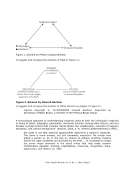
In this section we present two conceptual models that illustrate the birth of an sCS in a cult
environment and the emergence of an SCS outside the cult. This process is explained by
symbolic interaction theories on the self and communication theories on decoding
processes. Through these models we show how the power dynamics found in cult
environments affect creativity.
power and sovereignty reside exclusively with the charismatic leader who started the cult,
and with the most devoted and loyal followers who will not question their leader‘s views.
The goal of a totalitarian institution is to provide individuals with a context for deep
reconstruction of their identities, which is the resocialization process cult members
experience (Boeri, 2005 Lofland, 1977 Singer, 1995).
This paper does not address how a person becomes part of a cult, since an individual may
be coerced or threatened to join, recruited through deceptive promises, or may join by free
choice. Once a member, however, the individual will discover the hegemony and ideology of
the cult and one‘s place within the cult‘s power dynamics, where the leader uses various
tactics to achieve ascendency in both the thought and practice of members. According to
Elshtain (2008), ―The cult offers a total meaning system with no grounds for disputation or
interpretation‖ (p. 18). Transference of sovereignty from self to cult leader underpins the
bedrock upon which cults are sustained. In a cult environment, members form a sense of
self based on how they decode the meanings encoded by their leaders. Cult members, for
example, relinquish sovereignty over their selves, as well as their creativity, and transfer
the power to name these entities to the cult leader. Sovereignty empowers the cult leader
to name/label characteristics of members, such as creative or noncreative. We discuss
sovereignty more fully below here we show that sovereignty is conceptually linked to the
assumption that cults are total institutions.
Process of Creativity Suppression in a Cult Environment
Whereas it appears impossible for a creative self to flourish in a cultic milieu, this
environment may provide some individuals with the opportunity to develop a creative self
within the cult‘s ―generalized other‖ meaning system. We propose here that the creative self
(the I) becomes obscured by the me, but an sCS can also be born in this situation. Such an
outcome is dependent on how an individual reacts to the perceptions of others (Cooley,
1902).
Lalich (2004) describes the power dynamics in cults as a ―self-sealing system‖ that works by
―a narrow realm of constraint and control‖ (p. 15). Cult members relinquish to cult leaders
most choices that people living in democratic societies consider fundamental human rights—
choices such as what to eat, what to wear, where to live, employment options, whether to
marry, whom to marry, whether to have children, and how many. Additionally, the cult
leaders define what and who is creative. The expression of any thought—be it through song,
painting, story, or other craft—is generally discouraged, unless that expression enhances
thoughts the leaders (the power elite) have already expressed. Original personal thoughts
contrary to the cult‘s meaning system are forbidden, and the expression of such private
thoughts cannot become public. For example, musicians and songwriters are encouraged to
compose music for their leaders‘ lyrics writers are required to craft stories that express the
worldviews of those in power. This power dynamic in the cultic milieu supports the cult‘s
hegemony, and inhibits any questioning of the leader‘s naming of creativity. Cult members
keep busy criticizing themselves for shortcomings, consumed by working harder to achieve
the group‘s goals. The members‘ commitment to the group‘s cause supersedes creative
freedom and holds in place their self-denial, exhaustion, and guilt (Lalich, 2004). Lalich‘s
work supports our claim that the cult members‘ transference of sovereignty from self to
leadership underpins the bedrock upon which cults are sustained.
The Conceptual Models
In this section we present two conceptual models that illustrate the birth of an sCS in a cult
environment and the emergence of an SCS outside the cult. This process is explained by
symbolic interaction theories on the self and communication theories on decoding
processes. Through these models we show how the power dynamics found in cult
environments affect creativity.