Cultic Studies Review, Vol. 9, No. 1, 2010, Page 81
reinforced James‘ views of this particular brand of Christianity. If members did not comply
with these expectations, they would be physically punished or not spoken to for days.
Over the years the Community grew in numbers and by the end had around 80 members.
Most members, including families, lived in Community ―households‖ that were all in the
same geographical area. There were six houses used by Community members on two roads
in the same vicinity some of the houses were owned by individuals and some were rented.
In one case, the Community purchased a property with a lump sum of savings from a
number of individuals. Commitment to the Community was confirmed by living in a
household, and those who lived outside of the households were seen as second-class
citizens. A few individuals worked in the households cooking, cleaning, and looking after
their families but most of the members continued to attend college, university, or work.
Between 1974 and 1976 there was a growth of creative arts and creative expression in the
Community. A dance group was formed to dance out the narrative within the songs James
and other members wrote. Members made beautiful kaftans from richly coloured silks,
embroidered and sequined with tropical flowers and exotic birds one had a peacock all the
way up the front, sequined in rich, jewel-like colours. The needlework was extended to
beautiful, richly coloured hangings, based on the line drawings in The Good News Bible.
These creations hung in the meeting room. Members initially felt excitement and a sense of
pride in creating beautiful things but because individual talents were not acknowledged,
people became disillusioned as they felt exploited and devalued. The creative arts were
simply used to reinforce the beautiful false front that the Community was presenting.
Membership in the singing group became a measure of how good or worthy a member was
because this group was seen as the spiritual ministry and outreach arm of the Community.
Community members implicitly understood that there was a ranking system and those who
could minister (meaning let God use them) by singing and dancing were the more highly
ranked members (and therefore more spiritual). Those who could not minister were second-
class citizens. Although ministry conveyed status, in time the creative arts were used as a
means of control for the music group and later the whole Community, pushing them to
perform more and more perfectly and punishing and admonishing them if they did not. The
punishments evolved from verbal chastisement, to rebuking sessions and threats of
damnation in hell and God‘s punishment, to beatings done at first with hairbrush and in
time with bamboo cane. For example, the members of the singing group were excited when
they were invited to a church in another city to sing and minister. When they returned to
the Community, a hair brush appeared on the fireplace in the meeting room, with a sign
above it threatening punishment. It was clear that the group had failed, and an atmosphere
of doom and fear quickly spread from the music group to the rest of the Community.
It was Brian who had instigated the hairbrush and the bamboo cane to punish individual
members for ―sin‖ (meaning not reaching his standards). He did publicly beat one or two
individuals, but generally he had others, including James, do the beatings. In this way he
turned individuals against each other, causing paranoia and fear among the ordinary
members while protecting himself. This fear extended over many years. It took 23 years
before four ex-members could finally rouse the courage to report Brian‘s crimes to the
police even so, the complaints went nowhere because of lack of evidence due to Brian‘s
manipulations and lies.
Brian believed that the Community‘s success required his continuing control. His demands
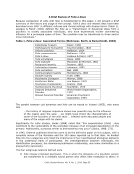
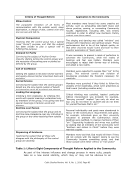
reflect Lifton‘s thought-reform program as delineated in Table 1. Brian and James had
hijacked the creative arts in the group to gain this control, although their stated intention
was to follow God, to be radical Christians, and to bring healing to the world. For the
members of the Community, this control fostered an atmosphere of ―deception,
dependency, and dread‖ (Langone, 1993, p. 7) that led to unthinking obedience and
reinforced James‘ views of this particular brand of Christianity. If members did not comply
with these expectations, they would be physically punished or not spoken to for days.
Over the years the Community grew in numbers and by the end had around 80 members.
Most members, including families, lived in Community ―households‖ that were all in the
same geographical area. There were six houses used by Community members on two roads
in the same vicinity some of the houses were owned by individuals and some were rented.
In one case, the Community purchased a property with a lump sum of savings from a
number of individuals. Commitment to the Community was confirmed by living in a
household, and those who lived outside of the households were seen as second-class
citizens. A few individuals worked in the households cooking, cleaning, and looking after
their families but most of the members continued to attend college, university, or work.
Between 1974 and 1976 there was a growth of creative arts and creative expression in the
Community. A dance group was formed to dance out the narrative within the songs James
and other members wrote. Members made beautiful kaftans from richly coloured silks,
embroidered and sequined with tropical flowers and exotic birds one had a peacock all the
way up the front, sequined in rich, jewel-like colours. The needlework was extended to
beautiful, richly coloured hangings, based on the line drawings in The Good News Bible.
These creations hung in the meeting room. Members initially felt excitement and a sense of
pride in creating beautiful things but because individual talents were not acknowledged,
people became disillusioned as they felt exploited and devalued. The creative arts were
simply used to reinforce the beautiful false front that the Community was presenting.
Membership in the singing group became a measure of how good or worthy a member was
because this group was seen as the spiritual ministry and outreach arm of the Community.
Community members implicitly understood that there was a ranking system and those who
could minister (meaning let God use them) by singing and dancing were the more highly
ranked members (and therefore more spiritual). Those who could not minister were second-
class citizens. Although ministry conveyed status, in time the creative arts were used as a
means of control for the music group and later the whole Community, pushing them to
perform more and more perfectly and punishing and admonishing them if they did not. The
punishments evolved from verbal chastisement, to rebuking sessions and threats of
damnation in hell and God‘s punishment, to beatings done at first with hairbrush and in
time with bamboo cane. For example, the members of the singing group were excited when
they were invited to a church in another city to sing and minister. When they returned to
the Community, a hair brush appeared on the fireplace in the meeting room, with a sign
above it threatening punishment. It was clear that the group had failed, and an atmosphere
of doom and fear quickly spread from the music group to the rest of the Community.
It was Brian who had instigated the hairbrush and the bamboo cane to punish individual
members for ―sin‖ (meaning not reaching his standards). He did publicly beat one or two
individuals, but generally he had others, including James, do the beatings. In this way he
turned individuals against each other, causing paranoia and fear among the ordinary
members while protecting himself. This fear extended over many years. It took 23 years
before four ex-members could finally rouse the courage to report Brian‘s crimes to the
police even so, the complaints went nowhere because of lack of evidence due to Brian‘s
manipulations and lies.
Brian believed that the Community‘s success required his continuing control. His demands
reflect Lifton‘s thought-reform program as delineated in Table 1. Brian and James had
hijacked the creative arts in the group to gain this control, although their stated intention
was to follow God, to be radical Christians, and to bring healing to the world. For the
members of the Community, this control fostered an atmosphere of ―deception,
dependency, and dread‖ (Langone, 1993, p. 7) that led to unthinking obedience and