Cultic Studies Review, Vol. 9, No. 1, 2010, Page 49
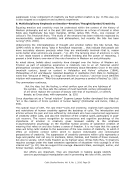
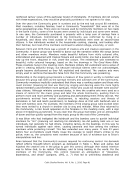
Trauma lessens the capacity for the psyche to symbolize and hold complexity of
feeling (Klein, 1930 Bion, 1950, 1973 Segal, 1994, 1957 Lacan, 1973 Deri, 1984
Abraham and Torok, 1987 Bromberg, 1998 van der Kolk 1996). I suggest that, in
cults, opposition/difference/multidimensional thinking is disallowed unless it is
attached to rigid doctrine used to control.
The cult leaders‘ often contradictory messages may be multidimensional in structure,
but their meaning—i.e., you must be devoted to me—is always unidimensional. The
messages may present irreconcilable contradiction to the member whose extreme
confusion renders compliance a safer option than the abuse that accompanies
opposing and questioning the leader.
The demand that members align with what the leader names as ―good‖ or ―pure‖ and
hate all that s/he names ―bad‖ or ―impure‖ brings to mind Lifton's ―demand for
purity‖ (1961). Although the member might recognize the contradiction between the
leader‘s demand for purity and the mentally and physically abusive manner in which
this demand is imposed, s/he may nevertheless choose compliance because of
indoctrination, exhaustion, and fear of rejection.
Social scientist/psychoanalyst Žižek (1989, p. 5) describes far-reaching effects of
disallowance of constructive opposition/difference/multidimensionality within the
context of totalitarianism, which is also applicable to cults: ―…[t]he aspiration to
abolish ‗radical antagonism‘ is precisely the source of totalitarian temptation: the
greatest mass murders and holocausts have always been perpetrated in the name of
man as harmonious being, of a new man without antagonistic tension.‖ By
disallowing opposition/difference/multidimensionality except when it is attached to
rigid doctrine, cult leaders impinge on healthy ‗antagonistic tension‘ within the cult
member‘s psyche. Such impingement counteracts creativity, including free use of
metaphor to express subjective meaning.
3. Tolerance of Lack/Unfilling of Gap. This criterion includes two nuanced meanings.
"Tolerance of lack" encourages reflection on the value of ―not having‖ "unfilling of
gap" offers an approach to achieving such a tolerance. Deeply entrenched cult
involvement can be thought of as a kind of addiction (Perlado, 2004) in
which psychic voids become filled with unquestioned solutions to personal and
universal problems through cult doctrine. The anxiety that might be soothed by a
substance or behavior is in this case seen in the desire for absolute answers and an
intolerance of lack. While good mental health acknowledges and tolerates lack with a
range of emotions including sadness, anxiety, anger, and acceptance, the cult leader
tends to dismiss personal losses (e.g., precult relationships) and to substitute
doctrine for tolerance of lack. Fixation on doctrine and devotion to the leader, like
any effective addiction, serves to mask the experience of loss with the promise of an
eternal high.
Psychic space, or gap, which is the result of lack, is intrinsic to the abstract concepts
of opposition/difference/multidimensionality, whereby a gap always exists between
―this‖ that is not ―that‖ (Derrida, 1982, Lacan, 1973). Since difference is minimized
in cults, gap is minimized, and without gap (in this case psychic gap), movement,
creative sliding, and linking and unlinking among feelings, thoughts, and phantasies
(unconscious) are also minimized. I suggest that, in cultic functioning, the member
aligns with the leader‘s dismissals of precult loss and intolerance of unfilled gap. The
denied absence blocks creation of symbol to represent what is missing. Instead, cult
members tend to defend against feelings regarding the absence by filling the psychic
gap with the leader‘s unidimensional loaded language. In one report, a member who
had a deep need to attend a parent‘s funeral was dissuaded by the cult leader‘s
Trauma lessens the capacity for the psyche to symbolize and hold complexity of
feeling (Klein, 1930 Bion, 1950, 1973 Segal, 1994, 1957 Lacan, 1973 Deri, 1984
Abraham and Torok, 1987 Bromberg, 1998 van der Kolk 1996). I suggest that, in
cults, opposition/difference/multidimensional thinking is disallowed unless it is
attached to rigid doctrine used to control.
The cult leaders‘ often contradictory messages may be multidimensional in structure,
but their meaning—i.e., you must be devoted to me—is always unidimensional. The
messages may present irreconcilable contradiction to the member whose extreme
confusion renders compliance a safer option than the abuse that accompanies
opposing and questioning the leader.
The demand that members align with what the leader names as ―good‖ or ―pure‖ and
hate all that s/he names ―bad‖ or ―impure‖ brings to mind Lifton's ―demand for
purity‖ (1961). Although the member might recognize the contradiction between the
leader‘s demand for purity and the mentally and physically abusive manner in which
this demand is imposed, s/he may nevertheless choose compliance because of
indoctrination, exhaustion, and fear of rejection.
Social scientist/psychoanalyst Žižek (1989, p. 5) describes far-reaching effects of
disallowance of constructive opposition/difference/multidimensionality within the
context of totalitarianism, which is also applicable to cults: ―…[t]he aspiration to
abolish ‗radical antagonism‘ is precisely the source of totalitarian temptation: the
greatest mass murders and holocausts have always been perpetrated in the name of
man as harmonious being, of a new man without antagonistic tension.‖ By
disallowing opposition/difference/multidimensionality except when it is attached to
rigid doctrine, cult leaders impinge on healthy ‗antagonistic tension‘ within the cult
member‘s psyche. Such impingement counteracts creativity, including free use of
metaphor to express subjective meaning.
3. Tolerance of Lack/Unfilling of Gap. This criterion includes two nuanced meanings.
"Tolerance of lack" encourages reflection on the value of ―not having‖ "unfilling of
gap" offers an approach to achieving such a tolerance. Deeply entrenched cult
involvement can be thought of as a kind of addiction (Perlado, 2004) in
which psychic voids become filled with unquestioned solutions to personal and
universal problems through cult doctrine. The anxiety that might be soothed by a
substance or behavior is in this case seen in the desire for absolute answers and an
intolerance of lack. While good mental health acknowledges and tolerates lack with a
range of emotions including sadness, anxiety, anger, and acceptance, the cult leader
tends to dismiss personal losses (e.g., precult relationships) and to substitute
doctrine for tolerance of lack. Fixation on doctrine and devotion to the leader, like
any effective addiction, serves to mask the experience of loss with the promise of an
eternal high.
Psychic space, or gap, which is the result of lack, is intrinsic to the abstract concepts
of opposition/difference/multidimensionality, whereby a gap always exists between
―this‖ that is not ―that‖ (Derrida, 1982, Lacan, 1973). Since difference is minimized
in cults, gap is minimized, and without gap (in this case psychic gap), movement,
creative sliding, and linking and unlinking among feelings, thoughts, and phantasies
(unconscious) are also minimized. I suggest that, in cultic functioning, the member
aligns with the leader‘s dismissals of precult loss and intolerance of unfilled gap. The
denied absence blocks creation of symbol to represent what is missing. Instead, cult
members tend to defend against feelings regarding the absence by filling the psychic
gap with the leader‘s unidimensional loaded language. In one report, a member who
had a deep need to attend a parent‘s funeral was dissuaded by the cult leader‘s