Cultic Studies Review, Vol. 9, No. 1, 2010, Page 104
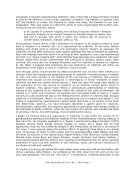
identify a cult member as creative, the member cannot continue to have a creative self
without birthing an sCS. Cultural studies theory helps explain why leaders in cults have this
power and why members may follow without question.
Communication Theories and the Making of Meanings
Cultural studies theorists such as Stuart Hall and Douglas Kellner, like critical theorists
Michel Foucault and Antonio Gramsci, are concerned with the generation and circulation of
meanings in industrial societies. Hall (1997) proposes that communication scholarship
should examine power relations and social structures because it is futile to talk about
meaning of words (e.g., self) without considering power at the same time. From a cultural-
studies perspective, the ultimate issue is not what information is presented, but whose
meaning it is. Critical theorists concern themselves with forms of authority and power
dynamics in groups, and the role of the power elite in dulling group members‘ sensitivity to
repression. They examine power imbalances between leaders and members, and challenge
the power elite‘s control of language to perpetuate these imbalances while followers
maintain an uncritical acceptance of meanings (Griffin, 2006).
We can understand the communication of the power elite (Mills, 1956) over a group through
cultural hegemony (Gramsci, 1935, 1971 Hall, 1996). In this paper, we use the Merriam-
Webster.com definition of hegemony, ―preponderant influence or authority over others
domination the social, cultural, ideological, or economic influence exerted by a dominant
group.‖ Critical theorists extend the meaning of hegemony to include the whole lived system
of ideas and beliefs, practically organized by the specific and dominant meanings imposed
by those in power (Berlin, 1988 Berger, 1995). Gramsci‘s concept of cultural hegemony
explains the domination and maintenance of power (e.g., coercion from leaders and consent
granted by members) (1935, 1971). The power elite persuade the subordinated group
members to accept and adopt the imposed external values, so that they come to see the
ideas of the power elite as the norm, the universal ideologies that benefit everyone. Hall
(1997) and Foucault (1980) analyzed how the power elite portray their worldview as
favorable to maintain their status quo and how they generate meanings to groups who
serve the power elite. Foucault (1980) proposes that meaning is constructed within power
dynamics:
Meaning … is produced only by virtue of multiple forms of constraint. And it
induces regular effects of power. Each society has its regime of truth, its
‗general politics‘ of truth that is, the types of discourse which it accepts and
makes function as true, the mechanisms and instances which enable one to
distinguish true and false statements, the means by which each is sanctioned
… the status of those who are charged with saying what counts as true. (p.
131)
The power elite influence a sense of self by holding the power to define the meaning
attached to symbols. Power entitles them to draw arbitrary lines between these labels, and
these distinctions have real physical effects on group members. The right or power to make
meaning can literally be the power to make others crazy (Foucault, 1980). People with
power in total institutions name the normal and the abnormal, the creative and the
noncreative.
Cults as Total Institutions
We see cults as total institutional settings in which people are isolated from the larger
society under the strict control and constant supervision of a specialist staff, such as that
which exists in prison or asylum environments (Goffman, 1961). A total institution regulates
every aspect of its members‘ lives, and isolates them from the outside world. In a total
institution, power resides solely among the leadership. In total institutions known as cults,
identify a cult member as creative, the member cannot continue to have a creative self
without birthing an sCS. Cultural studies theory helps explain why leaders in cults have this
power and why members may follow without question.
Communication Theories and the Making of Meanings
Cultural studies theorists such as Stuart Hall and Douglas Kellner, like critical theorists
Michel Foucault and Antonio Gramsci, are concerned with the generation and circulation of
meanings in industrial societies. Hall (1997) proposes that communication scholarship
should examine power relations and social structures because it is futile to talk about
meaning of words (e.g., self) without considering power at the same time. From a cultural-
studies perspective, the ultimate issue is not what information is presented, but whose
meaning it is. Critical theorists concern themselves with forms of authority and power
dynamics in groups, and the role of the power elite in dulling group members‘ sensitivity to
repression. They examine power imbalances between leaders and members, and challenge
the power elite‘s control of language to perpetuate these imbalances while followers
maintain an uncritical acceptance of meanings (Griffin, 2006).
We can understand the communication of the power elite (Mills, 1956) over a group through
cultural hegemony (Gramsci, 1935, 1971 Hall, 1996). In this paper, we use the Merriam-
Webster.com definition of hegemony, ―preponderant influence or authority over others
domination the social, cultural, ideological, or economic influence exerted by a dominant
group.‖ Critical theorists extend the meaning of hegemony to include the whole lived system
of ideas and beliefs, practically organized by the specific and dominant meanings imposed
by those in power (Berlin, 1988 Berger, 1995). Gramsci‘s concept of cultural hegemony
explains the domination and maintenance of power (e.g., coercion from leaders and consent
granted by members) (1935, 1971). The power elite persuade the subordinated group
members to accept and adopt the imposed external values, so that they come to see the
ideas of the power elite as the norm, the universal ideologies that benefit everyone. Hall
(1997) and Foucault (1980) analyzed how the power elite portray their worldview as
favorable to maintain their status quo and how they generate meanings to groups who
serve the power elite. Foucault (1980) proposes that meaning is constructed within power
dynamics:
Meaning … is produced only by virtue of multiple forms of constraint. And it
induces regular effects of power. Each society has its regime of truth, its
‗general politics‘ of truth that is, the types of discourse which it accepts and
makes function as true, the mechanisms and instances which enable one to
distinguish true and false statements, the means by which each is sanctioned
… the status of those who are charged with saying what counts as true. (p.
131)
The power elite influence a sense of self by holding the power to define the meaning
attached to symbols. Power entitles them to draw arbitrary lines between these labels, and
these distinctions have real physical effects on group members. The right or power to make
meaning can literally be the power to make others crazy (Foucault, 1980). People with
power in total institutions name the normal and the abnormal, the creative and the
noncreative.
Cults as Total Institutions
We see cults as total institutional settings in which people are isolated from the larger
society under the strict control and constant supervision of a specialist staff, such as that
which exists in prison or asylum environments (Goffman, 1961). A total institution regulates
every aspect of its members‘ lives, and isolates them from the outside world. In a total
institution, power resides solely among the leadership. In total institutions known as cults,