Cultic Studies Review, Vol. 9, No. 1, 2010, Page 135
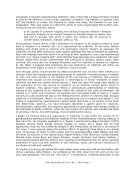
world (such a return to the secular world is likened to ―eating one‘s own vomit‖—i.e.,
reappropriating what formerly one had renounced). All of these strictures exist solely, of
course, for the benefit of the devotees, with our highest purpose in mind. The proper
response to such mercy and magnanimity is extreme gratefulness and eternal commitment
to the guru. The distant, hazy backdrop to all this asceticism and surrender is Krishna‘s
transcendent, paradisiacal world, which we‘ll reach one day if we manage to attain a state
of spiritual ―perfection.‖
Personally, I‘d love to find myself in such a place. It‘s quite a colorful and happy abode,
according to the scriptures. But, in reality, on the ground, within the actual institution that
presents itself as the necessary gateway to Krishna‘s heaven, life grinds on rather tediously
(punctuated by episodes of orchestrated exhilaration), power politics permeate, bitter and
never-ending theological battles rage, and very few members seem to attain the lofty states
of consciousness described in the holy texts.
If Part I of this essay has a somewhat episodic character, and at times is repetitious, it is
because I‘ve only recently (for purposes of this publication) begun to think about the topic
at hand in any kind of systematic manner. Let this, then, be a preliminary attempt to reflect
on the subject perhaps one day I will develop my thoughts further.
Part I: Theoretical
Creativity presumes freedom and openness of thought rather than ideological constraints
and pre-existing perspectives. The creative act requires that the creator is operating out of
the authentic self with reference to inner states of being— inner thoughts, feelings,
intuitions, as opposed to slavishly conforming to external models of thought and behavior.
Although acknowledging influences and sources of inspiration outside himself, the artist in
the act of creation seeks to stand in his own place, focus his attention on what is within and
unique to him—to stand within the ray of light that shines only upon him, to paraphrase
Emerson,i and then create something new, or show something as it has never been seen
before, offer fresh insight into the nature of reality. The cult member, in contrast, not only
must acknowledge his sources, but also must live continually within them and under their
shadow, making constant reference to them. He cannot make a move, as it were, without
consulting their edicts. He lives at the end of a very short leash, lest he stray from the
master and fall into the abyss. It is for his own protection, of course, that he walks
alongside his master. He must forever be checking his own thoughts against those of the
master, must carefully scrutinize his innermost motives to be sure they do not violate the
intentions and designs of the master. If the inner mind does not conform to the manifest
teacher, he places his very being in jeopardy, risking his ontological standing within Official
Reality.
************
The artist seeks to create new worlds, invent hypothetical universes or appropriate objects
and ideas, re-arrange them, and fashion new constructions. The cult member is handed an
already-constructed world, fashioned by others who by definition are vastly superior to
him—various divine and semidivine entities who long ago completed the process of creation
and published all the blueprints and diagrams in sacred texts. His task merely is to enter
that pre-existing structure, understand it through the published guidelines of its authors and
official interpreters, find his humble niche within, and inhabit that abode in a manner the
authorities mandate. If he has an urge to be creative, he may build a few shelves within his
tiny room, and perhaps place a few small ornaments upon them, as long as such minor
elaborations fall within the approved design. It is for him to live within established
structures, not to imagine new ones.
************
world (such a return to the secular world is likened to ―eating one‘s own vomit‖—i.e.,
reappropriating what formerly one had renounced). All of these strictures exist solely, of
course, for the benefit of the devotees, with our highest purpose in mind. The proper
response to such mercy and magnanimity is extreme gratefulness and eternal commitment
to the guru. The distant, hazy backdrop to all this asceticism and surrender is Krishna‘s
transcendent, paradisiacal world, which we‘ll reach one day if we manage to attain a state
of spiritual ―perfection.‖
Personally, I‘d love to find myself in such a place. It‘s quite a colorful and happy abode,
according to the scriptures. But, in reality, on the ground, within the actual institution that
presents itself as the necessary gateway to Krishna‘s heaven, life grinds on rather tediously
(punctuated by episodes of orchestrated exhilaration), power politics permeate, bitter and
never-ending theological battles rage, and very few members seem to attain the lofty states
of consciousness described in the holy texts.
If Part I of this essay has a somewhat episodic character, and at times is repetitious, it is
because I‘ve only recently (for purposes of this publication) begun to think about the topic
at hand in any kind of systematic manner. Let this, then, be a preliminary attempt to reflect
on the subject perhaps one day I will develop my thoughts further.
Part I: Theoretical
Creativity presumes freedom and openness of thought rather than ideological constraints
and pre-existing perspectives. The creative act requires that the creator is operating out of
the authentic self with reference to inner states of being— inner thoughts, feelings,
intuitions, as opposed to slavishly conforming to external models of thought and behavior.
Although acknowledging influences and sources of inspiration outside himself, the artist in
the act of creation seeks to stand in his own place, focus his attention on what is within and
unique to him—to stand within the ray of light that shines only upon him, to paraphrase
Emerson,i and then create something new, or show something as it has never been seen
before, offer fresh insight into the nature of reality. The cult member, in contrast, not only
must acknowledge his sources, but also must live continually within them and under their
shadow, making constant reference to them. He cannot make a move, as it were, without
consulting their edicts. He lives at the end of a very short leash, lest he stray from the
master and fall into the abyss. It is for his own protection, of course, that he walks
alongside his master. He must forever be checking his own thoughts against those of the
master, must carefully scrutinize his innermost motives to be sure they do not violate the
intentions and designs of the master. If the inner mind does not conform to the manifest
teacher, he places his very being in jeopardy, risking his ontological standing within Official
Reality.
************
The artist seeks to create new worlds, invent hypothetical universes or appropriate objects
and ideas, re-arrange them, and fashion new constructions. The cult member is handed an
already-constructed world, fashioned by others who by definition are vastly superior to
him—various divine and semidivine entities who long ago completed the process of creation
and published all the blueprints and diagrams in sacred texts. His task merely is to enter
that pre-existing structure, understand it through the published guidelines of its authors and
official interpreters, find his humble niche within, and inhabit that abode in a manner the
authorities mandate. If he has an urge to be creative, he may build a few shelves within his
tiny room, and perhaps place a few small ornaments upon them, as long as such minor
elaborations fall within the approved design. It is for him to live within established
structures, not to imagine new ones.
************