Cultic Studies Review, Vol. 9, No. 1, 2010, Page 59
experience of Perlado was like and not like his experience of the teacher. He presents Alex
with a nonretaliatory experience when Alex disavows his need for treatment. In addition,
with the support of this open environment, Alex‘s ―just joking‖ was expressed with
appropriate affect and made available for discussion between Perlado and Alex. I suggest
that Alex‘s spontaneous comment brought to the forefront his anxiety about his own
feelings of aggression. In an oppressive environment, these unacceptable feelings likely
would have remained unspoken and split off to remain outside of conscious awareness.
Marsalis (and Stewart, 1994) writes, ―the sound of human feeling has a power and intensity
of its own. The power in jazz comes from the passionate intelligence of a group of musicians
playing together. Musical freedom of speech‖ (p. 149). I suggest that moments such as
Alex‘s joke within and outside of the therapeutic setting reflect an opening up to his creative
use of language, to accessing split-off feelings and to embracing once again his own musical
freedom of speech.
Conclusion
Although creativity and an accompanying sense of aliveness are often assumed as human
potential, a dehumanizing cult situation is one in which this given is threatened. In this
article, I propose two themes of central importance for cultic studies: 1) the suppression of
creativity in cultic environments and the subsequent experience of inner deadness and 2)
the emergence of creativity as integral to cult-recovery treatment.
Creativity experienced most purely is beyond analysis. However, when it is the target of
suppression and leaves former members and SGAs with some degree of psychic deadness,
analysis enables identification and exploration of the criteria necessary for internally derived
creativity. I differentiate spontaneous play and creativity from the compulsive passion that I
believe characterizes a good deal of the ‗creative‘ work produced within an oppressive
setting that promotes the leader‘s goals.
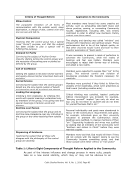
Drawing on psychoanalytic thinking, I suggest four criteria and related hypotheses that
contrast the fate of creativity in open versus authoritative environments in terms of
mourning of loss, allowance of opposition, and tolerance of lack/unfilling of gap, and of
uncertainty.
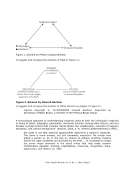
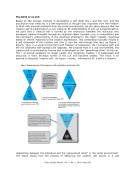
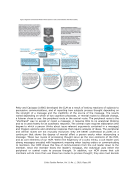
I then link the well-known concept of ―bait and switch‖ as used within cultic studies to the
psychoanalytic concepts of trial and total projective identification. I propose that the
continuous flow between trial and total projective identification found in open environments
contrasts with the trial projective identification that is used as bait in the seductive phases
of cult involvement and then switched to total projective identification by leaders as one
means of leading the member to a ―bounded choice‖ in cultic environments.
By the time the member is drawn into total projective identification via controlled and
unidimensional communication from the leader, the member‘s dependency, and willingness
to self-renounce and to increase devotion to the leader make the cost of leaving the cult too
terrifying to consider. At this point—perhaps what Conway and Siegelman (1978) call ―the
snapping point‖ and resulting in what Lalich describes as ―the bounded choice‖—the
member‘s free-flowing subjective voice, sense of aliveness, and therefore creativity have
been relegated to the realm of the suppressed.
To emphasize the importance of emergence of creativity in cult-recovery treatment, I
discuss Perlado‘s establishment of a safe clinical environment in which play, tolerance of
uncertainty, symbolic language, and imagination are evoked in a former member/musician.
Through Perlado‘s provision of multidirectional communication, the former member allows
his subjective feelings to emerge through dark humor followed by defensive and immediate
renunciation with the words ―just joking.‖ It is impossible to imagine such an exchange with
an oppressive cult leader.
experience of Perlado was like and not like his experience of the teacher. He presents Alex
with a nonretaliatory experience when Alex disavows his need for treatment. In addition,
with the support of this open environment, Alex‘s ―just joking‖ was expressed with
appropriate affect and made available for discussion between Perlado and Alex. I suggest
that Alex‘s spontaneous comment brought to the forefront his anxiety about his own
feelings of aggression. In an oppressive environment, these unacceptable feelings likely
would have remained unspoken and split off to remain outside of conscious awareness.
Marsalis (and Stewart, 1994) writes, ―the sound of human feeling has a power and intensity
of its own. The power in jazz comes from the passionate intelligence of a group of musicians
playing together. Musical freedom of speech‖ (p. 149). I suggest that moments such as
Alex‘s joke within and outside of the therapeutic setting reflect an opening up to his creative
use of language, to accessing split-off feelings and to embracing once again his own musical
freedom of speech.
Conclusion
Although creativity and an accompanying sense of aliveness are often assumed as human
potential, a dehumanizing cult situation is one in which this given is threatened. In this
article, I propose two themes of central importance for cultic studies: 1) the suppression of
creativity in cultic environments and the subsequent experience of inner deadness and 2)
the emergence of creativity as integral to cult-recovery treatment.
Creativity experienced most purely is beyond analysis. However, when it is the target of
suppression and leaves former members and SGAs with some degree of psychic deadness,
analysis enables identification and exploration of the criteria necessary for internally derived
creativity. I differentiate spontaneous play and creativity from the compulsive passion that I
believe characterizes a good deal of the ‗creative‘ work produced within an oppressive
setting that promotes the leader‘s goals.
Drawing on psychoanalytic thinking, I suggest four criteria and related hypotheses that
contrast the fate of creativity in open versus authoritative environments in terms of
mourning of loss, allowance of opposition, and tolerance of lack/unfilling of gap, and of
uncertainty.
I then link the well-known concept of ―bait and switch‖ as used within cultic studies to the
psychoanalytic concepts of trial and total projective identification. I propose that the
continuous flow between trial and total projective identification found in open environments
contrasts with the trial projective identification that is used as bait in the seductive phases
of cult involvement and then switched to total projective identification by leaders as one
means of leading the member to a ―bounded choice‖ in cultic environments.
By the time the member is drawn into total projective identification via controlled and
unidimensional communication from the leader, the member‘s dependency, and willingness
to self-renounce and to increase devotion to the leader make the cost of leaving the cult too
terrifying to consider. At this point—perhaps what Conway and Siegelman (1978) call ―the
snapping point‖ and resulting in what Lalich describes as ―the bounded choice‖—the
member‘s free-flowing subjective voice, sense of aliveness, and therefore creativity have
been relegated to the realm of the suppressed.
To emphasize the importance of emergence of creativity in cult-recovery treatment, I
discuss Perlado‘s establishment of a safe clinical environment in which play, tolerance of
uncertainty, symbolic language, and imagination are evoked in a former member/musician.
Through Perlado‘s provision of multidirectional communication, the former member allows
his subjective feelings to emerge through dark humor followed by defensive and immediate
renunciation with the words ―just joking.‖ It is impossible to imagine such an exchange with
an oppressive cult leader.