Cultic Studies Review, Vol. 9, No. 1, 2010, Page 86
not truly yours, to acquire a selective and critical attitude toward what is
offered you, and, above all, to develop the ability to ―bite off‖ and ―chew‖
experience so as to extract its healthy nourishment.
And, I would add, to evacuate that which is not nourishing. (Jenkinson, 2008). The
members of the Community began the process of ―biting off‖ and ―chewing over‖ their
experiences, reconnecting with their critical faculties and forming a post-cult identity
(Hassan, 2000). To return to the analogy of the tarmac and the seed, the seed ultimately
was stronger and more alive and organic than the tarmac and found a way to break through
to light, air, and freedom (Jenkinson, 2008).
Creativity in Recovery from a Cult Experience
When a person recruited as an adult leaves a cult, a major task for recovery is reconnecting
with the pre-cult personality (Martin and West, 1994 Hassan, 2000 Lalich and Tobias,
2004 Jenkinson, 2008). For those born and/or raised in cults, this process will be a more
complex journey since there is often little to offset the indoctrination in the group. In both
cases, there is a necessity for the person to experience a trusting environment in which his
or her own personality can emerge, and defences or creative adjustments become optional
rather than necessary for survival.
In the Community, and in many other groups, great fear of being oneself is instilled in the
individual (Langone, 1993), and learning to trust can be very challenging. Nevertheless,
with the acceptance and support of others, this reconnection with the pre-cult personality
and development of a post-cult identity can occur. Tobias and Lalich (2006, p. 197) note
that creative expression through a number of different disciplines, including art, writing,
dance, music, drama, or journaling, can help an individual to reconnect with the pre-cult
personality. In 2005 I conducted a study into what helps ex-cult members recover. In my
research, a number of ex-members identified the importance of creativity for this process,
and several specifically mentioned music and singing: ―...my parents had a lot of music
going on in the house when I grew up and so that was bringing me back to my childhood
and so bringing me back to my own personality again‖ [participant quote]. And ―...I
eventually started to listen to my old music again, which for me was part of my personality.
It felt like it was me again‖ [participant quote].
Supporting Recovery Through Creative (Gestalt) Psychotherapy
Contemporary Gestalt Psychotherapy (Gestalt) incorporates a fresh, creative, experimental
approach to mental-health treatment (Mackewn, 2000). Gestalt writer Joseph Zinker (1977,
P. 3) boldly states: ―Creativity is an expression of life—my celebration of life: I am here! I
love life! I love me! I can be anything! I can do anything!‖ and ―It is not only an expression
of the full range of each person‘s experience and sense of uniqueness, but also a social
act—a sharing with one‘s fellow human beings this celebration, this assertion in living a full
life.‖
Gestalt is a phenomenological approach that respects people‘s internal experience whilst
helping them modify their thinking and behaviour through graded and carefully timed
creative and sometimes playful ―experiments‖ which, Zinker states (1977, p. 123), are the
cornerstone of learning. The philosophy behind these experiments is for the individual to
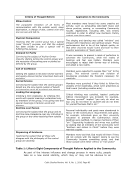
heighten contact with his/her self, others, or the environment. Lack of contact, or, to use a
Gestalt term, an ―interruption to contact,‖ is a blocking of contact with the self, other, or the
environment and therefore of growth. So in Gestalt psychotherapy, raising awareness and
heightening contact is a primary aim in order for growth and change to take place. Another
Gestalt writer, Gary Yontef (1993, p. 51), states that ―awareness is formed at the point of
contact‖ and leads to a creative integration of the problem.
not truly yours, to acquire a selective and critical attitude toward what is
offered you, and, above all, to develop the ability to ―bite off‖ and ―chew‖
experience so as to extract its healthy nourishment.
And, I would add, to evacuate that which is not nourishing. (Jenkinson, 2008). The
members of the Community began the process of ―biting off‖ and ―chewing over‖ their
experiences, reconnecting with their critical faculties and forming a post-cult identity
(Hassan, 2000). To return to the analogy of the tarmac and the seed, the seed ultimately
was stronger and more alive and organic than the tarmac and found a way to break through
to light, air, and freedom (Jenkinson, 2008).
Creativity in Recovery from a Cult Experience
When a person recruited as an adult leaves a cult, a major task for recovery is reconnecting
with the pre-cult personality (Martin and West, 1994 Hassan, 2000 Lalich and Tobias,
2004 Jenkinson, 2008). For those born and/or raised in cults, this process will be a more
complex journey since there is often little to offset the indoctrination in the group. In both
cases, there is a necessity for the person to experience a trusting environment in which his
or her own personality can emerge, and defences or creative adjustments become optional
rather than necessary for survival.
In the Community, and in many other groups, great fear of being oneself is instilled in the
individual (Langone, 1993), and learning to trust can be very challenging. Nevertheless,
with the acceptance and support of others, this reconnection with the pre-cult personality
and development of a post-cult identity can occur. Tobias and Lalich (2006, p. 197) note
that creative expression through a number of different disciplines, including art, writing,
dance, music, drama, or journaling, can help an individual to reconnect with the pre-cult
personality. In 2005 I conducted a study into what helps ex-cult members recover. In my
research, a number of ex-members identified the importance of creativity for this process,
and several specifically mentioned music and singing: ―...my parents had a lot of music
going on in the house when I grew up and so that was bringing me back to my childhood
and so bringing me back to my own personality again‖ [participant quote]. And ―...I
eventually started to listen to my old music again, which for me was part of my personality.
It felt like it was me again‖ [participant quote].
Supporting Recovery Through Creative (Gestalt) Psychotherapy
Contemporary Gestalt Psychotherapy (Gestalt) incorporates a fresh, creative, experimental
approach to mental-health treatment (Mackewn, 2000). Gestalt writer Joseph Zinker (1977,
P. 3) boldly states: ―Creativity is an expression of life—my celebration of life: I am here! I
love life! I love me! I can be anything! I can do anything!‖ and ―It is not only an expression
of the full range of each person‘s experience and sense of uniqueness, but also a social
act—a sharing with one‘s fellow human beings this celebration, this assertion in living a full
life.‖
Gestalt is a phenomenological approach that respects people‘s internal experience whilst
helping them modify their thinking and behaviour through graded and carefully timed
creative and sometimes playful ―experiments‖ which, Zinker states (1977, p. 123), are the
cornerstone of learning. The philosophy behind these experiments is for the individual to
heighten contact with his/her self, others, or the environment. Lack of contact, or, to use a
Gestalt term, an ―interruption to contact,‖ is a blocking of contact with the self, other, or the
environment and therefore of growth. So in Gestalt psychotherapy, raising awareness and
heightening contact is a primary aim in order for growth and change to take place. Another
Gestalt writer, Gary Yontef (1993, p. 51), states that ―awareness is formed at the point of
contact‖ and leads to a creative integration of the problem.