Cultic Studies Review, Vol. 9, No. 1, 2010, Page 119
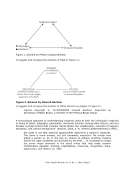
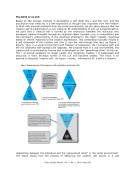
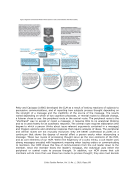
Through the HCM we can better understand power dynamics, hegemony, and sovereignty in
cults, as Miriam and Karen‘s case studies in the Children of God and Scientology show. The
HCM posits that the sovereign cult leaders encode symbols (perceptions, judgments,
naming, and orders) through the hegemony of power dynamics, and that cult members
employ a route of response through which they decode meanings from leaders. Together,
this combination determines their actions within and outcomes relevant to the cult.
We use the framework of Petty and Cacioppo‘s ELM (1986) in the HCM because we posit
that their findings on the relative effectiveness of strong-message arguments and high
source credibility in persuasive communication are applicable to the power dynamics of cults
as total institutions. Their results varied depending on which of two cognitive processes, or
mental routes to attitude change, a listener chose to use: the peripheral route or the central
route. As we described earlier, however, the central route requires the addition of two
decoding options for the cult member. Hall‘s (1997) theories of hegemonic decoding
options, which the powerless who are resisting dominant ideology use, supports our
proposal that cult members may change their methods of decoding from peripheral route
with hegemonic decoding to ―negotiable‖ or ―free,‖ depending on the degree of sovereignty
the cult member holds. As our case studies illustrate, especially Miriam‘s, a cult member will
accept a leader‘s labeling without question if the member has relinquished self-sovereignty
to the leader this illustrates the member‘s use of the peripheral route of thought with
hegemonic decoding, exerting no mental effort to disagree or reject the label. The case
studies explore how these cult members encountered experiences with others that affirmed
their creativity. Negotiable decoding enabled Miriam and Karen to remain in their respective
groups, and it also demonstrated critical-thinking skills and some restoration of free
thought. Eventually, the members reclaimed sovereignty from the leaders and decided to
leave their groups to fully express their creative abilities. Here they used the ―free thought‖
option of decoding under the central route. Thus, in concert with Petty and Cacioppo‘s ELM
routes of processing thought, and Hall‘s hegemonic encoding and decoding theories, the
HCM is a synthesis of symbolic interactionism, mass communication theory, and critical
theory on hegemony, power dynamics, and sovereignty (Mills, 1956 Foucault, 1980
Elshtain, 2008 Gramsci,1935, 1971 Lifton, 1982 Lalich, 2004).
Using the HCM as a tool helps us see how Miriam processed thought within the power
dynamics of the COG, how she managed sovereignty, and how she responded to group
hegemony. Miriam used the peripheral route of response during the majority of her years in
the COG because she felt called to carry out God‘s plans for her life through this group,
whose leader was Berg. The HCM suggests that once Berg deemed her noncreative
(following the children‘s story incident), while some of the editors liked her work and
encouraged her as a writer, she began doubting that Berg was right in his assessment. This
encouragement enabled Miriam to stop responding through the peripheral route, by which
she received all of Berg‘s statements without question. Her doubts represented some
reclaiming of sovereignty from Berg back to herself, which shifted her thinking process to
the central route of processing thought, with negotiable decoding of his words. By applying
negotiable decoding, she could retain her position in the group and her marriage, while
secretly harboring disagreement with Berg. Her action of reclaiming some sovereignty from
Berg back to herself allowed her sovereignty to grow and enabled her to regain critical-
thinking skills and thus to access ―free thought‖ under the central route. She became able
to see through Berg‘s power game her eventual rebellion allowed the birth of her sCS that
she had expressed only to individuals outside the COG.
Karen showed that she was able to see through the leader‘s bias and the risk it posed to her
survival. She not only exercised her thoughts of leaving by departing several times
throughout the years, but also attempted to raise others‘ awareness about group hegemony
by mustering the courage to attempt to persuade her husband to leave with her, despite the
Through the HCM we can better understand power dynamics, hegemony, and sovereignty in
cults, as Miriam and Karen‘s case studies in the Children of God and Scientology show. The
HCM posits that the sovereign cult leaders encode symbols (perceptions, judgments,
naming, and orders) through the hegemony of power dynamics, and that cult members
employ a route of response through which they decode meanings from leaders. Together,
this combination determines their actions within and outcomes relevant to the cult.
We use the framework of Petty and Cacioppo‘s ELM (1986) in the HCM because we posit
that their findings on the relative effectiveness of strong-message arguments and high
source credibility in persuasive communication are applicable to the power dynamics of cults
as total institutions. Their results varied depending on which of two cognitive processes, or
mental routes to attitude change, a listener chose to use: the peripheral route or the central
route. As we described earlier, however, the central route requires the addition of two
decoding options for the cult member. Hall‘s (1997) theories of hegemonic decoding
options, which the powerless who are resisting dominant ideology use, supports our
proposal that cult members may change their methods of decoding from peripheral route
with hegemonic decoding to ―negotiable‖ or ―free,‖ depending on the degree of sovereignty
the cult member holds. As our case studies illustrate, especially Miriam‘s, a cult member will
accept a leader‘s labeling without question if the member has relinquished self-sovereignty
to the leader this illustrates the member‘s use of the peripheral route of thought with
hegemonic decoding, exerting no mental effort to disagree or reject the label. The case
studies explore how these cult members encountered experiences with others that affirmed
their creativity. Negotiable decoding enabled Miriam and Karen to remain in their respective
groups, and it also demonstrated critical-thinking skills and some restoration of free
thought. Eventually, the members reclaimed sovereignty from the leaders and decided to
leave their groups to fully express their creative abilities. Here they used the ―free thought‖
option of decoding under the central route. Thus, in concert with Petty and Cacioppo‘s ELM
routes of processing thought, and Hall‘s hegemonic encoding and decoding theories, the
HCM is a synthesis of symbolic interactionism, mass communication theory, and critical
theory on hegemony, power dynamics, and sovereignty (Mills, 1956 Foucault, 1980
Elshtain, 2008 Gramsci,1935, 1971 Lifton, 1982 Lalich, 2004).
Using the HCM as a tool helps us see how Miriam processed thought within the power
dynamics of the COG, how she managed sovereignty, and how she responded to group
hegemony. Miriam used the peripheral route of response during the majority of her years in
the COG because she felt called to carry out God‘s plans for her life through this group,
whose leader was Berg. The HCM suggests that once Berg deemed her noncreative
(following the children‘s story incident), while some of the editors liked her work and
encouraged her as a writer, she began doubting that Berg was right in his assessment. This
encouragement enabled Miriam to stop responding through the peripheral route, by which
she received all of Berg‘s statements without question. Her doubts represented some
reclaiming of sovereignty from Berg back to herself, which shifted her thinking process to
the central route of processing thought, with negotiable decoding of his words. By applying
negotiable decoding, she could retain her position in the group and her marriage, while
secretly harboring disagreement with Berg. Her action of reclaiming some sovereignty from
Berg back to herself allowed her sovereignty to grow and enabled her to regain critical-
thinking skills and thus to access ―free thought‖ under the central route. She became able
to see through Berg‘s power game her eventual rebellion allowed the birth of her sCS that
she had expressed only to individuals outside the COG.
Karen showed that she was able to see through the leader‘s bias and the risk it posed to her
survival. She not only exercised her thoughts of leaving by departing several times
throughout the years, but also attempted to raise others‘ awareness about group hegemony
by mustering the courage to attempt to persuade her husband to leave with her, despite the