Cultic Studies Review, Vol. 9, No. 1, 2010, Page 5
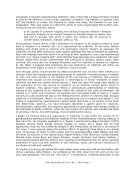
lectures. I am grateful that the clinic represents an environment where my own creativity as
a cult therapist with psychoanalytic and trauma-studies background flourishes. Many years
later, occupying Madsen‘s position at the clinic after she retired across the country, I
continue to benefit from her wisdom. Spending countless hours, we together reviewed,
processed, and challenged the contributors, each of whom brought different roles, skills,
and interests to the task. Such fluidity of roles would be impossible in a cult. Madsen‘s
unobtrusive support of my creative process represents one of her own finest forms of
creativity: her attunement to the need for linking thoughts and sentences as invaluable not
only in the development of coherent writing, but also symbolically, parallel to the work of
creating order out of the chaos found in post-cult recovery. I cannot thank her enough.
And then came Ashley Allen, BSW student and SGA, pointed in the direction of the Cult
Clinic by Janja Lalich and invited to volunteer by Arnold Markowitz. Her insightful
contribution to the collation and evaluation of the survey on cults and creativity is rich in
symbolic meaning. Bringing professional and personal interest to the work, she found that
the results of the survey elicited a range of responses and raised many questions for further
study. One respondent states that creativity is ―a bridge between inner and outer
experience,‖ reflecting a psychodynamic leaning that echoes my own. Respondents
overwhelmingly feel creativity is suppressed in cults, perhaps because the bridge between
internal and external has been to varying degrees blocked or severed. As one respondent
summarizes, ―the cult dealt with creativity, like all else, as basically about control and
manipulation.‖ Contrast this statement with quotes that capture the essence of creativity.
Writes psychologist Rollo May, ―[e]very creative encounter is a new event every time
requires another assertion of courage. …. To encounter ‗the reality of experience‘ is surely
the basis for all creativity‖ (1975, p. 26) and poet T. S. Eliot, ―[f]or the pattern is new in
every moment, and every moment is a new and shocking valuation of all we have been‖
(1943, p. 26). One task of post-cult recovery is finding the courage to experience every
moment as new, without fear of reprisal for noncompliance.
A very limited minority of survey respondents feel creativity is enhanced in cults. For
example,
I was always interested in music, and the cult‘s leaders (who were
professional music teachers) encouraged me to learn as much as I could and
to create music both as a composer and a saxophonist, to write and to make
visual art. I was doing none of these things before joining.
I suggest that in future studies of cults and creativity, specific questions that address
variations in available time, space, degree of isolation, and workload are considered as part
of assessing the degree to which the individual‘s cult experience involved suppression or
enhancement of creativity.
Oxford Dictionaries define creativity as ―the use of the imagination or original ideas,
especially in the production of an artistic work.‖ Thinking in terms of productivity, former
members and SGAs might disdainfully say one of the few benefits of having been used as
slaves in the cult is learning certain skills that make them potentially productive in
mainstream society. These skills are sometimes described as ―street smarts,‖ while others
cited might be marketing, networking, public speaking, cooking, playing new musical
instruments, and the like. The question is, at what cost might the individual gain these
skills?
Recent creativity research by Howard Gruber (1974), based on detailed study of Darwin‘s
journals tracking his development of the theory of evolution, replaces the notion of the flash
of creative insight with a view that sees creative products as resulting from long, complex, -
involved processes that incorporate networks of people and long periods of hard work,
during which many independent but connected mini-insights take place (Sawyer, 2006, p.
lectures. I am grateful that the clinic represents an environment where my own creativity as
a cult therapist with psychoanalytic and trauma-studies background flourishes. Many years
later, occupying Madsen‘s position at the clinic after she retired across the country, I
continue to benefit from her wisdom. Spending countless hours, we together reviewed,
processed, and challenged the contributors, each of whom brought different roles, skills,
and interests to the task. Such fluidity of roles would be impossible in a cult. Madsen‘s
unobtrusive support of my creative process represents one of her own finest forms of
creativity: her attunement to the need for linking thoughts and sentences as invaluable not
only in the development of coherent writing, but also symbolically, parallel to the work of
creating order out of the chaos found in post-cult recovery. I cannot thank her enough.
And then came Ashley Allen, BSW student and SGA, pointed in the direction of the Cult
Clinic by Janja Lalich and invited to volunteer by Arnold Markowitz. Her insightful
contribution to the collation and evaluation of the survey on cults and creativity is rich in
symbolic meaning. Bringing professional and personal interest to the work, she found that
the results of the survey elicited a range of responses and raised many questions for further
study. One respondent states that creativity is ―a bridge between inner and outer
experience,‖ reflecting a psychodynamic leaning that echoes my own. Respondents
overwhelmingly feel creativity is suppressed in cults, perhaps because the bridge between
internal and external has been to varying degrees blocked or severed. As one respondent
summarizes, ―the cult dealt with creativity, like all else, as basically about control and
manipulation.‖ Contrast this statement with quotes that capture the essence of creativity.
Writes psychologist Rollo May, ―[e]very creative encounter is a new event every time
requires another assertion of courage. …. To encounter ‗the reality of experience‘ is surely
the basis for all creativity‖ (1975, p. 26) and poet T. S. Eliot, ―[f]or the pattern is new in
every moment, and every moment is a new and shocking valuation of all we have been‖
(1943, p. 26). One task of post-cult recovery is finding the courage to experience every
moment as new, without fear of reprisal for noncompliance.
A very limited minority of survey respondents feel creativity is enhanced in cults. For
example,
I was always interested in music, and the cult‘s leaders (who were
professional music teachers) encouraged me to learn as much as I could and
to create music both as a composer and a saxophonist, to write and to make
visual art. I was doing none of these things before joining.
I suggest that in future studies of cults and creativity, specific questions that address
variations in available time, space, degree of isolation, and workload are considered as part
of assessing the degree to which the individual‘s cult experience involved suppression or
enhancement of creativity.
Oxford Dictionaries define creativity as ―the use of the imagination or original ideas,
especially in the production of an artistic work.‖ Thinking in terms of productivity, former
members and SGAs might disdainfully say one of the few benefits of having been used as
slaves in the cult is learning certain skills that make them potentially productive in
mainstream society. These skills are sometimes described as ―street smarts,‖ while others
cited might be marketing, networking, public speaking, cooking, playing new musical
instruments, and the like. The question is, at what cost might the individual gain these
skills?
Recent creativity research by Howard Gruber (1974), based on detailed study of Darwin‘s
journals tracking his development of the theory of evolution, replaces the notion of the flash
of creative insight with a view that sees creative products as resulting from long, complex, -
involved processes that incorporate networks of people and long periods of hard work,
during which many independent but connected mini-insights take place (Sawyer, 2006, p.