Cultic Studies Review, Vol. 9, No. 1, 2010, Page 4
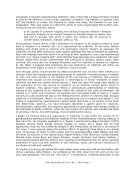
complexity is beyond comprehensive definition. Allen notes that a frequent theme included
as part of the definition in the survey responses is freedom: the freedom to express one‘s
self, the freedom to create, the freedom to create new ideas, the freedom to use one‘s
imagination. This view seems to reflect the words of social psychologist Morris Stein who,
writing during the Cold War, states,
to be capable of [creative insights] the individual requires freedom—freedom
to explore, freedom to be himself, freedom to entertain ideas no matter how
wild and to express that which is within him without fear of censure or
concern about evaluation. (Sawyer, 2006, p. 42)
Psychoanalyst Marion Milner (1987) describes the freedom to be absent-minded—a state
hard to imagine in a harmful cult—as a requirement for creativity. In this issue, Steven
Gelberg and others point to external and particularly internal freedom as necessary for
creativity. Several other authors to some degree challenge this idea of freedom as essential.
Boeri and Pressley note that within the confines of their oppressive cults, they experienced
the birth of a ―secret creative self,‖ while Melinda Haas discusses two composers who were
famous before their severe confinements and continued to produce master works when
confined. She notes that the composer Messiaen used his creativity to tolerate his captivity
by the Nazis. I suggest that examining pre-cult experience of creativity will refine our
assessment of the impact of cults on creativity in future studies.
Over the past years, I have blended my deep involvement with art and a keen interest as a
clinician in the neo-Kleinian and postmodern study of creativity, in trauma studies in relation
to cults, and more recently in the findings of the new science of creativity. Cult-recovery
treatment that focuses on the emergence or reemergence of former members‘ or SGAs‘
creativity has been my central clinical concern. I hope this issue will bring cultic studies to
the awareness of the new science of creativity as an extreme context within which to
explore creativity. This special issue reflects a sociocultural understanding of creativity,
looking at the creativity of an individual within the context of the cultic environment. My
interest is in ―cults‖ and ―creativity‖ as separate and interrelated fields of inquiry it builds
not only on cultic studies but also on the finding from the science of creativity that, because
creativity is multifaceted, there is no one comprehensive tool to measure and define it. This
finding is supported by neuroscience‘s current belief that there is no section of the brain
that determines creativity, nor have biologists identified a specific gene for creativity.
Psychodynamic, behavioral, and cognitive approaches to psychology have always looked to
the individual to define creativity, while the new science of creativity also includes the fields
of sociology, history, and anthropology, thus broadening the inquiry.
I began my thinking about the suppression of creativity in cults within the context of my
psychoanalytic training at the National Institute for the Psychotherapies Training Institute in
New York City. My thoughts expanded in a chapter I contributed to Miguel Perlado‘s (2007)
Estudios Clinicos Sobre Sectas (Clinical Studies on Cults), and I thank him for that
opportunity they are now further developed in this introduction, as well as in my article in
this issue. I have enjoyed seeing the positive effects of applying these ideas in my clinical
work. It has been an honor to work closely with the associate editor Libbe Madsen and with
the other contributors of this special issue, Miguel Perlado, Gillie Jenkinson, Colleen Russell,
Melinda Haas, Karen Boeri and Karen Pressley, Joseph Szimhart, and Steven Gelberg. I
value having worked with the authors who, drawing on professional and, for some, personal
experience in cults, turn their attention to the individual, social, and cultural implications of
our theme of cults and creativity.
My creative journey guest editing this issue began many years ago with my fascination with
clinical examples Libbe Madsen, my professor at the time, drew from her work at the Cult
Clinic and presented. ―Did she say ‗cult clinic‘?‖ I wondered as I listened attentively to her
complexity is beyond comprehensive definition. Allen notes that a frequent theme included
as part of the definition in the survey responses is freedom: the freedom to express one‘s
self, the freedom to create, the freedom to create new ideas, the freedom to use one‘s
imagination. This view seems to reflect the words of social psychologist Morris Stein who,
writing during the Cold War, states,
to be capable of [creative insights] the individual requires freedom—freedom
to explore, freedom to be himself, freedom to entertain ideas no matter how
wild and to express that which is within him without fear of censure or
concern about evaluation. (Sawyer, 2006, p. 42)
Psychoanalyst Marion Milner (1987) describes the freedom to be absent-minded—a state
hard to imagine in a harmful cult—as a requirement for creativity. In this issue, Steven
Gelberg and others point to external and particularly internal freedom as necessary for
creativity. Several other authors to some degree challenge this idea of freedom as essential.
Boeri and Pressley note that within the confines of their oppressive cults, they experienced
the birth of a ―secret creative self,‖ while Melinda Haas discusses two composers who were
famous before their severe confinements and continued to produce master works when
confined. She notes that the composer Messiaen used his creativity to tolerate his captivity
by the Nazis. I suggest that examining pre-cult experience of creativity will refine our
assessment of the impact of cults on creativity in future studies.
Over the past years, I have blended my deep involvement with art and a keen interest as a
clinician in the neo-Kleinian and postmodern study of creativity, in trauma studies in relation
to cults, and more recently in the findings of the new science of creativity. Cult-recovery
treatment that focuses on the emergence or reemergence of former members‘ or SGAs‘
creativity has been my central clinical concern. I hope this issue will bring cultic studies to
the awareness of the new science of creativity as an extreme context within which to
explore creativity. This special issue reflects a sociocultural understanding of creativity,
looking at the creativity of an individual within the context of the cultic environment. My
interest is in ―cults‖ and ―creativity‖ as separate and interrelated fields of inquiry it builds
not only on cultic studies but also on the finding from the science of creativity that, because
creativity is multifaceted, there is no one comprehensive tool to measure and define it. This
finding is supported by neuroscience‘s current belief that there is no section of the brain
that determines creativity, nor have biologists identified a specific gene for creativity.
Psychodynamic, behavioral, and cognitive approaches to psychology have always looked to
the individual to define creativity, while the new science of creativity also includes the fields
of sociology, history, and anthropology, thus broadening the inquiry.
I began my thinking about the suppression of creativity in cults within the context of my
psychoanalytic training at the National Institute for the Psychotherapies Training Institute in
New York City. My thoughts expanded in a chapter I contributed to Miguel Perlado‘s (2007)
Estudios Clinicos Sobre Sectas (Clinical Studies on Cults), and I thank him for that
opportunity they are now further developed in this introduction, as well as in my article in
this issue. I have enjoyed seeing the positive effects of applying these ideas in my clinical
work. It has been an honor to work closely with the associate editor Libbe Madsen and with
the other contributors of this special issue, Miguel Perlado, Gillie Jenkinson, Colleen Russell,
Melinda Haas, Karen Boeri and Karen Pressley, Joseph Szimhart, and Steven Gelberg. I
value having worked with the authors who, drawing on professional and, for some, personal
experience in cults, turn their attention to the individual, social, and cultural implications of
our theme of cults and creativity.
My creative journey guest editing this issue began many years ago with my fascination with
clinical examples Libbe Madsen, my professor at the time, drew from her work at the Cult
Clinic and presented. ―Did she say ‗cult clinic‘?‖ I wondered as I listened attentively to her