Cultic Studies Review, Vol. 9, No. 1, 2010, Page 108
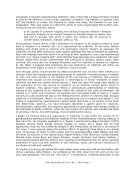
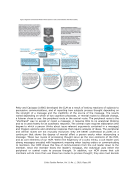
Petty and Cacioppo (1986) developed the ELM as a result of testing reactions of subjects to
persuasive communications, and of reporting how subjects process thought depending on
the strength of a message and the credibility of the source of the message. The results
varied depending on which of two cognitive processes, or mental routes to attitude change,
a listener chose to use: the peripheral route or the central route. The peripheral route is the
―shorthand‖ way to accept or reject a message it requires little to no analytical thinking
and so is used mostly for an automatic response. The central route requires elaboration (the
degree to which a person thinks about issue-relevant arguments contained in a message)
and triggers opinions and emotional response that require analysis of ideas. The peripheral
and central routes are not mutually exclusive they are better understood as poles on a
continuum that shows the degree of mental effort a person exerts when interpreting a
message. These two routes of processing thought serve as the core elements of the ELM,
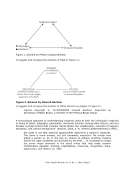
and as core elements of our HCM. Within the hegemony of a cultic milieu, a cult leader uses
strong messages encoded with hegemonic meaning when issuing orders or communicating
to members. Our HCM shows this flow of communication from the cult leader down to the
member. Once the member hears the leader‘s message, the individual uses either the
peripheral or central route to process thought. In addition, our HCM shows that cult
members will do more than use these two routes to process thought they also must decode
Petty and Cacioppo (1986) developed the ELM as a result of testing reactions of subjects to
persuasive communications, and of reporting how subjects process thought depending on
the strength of a message and the credibility of the source of the message. The results
varied depending on which of two cognitive processes, or mental routes to attitude change,
a listener chose to use: the peripheral route or the central route. The peripheral route is the
―shorthand‖ way to accept or reject a message it requires little to no analytical thinking
and so is used mostly for an automatic response. The central route requires elaboration (the
degree to which a person thinks about issue-relevant arguments contained in a message)
and triggers opinions and emotional response that require analysis of ideas. The peripheral
and central routes are not mutually exclusive they are better understood as poles on a
continuum that shows the degree of mental effort a person exerts when interpreting a
message. These two routes of processing thought serve as the core elements of the ELM,
and as core elements of our HCM. Within the hegemony of a cultic milieu, a cult leader uses
strong messages encoded with hegemonic meaning when issuing orders or communicating
to members. Our HCM shows this flow of communication from the cult leader down to the
member. Once the member hears the leader‘s message, the individual uses either the
peripheral or central route to process thought. In addition, our HCM shows that cult
members will do more than use these two routes to process thought they also must decode