Cultic Studies Review, Vol. 9, No. 1, 2010, Page 9
He further states, ―it is impossible to understand creativity without understanding how fields
operate, how they decide whether something new should or should not be added to the
domain‖ (1996, p. 330).
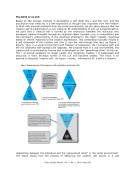
Cult, thought of as a symbolic system (Lalich, 2004), can be placed in the position of field in
the creativity triangle since the cult leader as ―field‖ attempts to control the creation and
use of members‘ symbolic expression. According to the postmodern thinking of
psychoanalyst Jacques Lacan, ―any culture may be looked upon as an ensemble of symbolic
systems, in the front rank of which are to be found language, marriage laws, economic
relations, art, science, and religion‖ (Laplanche and Pontalis, p. 440). Using the three-part
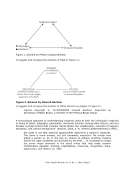
schema, one might say that the domain—the particular symbolic system of an art form such
as painting, in which the individual member is well trained, is co-opted by the particular
symbolic system of the cult in its position as field. The individual‘s creativity is then subject
to this ―self-sealing environment,‖ to use Lalich‘s term. I situate psychodynamic, cognitive,
and neuroscientific aspects of creativity within the individual pole of the schema, asking
what impact the cultic system, field, has on those aspects explored within those fields.
I contextualize my thinking of cults as the field that professes higher purpose within Lalich‘s
(2004) description of cults as symbolic systems in which transcendent belief represents a
―symbol system provid[ing] a template for going beyond the ordinary everyday reality
offer[ing] grand solutions by means of authoritative concepts and persuasive imagery‖ (p.
232). Her discussion of the member‘s devotion to the transcendent belief that will bring
personal freedom reminds me of the common notion of the artist‘s and creative person‘s
urgency for personal freedom and passionate encounter with experience. It suggests one
reason cults might appeal to the artist in particular, especially when the cult uses the arts as
proselytizing vehicles, unbeknownst to the new recruit.
The search for personal and universal freedom that finds a cult fully aligns with the
humanistic and perhaps counterculture values of the 1960s. Singer (1995), describing this
period, states,
...a new set of disturbances in U.S. culture welled up during the 1960s with
the expansion of an unpopular war in Southeast Asia, massive upheavals over
civil rights, and a profound crisis in values defined by unprecedented
affluence on the one hand and potential thermonuclear holocaust on the
other. These glaring contradictions aggravated an already disjointed society
into an even more unsettled state. (p. 36)
She continues that the 1960s were ―fertile ground for cults. … As the nation went through
massive social and political changes … the social climate was ripe for cult leaders to appear‖
(p. 37).
In other parts of society, skeptical ―critical theory‖ was developing within the
antiauthoritarian movement of the 1960s while in contrast, within the walls of cults, the
cult leader was viewed as owner of knowledge and language, and author of all doctrine.
Radical changes occurred within the domains of theater, such as in the drama of Pinter,
Becket, and others at the same time within cults, the domain of theater, among others,
reflected the vision of the cult leader‘s mission.
According to Sally Francis, former member of the Fourth Wall Repertory Company of the
Sullivanians, early on during auditions, sketch artists performed cutting-edge material that
caught the attention of Second City producers (2007, personal communication). At the
coercive prompting of Joan Harvey, one of the leaders, members turned down this
opportunity and instead remained with the theater that soon became a vehicle for
repetitive, rhetorical material that Harvey controlled. By contrast, Russell, in this issue, cites
that being given permission to explore and question within the context of an acting studio
He further states, ―it is impossible to understand creativity without understanding how fields
operate, how they decide whether something new should or should not be added to the
domain‖ (1996, p. 330).
Cult, thought of as a symbolic system (Lalich, 2004), can be placed in the position of field in
the creativity triangle since the cult leader as ―field‖ attempts to control the creation and
use of members‘ symbolic expression. According to the postmodern thinking of
psychoanalyst Jacques Lacan, ―any culture may be looked upon as an ensemble of symbolic
systems, in the front rank of which are to be found language, marriage laws, economic
relations, art, science, and religion‖ (Laplanche and Pontalis, p. 440). Using the three-part
schema, one might say that the domain—the particular symbolic system of an art form such
as painting, in which the individual member is well trained, is co-opted by the particular
symbolic system of the cult in its position as field. The individual‘s creativity is then subject
to this ―self-sealing environment,‖ to use Lalich‘s term. I situate psychodynamic, cognitive,
and neuroscientific aspects of creativity within the individual pole of the schema, asking
what impact the cultic system, field, has on those aspects explored within those fields.
I contextualize my thinking of cults as the field that professes higher purpose within Lalich‘s
(2004) description of cults as symbolic systems in which transcendent belief represents a
―symbol system provid[ing] a template for going beyond the ordinary everyday reality
offer[ing] grand solutions by means of authoritative concepts and persuasive imagery‖ (p.
232). Her discussion of the member‘s devotion to the transcendent belief that will bring
personal freedom reminds me of the common notion of the artist‘s and creative person‘s
urgency for personal freedom and passionate encounter with experience. It suggests one
reason cults might appeal to the artist in particular, especially when the cult uses the arts as
proselytizing vehicles, unbeknownst to the new recruit.
The search for personal and universal freedom that finds a cult fully aligns with the
humanistic and perhaps counterculture values of the 1960s. Singer (1995), describing this
period, states,
...a new set of disturbances in U.S. culture welled up during the 1960s with
the expansion of an unpopular war in Southeast Asia, massive upheavals over
civil rights, and a profound crisis in values defined by unprecedented
affluence on the one hand and potential thermonuclear holocaust on the
other. These glaring contradictions aggravated an already disjointed society
into an even more unsettled state. (p. 36)
She continues that the 1960s were ―fertile ground for cults. … As the nation went through
massive social and political changes … the social climate was ripe for cult leaders to appear‖
(p. 37).
In other parts of society, skeptical ―critical theory‖ was developing within the
antiauthoritarian movement of the 1960s while in contrast, within the walls of cults, the
cult leader was viewed as owner of knowledge and language, and author of all doctrine.
Radical changes occurred within the domains of theater, such as in the drama of Pinter,
Becket, and others at the same time within cults, the domain of theater, among others,
reflected the vision of the cult leader‘s mission.
According to Sally Francis, former member of the Fourth Wall Repertory Company of the
Sullivanians, early on during auditions, sketch artists performed cutting-edge material that
caught the attention of Second City producers (2007, personal communication). At the
coercive prompting of Joan Harvey, one of the leaders, members turned down this
opportunity and instead remained with the theater that soon became a vehicle for
repetitive, rhetorical material that Harvey controlled. By contrast, Russell, in this issue, cites
that being given permission to explore and question within the context of an acting studio