Cultic Studies Review, Vol. 9, No. 1, 2010, Page 65
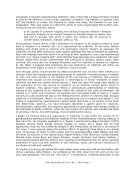
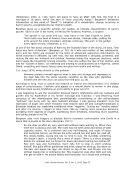
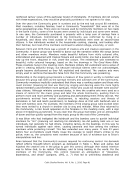
understand how anyone could believe such dire warnings of the ―Living Eck Master‖
(Twitchell, 1971a) as the following:
But once the chela5 has become a member of the inner circle, he cannot
resign… Those few have found that spiritual decay sets in immediately,
affecting the health, material life, and spiritual life, and brings death more
swiftly. (p.197 166 in older editions)
This inaccurate, self-limiting, and self-sabotaging belief took hold deep within my psyche, a
result of thought reform.
I‘m delighted to say I proved Twitchell wrong!
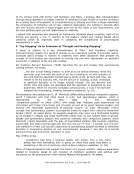
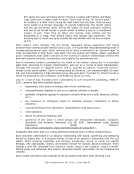
Robert J. Lifton conceptualizes the process of thought reform in his seminal book Thought
Reform and the Psychology of Totalism: A Study of "Brainwashing" in China, (Lifton, 1961).
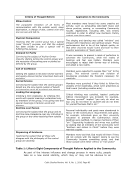
He enumerates eight ―psychological themes‖ or methods used to change people‘s basic
beliefs without their being aware of the process. I recommend that the reader further study
the following themes that I will simply name here: milieu control mystical manipulation
the demand for purity a cult of confession a sacred science loading the language
doctrine over person and dispensing of existence.
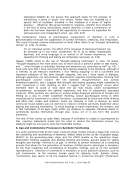
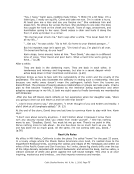
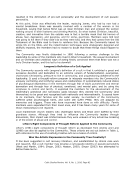
My observation is that in some cases, pathogenic beliefs formed through family of origin
experience, and reinforced in high-demand groups or cults, contribute to people‘s
vulnerability to recruitment and indoctrination. I‘ve identified the following typical
pathogenic beliefs resulting from thought reform in my work with former members, some of
which I also internalized and eventually disconfirmed from my experience in Eckankar:
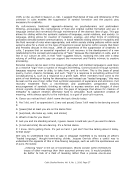
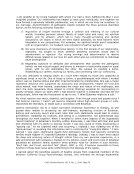
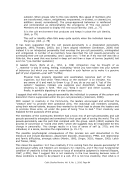
1. Normal developmental goals such as separation and individuation will harm others
and oneself
2. The cult leader has absolute knowledge, insight, or spiritual power, indisputable
and essential for survival
3. One‘s essential identity is defined by the cult leader, usually in terms of lifelong,
symbiotic ties with him/her
4. One‘s personal history prior to recruitment is insignificant
5. One‘s previous perception of reality is false, misguided, or an ―illusion‖ the leader‘s
is ―true‖
6. Anger is a ―negative‖ emotion and will wound or destroy self or others
7. Thoughts, feelings, and beliefs must be compartmentalized into ―higher‖/―lower,‖
―good‖/ ―bad‖ categories, as defined by the cult leader
8. The mind is negative, and it is only the cult leader who is free of the deception of
the ―mind powers‖
9. The cult is the central organizing factor in one‘s life
10. Something disastrous will occur should one leave the cult
11. Leaving the cult is an act of betrayal and disloyalty to the leader and therefore,
self
12. Pursuing goals independent of those espoused by the cult, sometimes including
academic or professional goals, will result in dire consequences or ―losing one‘s
self‖
13. The ―true‖ personal needs of the cult leader and the follower are merged—one and
the same—and one must put aside any other needs for the ―good of the whole‖
understand how anyone could believe such dire warnings of the ―Living Eck Master‖
(Twitchell, 1971a) as the following:
But once the chela5 has become a member of the inner circle, he cannot
resign… Those few have found that spiritual decay sets in immediately,
affecting the health, material life, and spiritual life, and brings death more
swiftly. (p.197 166 in older editions)
This inaccurate, self-limiting, and self-sabotaging belief took hold deep within my psyche, a
result of thought reform.
I‘m delighted to say I proved Twitchell wrong!
Robert J. Lifton conceptualizes the process of thought reform in his seminal book Thought
Reform and the Psychology of Totalism: A Study of "Brainwashing" in China, (Lifton, 1961).
He enumerates eight ―psychological themes‖ or methods used to change people‘s basic
beliefs without their being aware of the process. I recommend that the reader further study
the following themes that I will simply name here: milieu control mystical manipulation
the demand for purity a cult of confession a sacred science loading the language
doctrine over person and dispensing of existence.
My observation is that in some cases, pathogenic beliefs formed through family of origin
experience, and reinforced in high-demand groups or cults, contribute to people‘s
vulnerability to recruitment and indoctrination. I‘ve identified the following typical
pathogenic beliefs resulting from thought reform in my work with former members, some of
which I also internalized and eventually disconfirmed from my experience in Eckankar:
1. Normal developmental goals such as separation and individuation will harm others
and oneself
2. The cult leader has absolute knowledge, insight, or spiritual power, indisputable
and essential for survival
3. One‘s essential identity is defined by the cult leader, usually in terms of lifelong,
symbiotic ties with him/her
4. One‘s personal history prior to recruitment is insignificant
5. One‘s previous perception of reality is false, misguided, or an ―illusion‖ the leader‘s
is ―true‖
6. Anger is a ―negative‖ emotion and will wound or destroy self or others
7. Thoughts, feelings, and beliefs must be compartmentalized into ―higher‖/―lower,‖
―good‖/ ―bad‖ categories, as defined by the cult leader
8. The mind is negative, and it is only the cult leader who is free of the deception of
the ―mind powers‖
9. The cult is the central organizing factor in one‘s life
10. Something disastrous will occur should one leave the cult
11. Leaving the cult is an act of betrayal and disloyalty to the leader and therefore,
self
12. Pursuing goals independent of those espoused by the cult, sometimes including
academic or professional goals, will result in dire consequences or ―losing one‘s
self‖
13. The ―true‖ personal needs of the cult leader and the follower are merged—one and
the same—and one must put aside any other needs for the ―good of the whole‖