Cultic Studies Review, Vol. 9, No. 1, 2010, Page 114
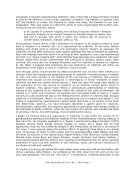
achieved some success by 1982 with our hit song, ―On the Wings of Love,‖ and I started a
music publishing company to house my husband‘s compositions. We possessed self-
confidence as creative artists, but found the high level of competition in Hollywood
somewhat intimidating.
Peter‘s job playing keyboards for Cher‘s band, Black Rose, drew us into recording studios
and night clubs where we met Scientologists who told us about the Celebrity Centre in
Hollywood. We soon began to attend Celebrity Centre International (CCI), where artists of
all professional levels congregated. CCI reached out to us as creative people by offering
spiritual advancement through the idea that spiritual authority resides within the self, and
that we could unblock our own creativity through Scientology processes. We found this idea
of building self-sovereignty to be strongly appealing, in a similar way to that which Elshtain
describes (2008). Hubbard‘s philosophy of the artist‘s role elevates artists to a higher realm
of abilities where they can change the world in ways no one else can. As a person whose life
passion was creative expression, especially designing and writing, I was lured by Hubbard‘s
description (2001) of the artist‘s role in society:
The artist has an enormous role in the enhancement of today‘s and the
creation of tomorrow‘s reality. He operates in a rank in advance of science as
to the necessities and requirements of man. The elevation of a culture can be
measured directly by the numbers of its people working in the field of
aesthetics. Because the artist deals in future realities, he always seeks
improvements or changes in the existing reality. This makes the artist,
inevitably and invariably, a rebel against the status quo. The artist, day by
day, by postulating the new realities of the future, accomplishes peaceful
revolution ...The artist injects theta (spirit of life) into the culture, and
without that theta, the culture becomes reactive. (pp. 482–483)
CCI offers an alluring system comprising hierarchies, labels, and identities that reflect
spiritual progress and measure power and control. Scientology‘s focus on becoming super-
literate was a significant attraction for me because I have always loved education and
dreamed of finishing college to eventually teach. When I read Hubbard‘s view that the real
barbarism of Earth is stupidity, and that knowledge of self brings responsibility and control,
I believed I could flourish in the Scientology environment. I learned Scientology‘s pattern
for the life cycle—create, survive, destroy—and immersed myself in creating and surviving
across all eight dynamics (compartments) of my life (self, sex and family, groups, mankind,
nonliving and living things, spirituality, and the [undefined] supreme being). I found that
Scientology ―technology‖ demands an all-or-nothing lifestyle. I was pressured to ―move up
the bridge‖ while there was still a chance to ―go free‖ while Scientology was on Earth,
before humankind destroyed itself with nuclear bombs.
My attendance and progress were monitored through CSI‘s police-state-like management
operations that claimed rights to setting my schedule and questioning deviance from it. At
that time I was unaware of my gradual succumbing to the ―dangerous environment‖ threats
Scientology posed, by recognizing Hubbard as a leader in possession of superhuman
wisdom. Peter and I adopted a sense of duty toward Hubbard, feeling called to acknowledge
his abilities with a sense of personal abandon. This began what became my routine
acceptance of orders and control without questioning them instead, I accepted this as a
Scientology way of life. I can see that I used the peripheral route of processing thought at
that time. I readily adopted the ―on source‖ identity that came with becoming highly
technically trained in Scientology. My identity changed from fashion designer and music
publisher to fanatically dedicated Scientologist. Progressing up the Scientology ―bridge to
total freedom‖ with Peter, unblocking creativity, and developing spiritual abilities as
―operating thetans‖ (OT) became an obsessive quest for knowledge about our omnipotence,
omniscience, and omnipresence.
achieved some success by 1982 with our hit song, ―On the Wings of Love,‖ and I started a
music publishing company to house my husband‘s compositions. We possessed self-
confidence as creative artists, but found the high level of competition in Hollywood
somewhat intimidating.
Peter‘s job playing keyboards for Cher‘s band, Black Rose, drew us into recording studios
and night clubs where we met Scientologists who told us about the Celebrity Centre in
Hollywood. We soon began to attend Celebrity Centre International (CCI), where artists of
all professional levels congregated. CCI reached out to us as creative people by offering
spiritual advancement through the idea that spiritual authority resides within the self, and
that we could unblock our own creativity through Scientology processes. We found this idea
of building self-sovereignty to be strongly appealing, in a similar way to that which Elshtain
describes (2008). Hubbard‘s philosophy of the artist‘s role elevates artists to a higher realm
of abilities where they can change the world in ways no one else can. As a person whose life
passion was creative expression, especially designing and writing, I was lured by Hubbard‘s
description (2001) of the artist‘s role in society:
The artist has an enormous role in the enhancement of today‘s and the
creation of tomorrow‘s reality. He operates in a rank in advance of science as
to the necessities and requirements of man. The elevation of a culture can be
measured directly by the numbers of its people working in the field of
aesthetics. Because the artist deals in future realities, he always seeks
improvements or changes in the existing reality. This makes the artist,
inevitably and invariably, a rebel against the status quo. The artist, day by
day, by postulating the new realities of the future, accomplishes peaceful
revolution ...The artist injects theta (spirit of life) into the culture, and
without that theta, the culture becomes reactive. (pp. 482–483)
CCI offers an alluring system comprising hierarchies, labels, and identities that reflect
spiritual progress and measure power and control. Scientology‘s focus on becoming super-
literate was a significant attraction for me because I have always loved education and
dreamed of finishing college to eventually teach. When I read Hubbard‘s view that the real
barbarism of Earth is stupidity, and that knowledge of self brings responsibility and control,
I believed I could flourish in the Scientology environment. I learned Scientology‘s pattern
for the life cycle—create, survive, destroy—and immersed myself in creating and surviving
across all eight dynamics (compartments) of my life (self, sex and family, groups, mankind,
nonliving and living things, spirituality, and the [undefined] supreme being). I found that
Scientology ―technology‖ demands an all-or-nothing lifestyle. I was pressured to ―move up
the bridge‖ while there was still a chance to ―go free‖ while Scientology was on Earth,
before humankind destroyed itself with nuclear bombs.
My attendance and progress were monitored through CSI‘s police-state-like management
operations that claimed rights to setting my schedule and questioning deviance from it. At
that time I was unaware of my gradual succumbing to the ―dangerous environment‖ threats
Scientology posed, by recognizing Hubbard as a leader in possession of superhuman
wisdom. Peter and I adopted a sense of duty toward Hubbard, feeling called to acknowledge
his abilities with a sense of personal abandon. This began what became my routine
acceptance of orders and control without questioning them instead, I accepted this as a
Scientology way of life. I can see that I used the peripheral route of processing thought at
that time. I readily adopted the ―on source‖ identity that came with becoming highly
technically trained in Scientology. My identity changed from fashion designer and music
publisher to fanatically dedicated Scientologist. Progressing up the Scientology ―bridge to
total freedom‖ with Peter, unblocking creativity, and developing spiritual abilities as
―operating thetans‖ (OT) became an obsessive quest for knowledge about our omnipotence,
omniscience, and omnipresence.