Cultic Studies Review, Vol. 9, No. 1, 2010, Page 41
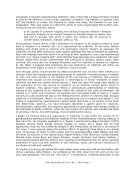
A few months later, neighbours of the Teacher‘s relatives stated that they had seen him on
the street talking to himself, saying, ―the stones are blue.‖ Six months after that I learned
that the Teacher and his partner had been seen, sickly looking, on a traffic island next to a
homeless shelter. Maintaining minimum contact with the Teacher‘s family, his partner made
sure nobody got close to him. However, a psychiatric internment was never possible
because either the Teacher at times seemed stable, or, in times of crisis, his family could
not bring themselves to confine him.
Discussion
This case was exceptionally interesting in several ways. First, a group that formed to create
music with an emphasis on spontaneity paradoxically developed into a cult-like group that
undermined and controlled the members‘ creativity. Second, several family groupings
requested help concurrently, fearfully, and without knowledge of each other‘s intention.
Third, the leader‘s family was one of these groups, which enabled me to learn about his
psychological development directly, through primary sources.
The fact that so many family members turned up at my office around the same time also
determined a rhythm and approach that was different from what I am accustomed to. They
organised themselves spontaneously after the first chance encounter of one ex-member
with a family on the street. If they had come separately, the results would probably have
been different. As I mentioned, having learned about the reality of this group, the families
arrived with considerable anxiety and fear, in a state of benign regression. Work with the
families was no easy task because they were intensely defensive about the panic that the
situation created in them. Some rationalized the problem, saying it was a creative process
that they would come through eventually, that many musicians are eccentrics. Others
vehemently upheld the words and ideas of the Teacher while dissociating from the
information about abuse and shared madness that came to light.
In this respect, the ideas of W. R. Bion (Grinberg &Tabak de Bianchedi, 1972) on the basic
assumptions that operate within a group are also pertinent for a better comprehension of
the case. ―Basic assumptions‖ form one of the unconscious emotional foundations of the
mentality of a group and its culture, and these are configured by extremely intense
emotions of primitive origin. In this way these assumptions form certain group fantasies of
an omnipotent nature. The group that functions according to a basic assumption—as was
the case of the group we have described—stands in opposition to the working group. Bion
describes three basic assumptions:
1) the basic assumption of dependency, according to which the group sustains the
conviction that it has formed so that someone on whom the group depends provides
them with satisfaction of their desires and needs
2) the basic assumption of fight/flight, according to which the group is convinced that
an enemy exists and that it must either be attacked (and destroyed) or fled from
and
3) the basic assumption of pairing, whereby the group sustains a fantasy according to
which, regardless of all the problems that may arise, something in the future will
happen, or someone will come, and will resolve all their problems—a messianic hope
of change, in other words.
Initially, the basic assumption of the families that came to seek help in this situation was
one of dependency—they were looking for a leader-therapist who could satisfy their needs
as a group. They were convinced that I would resolve all the problems they had come to see
me about. Sustained work was necessary to effect a change in these families, so they could
shift from dependency to work as a group to help their kin. Working in a group requires
A few months later, neighbours of the Teacher‘s relatives stated that they had seen him on
the street talking to himself, saying, ―the stones are blue.‖ Six months after that I learned
that the Teacher and his partner had been seen, sickly looking, on a traffic island next to a
homeless shelter. Maintaining minimum contact with the Teacher‘s family, his partner made
sure nobody got close to him. However, a psychiatric internment was never possible
because either the Teacher at times seemed stable, or, in times of crisis, his family could
not bring themselves to confine him.
Discussion
This case was exceptionally interesting in several ways. First, a group that formed to create
music with an emphasis on spontaneity paradoxically developed into a cult-like group that
undermined and controlled the members‘ creativity. Second, several family groupings
requested help concurrently, fearfully, and without knowledge of each other‘s intention.
Third, the leader‘s family was one of these groups, which enabled me to learn about his
psychological development directly, through primary sources.
The fact that so many family members turned up at my office around the same time also
determined a rhythm and approach that was different from what I am accustomed to. They
organised themselves spontaneously after the first chance encounter of one ex-member
with a family on the street. If they had come separately, the results would probably have
been different. As I mentioned, having learned about the reality of this group, the families
arrived with considerable anxiety and fear, in a state of benign regression. Work with the
families was no easy task because they were intensely defensive about the panic that the
situation created in them. Some rationalized the problem, saying it was a creative process
that they would come through eventually, that many musicians are eccentrics. Others
vehemently upheld the words and ideas of the Teacher while dissociating from the
information about abuse and shared madness that came to light.
In this respect, the ideas of W. R. Bion (Grinberg &Tabak de Bianchedi, 1972) on the basic
assumptions that operate within a group are also pertinent for a better comprehension of
the case. ―Basic assumptions‖ form one of the unconscious emotional foundations of the
mentality of a group and its culture, and these are configured by extremely intense
emotions of primitive origin. In this way these assumptions form certain group fantasies of
an omnipotent nature. The group that functions according to a basic assumption—as was
the case of the group we have described—stands in opposition to the working group. Bion
describes three basic assumptions:
1) the basic assumption of dependency, according to which the group sustains the
conviction that it has formed so that someone on whom the group depends provides
them with satisfaction of their desires and needs
2) the basic assumption of fight/flight, according to which the group is convinced that
an enemy exists and that it must either be attacked (and destroyed) or fled from
and
3) the basic assumption of pairing, whereby the group sustains a fantasy according to
which, regardless of all the problems that may arise, something in the future will
happen, or someone will come, and will resolve all their problems—a messianic hope
of change, in other words.
Initially, the basic assumption of the families that came to seek help in this situation was
one of dependency—they were looking for a leader-therapist who could satisfy their needs
as a group. They were convinced that I would resolve all the problems they had come to see
me about. Sustained work was necessary to effect a change in these families, so they could
shift from dependency to work as a group to help their kin. Working in a group requires