Cultic Studies Review, Vol. 9, No. 1, 2010, Page 17
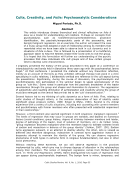
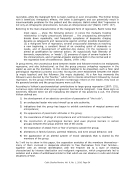
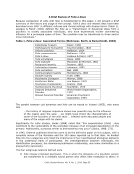
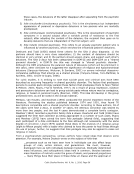
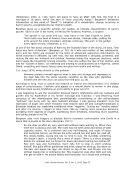
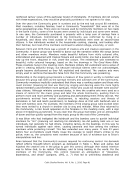
As noted earlier, a pioneer in the study of symbol formation and a great influence on the
neo-Kleinian school of psychoanalysis, philosopher Suzanne Langer (1942), built upon early
20th century philosopher Alfred North Whitehead, sharing his belief that ―philosophy is based
not on reason alone, but one that includes ...‗feeling.‘ ...not simply affect...‖ but ―...the
total capacity of the human organism to experience his or her world‖ (Whitehead, in May,
1975/1994, p. 134). This emphasis on emotion is a recent addition to the history of Western
philosophy. Langer (1942) also drew on Freud, stating,
The great contribution of Freud to the philosophy of mind has been the
realization that human behavior is not only a food-getting strategy, but is also
a language that every move is at the same time a gesture. Symbolization is
both an end and an instrument. (p. 26)
Langer develops Freud‘s belief in ―the fundamentally symbolic function of the mind‖ (p. 51)
and writes, ―the power of using symbol makes [man] lord of the earth‖ (p. 26).
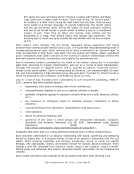
Describing Langer‘s work, Eric Rayner (1995) states that she has had a far-reaching
influence on psychoanalytic thinking with her views that symbol formation differentiates
humans from animals, and that art is a symbol of feeling. She categorizes language into two
forms: discursive and presentational, whereby ―she makes it plain that psychoanalytic
symbols are essentially presentational. … [and] presentational symbolism, and metaphor in
particular, is the central verbal means of communicating affects‖ (p. 17).
Rycroft (1968), drawing on Langer states, ―the various ‗impractical‘ apparently unbiological
activities of man, such as religion, magic, art, dreaming, and symptom-formation … arise
from a basic human need to symbolize and communicate, and are really languages‖ (p. 61).
Thinking about the rituals in cults within this context underscores the harm done when ―the
human need to symbolize and communicate‖ is so methodically compromised.
Describing presentational symbolism, Langer (1942) states that ―outside of the rational
domain is the inexpressible realm of feeling, of formless desires and satisfactions,
immediate experience, forever incognito and incommunicado,‖ and this is what therapy
seeks to help the patient formulate and/or experience (p. 86).
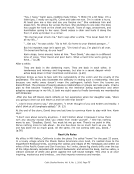
Winnicott, who has written vastly about ―transitional objects‖ and other aspects of symbol
formation and use, offers a clear understanding of the task of symbolic processing when he
states (1971), ―the individual is engaged in the perpetual human task of keeping inner and
outer reality separate yet interrelated‖ (p. 2). Similarly, psychoanalyst Susan Deri (1984)
notes that ―since the specifically human mode of communication is symbolic, symbolization
is the central issue in human psychology‖ (p. 61). I believe that since feelings are both
dictated and minimized in cults, understanding the importance of symbol formation and its
mechanisms based on Langer and other theorists cited offers much to post-cult recovery.
Deri, in the Kleinian psychodynamic tradition, sees the capacity for symbol formation and
use as integral to well-being she states,
symbols both link the person to the environment and provide the basis for
communication with the self. It is through symbols that we become in touch
with ourselves. (p. 29)
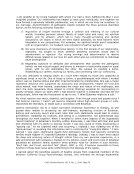
Further, neo-Kleinian Wilfred Bion states, ―the mind is an instrument for thinking about
emotional experiences" (in Meltzer and Harris, 1988, p. 7), and further suggests, ―when the
[symbol-forming] linking function between subject and environment is severed, when the
environment fails to contain the subject‘s unmanageable and powerful emotions, one effect
is that the impulse of curiosity on which all learning depends‖ is disturbed (Bion, 1950).
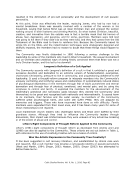
Former members/SGAs often say that it was easier to stop thinking for themselves than to
face their cult-induced pervasive fears as built upon pre-cult personality. In terms of how
As noted earlier, a pioneer in the study of symbol formation and a great influence on the
neo-Kleinian school of psychoanalysis, philosopher Suzanne Langer (1942), built upon early
20th century philosopher Alfred North Whitehead, sharing his belief that ―philosophy is based
not on reason alone, but one that includes ...‗feeling.‘ ...not simply affect...‖ but ―...the
total capacity of the human organism to experience his or her world‖ (Whitehead, in May,
1975/1994, p. 134). This emphasis on emotion is a recent addition to the history of Western
philosophy. Langer (1942) also drew on Freud, stating,
The great contribution of Freud to the philosophy of mind has been the
realization that human behavior is not only a food-getting strategy, but is also
a language that every move is at the same time a gesture. Symbolization is
both an end and an instrument. (p. 26)
Langer develops Freud‘s belief in ―the fundamentally symbolic function of the mind‖ (p. 51)
and writes, ―the power of using symbol makes [man] lord of the earth‖ (p. 26).
Describing Langer‘s work, Eric Rayner (1995) states that she has had a far-reaching
influence on psychoanalytic thinking with her views that symbol formation differentiates
humans from animals, and that art is a symbol of feeling. She categorizes language into two
forms: discursive and presentational, whereby ―she makes it plain that psychoanalytic
symbols are essentially presentational. … [and] presentational symbolism, and metaphor in
particular, is the central verbal means of communicating affects‖ (p. 17).
Rycroft (1968), drawing on Langer states, ―the various ‗impractical‘ apparently unbiological
activities of man, such as religion, magic, art, dreaming, and symptom-formation … arise
from a basic human need to symbolize and communicate, and are really languages‖ (p. 61).
Thinking about the rituals in cults within this context underscores the harm done when ―the
human need to symbolize and communicate‖ is so methodically compromised.
Describing presentational symbolism, Langer (1942) states that ―outside of the rational
domain is the inexpressible realm of feeling, of formless desires and satisfactions,
immediate experience, forever incognito and incommunicado,‖ and this is what therapy
seeks to help the patient formulate and/or experience (p. 86).
Winnicott, who has written vastly about ―transitional objects‖ and other aspects of symbol
formation and use, offers a clear understanding of the task of symbolic processing when he
states (1971), ―the individual is engaged in the perpetual human task of keeping inner and
outer reality separate yet interrelated‖ (p. 2). Similarly, psychoanalyst Susan Deri (1984)
notes that ―since the specifically human mode of communication is symbolic, symbolization
is the central issue in human psychology‖ (p. 61). I believe that since feelings are both
dictated and minimized in cults, understanding the importance of symbol formation and its
mechanisms based on Langer and other theorists cited offers much to post-cult recovery.
Deri, in the Kleinian psychodynamic tradition, sees the capacity for symbol formation and
use as integral to well-being she states,
symbols both link the person to the environment and provide the basis for
communication with the self. It is through symbols that we become in touch
with ourselves. (p. 29)
Further, neo-Kleinian Wilfred Bion states, ―the mind is an instrument for thinking about
emotional experiences" (in Meltzer and Harris, 1988, p. 7), and further suggests, ―when the
[symbol-forming] linking function between subject and environment is severed, when the
environment fails to contain the subject‘s unmanageable and powerful emotions, one effect
is that the impulse of curiosity on which all learning depends‖ is disturbed (Bion, 1950).
Former members/SGAs often say that it was easier to stop thinking for themselves than to
face their cult-induced pervasive fears as built upon pre-cult personality. In terms of how