Cultic Studies Review, Vol. 9, No. 1, 2010, Page 44
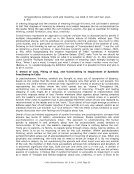
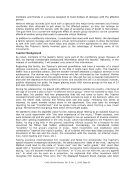
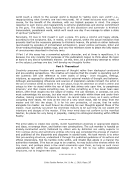
In my work with these families, I explicitly attended to countertransferential responses as a
means to harmonize with the feelings of the former members and parents, to approach the
mix-up that fostered therapeutic understanding. With regard to the scope of creation, Balint
observes that
...this latter [creative area] may entail as a first step a regressive withdrawal
from objects found too harsh and frustrating, to the harmonious mix-up of
earlier states, which is then followed by an attempt to create something
better, kinder, more understandable, more beautiful, and above all, more
consistent and more harmonious than the real objects proved to be.
Unfortunately this attempt does not succeed each time much too often the
creation is no better—even worse—than the bitter reality. (Balint, 1969: 68)
Something of this nature happened in the music group we have described from the initial
creative activity in which the individuality and subjectivity of each participant was
respected, the group ended up in a spiral of malignant regression and suppression of
subjectivity—and therefore of the members‘ capacity to be creative and live in freedom.
End Notes
1 A briefer version of this material was previously presented in two different forums in 2008: first, at
the seminar in iPsi, Formació Psicoanalítica with Janine Puget, Barcelona www.centreipsi.com and
second, at the Annual Conference of the International Cultic Studies Association (ICSA), Brussels
(www.icsahome.com). I would like to thank Valentín Barenblit, Janine Puget, and Dana Wehle for their
support and suggestions.
2 According to West and Langone (1986), ―cult‖ should be defined as a group or movement that
exhibits excessive devotion or dedication to a person, idea, or thing and employs unethical
manipulative techniques of persuasion and control (e.g., isolation from former friends and family,
debilitation, use of special methods to heighten suggestibility and subservience, powerful group
pressures, information management, suspension of individuality or critical judgment, promotion of
total dependency on the group and fear of leaving it, etc.) designed to advance the goals of the
group‘s leaders to the actual or possible detriment of members, their families, or the community.
3 According to Tobias and Lalich (1994), ―cults may be large or small. What defines them is not their
size but their behaviour. In addition to the larger, more publicised cults, there are small cults of less
than a dozen members who follow a particular "guru" "family cults," where the head of the family
uses deceptive and excessive persuasion and control techniques and probably the least
acknowledged, the one-on-one cult […] the one-on-one cult is a deliberately manipulative and
exploitative intimate relationship between two persons, often involving physical abuse of the
subordinate partner. In the one-on-one cult, which we call a cultic relationship, there is a significant
power imbalance between the two participants. The stronger uses his (or her) influence to control,
manipulate, abuse, and exploit the other. In essence the cultic relationship is a one-on-one version of
the larger group. It may even be more intense than participation in a group cult since all the attention
and abuse is focused on one person, often with more damaging consequences.‖
4 As Laplanche and Pontalis (1973: 385) noted, ―the idea of regression is evoked very often in psycho-
analysis and modern psychology it is generally conceived of as a reversion to earlier forms in the
development of thought, of object-relationships or of the structure of behavior.‖
5 In the formative period of the group, the music teacher began simply as the tutor of his students,
but ended up setting himself up as a Teacher, which in fact was how he asked to be addressed by his
followers, who were made to feel different and special by virtue of sharing the ―experience‖ with him.
For this reason, from now on we‘ll refer to him as the Teacher, with a capital ―t‖.
6 According to Laplanche and Pontalis (1973: 273), ―psycho-analysis considers the notion of object
from three main points of view: (1) In correlation with the instinct: the object is the thing in respect of
which and through which the instinct seeks to attain its aim (i.e., a certain type of satisfaction). It
may be a person or a part-object, a real object, or a fantasized one. (2) In correlation with love (or
hate): the relation in question here is that between the whole person, or the agency of the ego, and
an object which is itself focused upon in its totality (person, entity, ideal, etc.). (3) In the sense
In my work with these families, I explicitly attended to countertransferential responses as a
means to harmonize with the feelings of the former members and parents, to approach the
mix-up that fostered therapeutic understanding. With regard to the scope of creation, Balint
observes that
...this latter [creative area] may entail as a first step a regressive withdrawal
from objects found too harsh and frustrating, to the harmonious mix-up of
earlier states, which is then followed by an attempt to create something
better, kinder, more understandable, more beautiful, and above all, more
consistent and more harmonious than the real objects proved to be.
Unfortunately this attempt does not succeed each time much too often the
creation is no better—even worse—than the bitter reality. (Balint, 1969: 68)
Something of this nature happened in the music group we have described from the initial
creative activity in which the individuality and subjectivity of each participant was
respected, the group ended up in a spiral of malignant regression and suppression of
subjectivity—and therefore of the members‘ capacity to be creative and live in freedom.
End Notes
1 A briefer version of this material was previously presented in two different forums in 2008: first, at
the seminar in iPsi, Formació Psicoanalítica with Janine Puget, Barcelona www.centreipsi.com and
second, at the Annual Conference of the International Cultic Studies Association (ICSA), Brussels
(www.icsahome.com). I would like to thank Valentín Barenblit, Janine Puget, and Dana Wehle for their
support and suggestions.
2 According to West and Langone (1986), ―cult‖ should be defined as a group or movement that
exhibits excessive devotion or dedication to a person, idea, or thing and employs unethical
manipulative techniques of persuasion and control (e.g., isolation from former friends and family,
debilitation, use of special methods to heighten suggestibility and subservience, powerful group
pressures, information management, suspension of individuality or critical judgment, promotion of
total dependency on the group and fear of leaving it, etc.) designed to advance the goals of the
group‘s leaders to the actual or possible detriment of members, their families, or the community.
3 According to Tobias and Lalich (1994), ―cults may be large or small. What defines them is not their
size but their behaviour. In addition to the larger, more publicised cults, there are small cults of less
than a dozen members who follow a particular "guru" "family cults," where the head of the family
uses deceptive and excessive persuasion and control techniques and probably the least
acknowledged, the one-on-one cult […] the one-on-one cult is a deliberately manipulative and
exploitative intimate relationship between two persons, often involving physical abuse of the
subordinate partner. In the one-on-one cult, which we call a cultic relationship, there is a significant
power imbalance between the two participants. The stronger uses his (or her) influence to control,
manipulate, abuse, and exploit the other. In essence the cultic relationship is a one-on-one version of
the larger group. It may even be more intense than participation in a group cult since all the attention
and abuse is focused on one person, often with more damaging consequences.‖
4 As Laplanche and Pontalis (1973: 385) noted, ―the idea of regression is evoked very often in psycho-
analysis and modern psychology it is generally conceived of as a reversion to earlier forms in the
development of thought, of object-relationships or of the structure of behavior.‖
5 In the formative period of the group, the music teacher began simply as the tutor of his students,
but ended up setting himself up as a Teacher, which in fact was how he asked to be addressed by his
followers, who were made to feel different and special by virtue of sharing the ―experience‖ with him.
For this reason, from now on we‘ll refer to him as the Teacher, with a capital ―t‖.
6 According to Laplanche and Pontalis (1973: 273), ―psycho-analysis considers the notion of object
from three main points of view: (1) In correlation with the instinct: the object is the thing in respect of
which and through which the instinct seeks to attain its aim (i.e., a certain type of satisfaction). It
may be a person or a part-object, a real object, or a fantasized one. (2) In correlation with love (or
hate): the relation in question here is that between the whole person, or the agency of the ego, and
an object which is itself focused upon in its totality (person, entity, ideal, etc.). (3) In the sense