Cultic Studies Review, Vol. 9, No. 1, 2010, Page 56
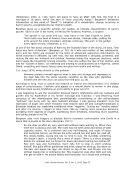
internal and external dependencies, anxieties, and pathological defenses
each is also a child with his internal parents and each of these whole
personalities … responds to every event of the analytic situation. (p. 132)
This stance is the antithesis of a cult leader‘s spurning of taking responsibility for his own
feelings and thoughts, which leaves the cult member without a container for his/her
projective identifications.
Hypotheses
Building on this summary, I present the following four working hypotheses about
psychoanalytically informed treatment of the suppression of subjectivity and creativity in
cults. The first hypothesis speaks to symbol formation as the result of the mourning of loss.
1. Mourning of loss. There will be a difference in individual creativity between open
environments that value the mourning of loss and the subsequent capacity for
symbol formation, and in cults, where leaders disallow members to experience and
mourn loss. I believe that cult recovery, as a form of trauma recovery, is itself
layered and involves a process of mourning losses. This includes mourning
connections that were broken on entering the group, connections with people and
beliefs upon leaving the group, time and dreams lost, as well as precult losses. Such
mourning requires recognition of loss and is a prerequisite for symbol formation and
therefore creativity. The prohibition against the experience of personal loss can be
seen as a special example of the demand for sameness among cult members. This
demand is a prohibition against difference, or in other words opposition, which leads
me to the second hypothesis.
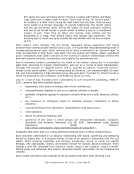
2. Allowance of opposition. There will be a difference in individual creativity between
open environments that allow opposition (difference/multidimensionality), and in
cults where leaders disallow opposition. Trial projective identification represents the
holding together of split parts in the depressive position—tolerance of ambivalence—
as characterized by the dynamic tension between opposites. In open environments,
trial projective identification also represents the simultaneity between the
persecutory thinking of the paranoid schizoid position and the tolerance of
ambivalence in the depressive position. Thus the creative function of tearing things
apart exists in dynamic tension with the striving to integrate parts. Winnicott
believes that a sense of aliveness—of subjectivity and creativity—is inherent in
creating subjective meaning by experiencing rather than trying to resolve paradox—
i.e., opposites (1971). Inherent in the concept of opposition is gap, space between
differences, leading to the third hypothesis.
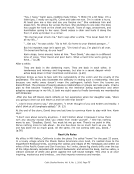
3. Tolerance of Lack/Unfilling of Gap. There will be a difference in individual
creativity between open environments where lack is tolerated and unfilled emotional,
psychological, physical, and other space is assumed as a given with which the
subject is free to create subjective meaning, and in cults where the leader assigns
emotional, psychological, and physical experience by claiming s/he is holder of
absolute truth and is therefore solely able to fill the member with what is lacking.
With differing emphases, according to Winnicott (1971), Lacan (1973), Evans
(1996), Milner, (1987), Deri (1984) and others, unfilled space is intrinsic to
creativity. Milner asks ―how truly to trust the unconscious: trust the emptiness, the
blankness, trust what seems to be not there.‖ She states further,
The inescapable condition of true expression was the plunge into the
abyss, the willingness to recognize the moment of blankness. … For
me, doubt came to mean accepting emptiness, it means a suspicion of
what was supposed to fill the gap while at the same time being able to
internal and external dependencies, anxieties, and pathological defenses
each is also a child with his internal parents and each of these whole
personalities … responds to every event of the analytic situation. (p. 132)
This stance is the antithesis of a cult leader‘s spurning of taking responsibility for his own
feelings and thoughts, which leaves the cult member without a container for his/her
projective identifications.
Hypotheses
Building on this summary, I present the following four working hypotheses about
psychoanalytically informed treatment of the suppression of subjectivity and creativity in
cults. The first hypothesis speaks to symbol formation as the result of the mourning of loss.
1. Mourning of loss. There will be a difference in individual creativity between open
environments that value the mourning of loss and the subsequent capacity for
symbol formation, and in cults, where leaders disallow members to experience and
mourn loss. I believe that cult recovery, as a form of trauma recovery, is itself
layered and involves a process of mourning losses. This includes mourning
connections that were broken on entering the group, connections with people and
beliefs upon leaving the group, time and dreams lost, as well as precult losses. Such
mourning requires recognition of loss and is a prerequisite for symbol formation and
therefore creativity. The prohibition against the experience of personal loss can be
seen as a special example of the demand for sameness among cult members. This
demand is a prohibition against difference, or in other words opposition, which leads
me to the second hypothesis.
2. Allowance of opposition. There will be a difference in individual creativity between
open environments that allow opposition (difference/multidimensionality), and in
cults where leaders disallow opposition. Trial projective identification represents the
holding together of split parts in the depressive position—tolerance of ambivalence—
as characterized by the dynamic tension between opposites. In open environments,
trial projective identification also represents the simultaneity between the
persecutory thinking of the paranoid schizoid position and the tolerance of
ambivalence in the depressive position. Thus the creative function of tearing things
apart exists in dynamic tension with the striving to integrate parts. Winnicott
believes that a sense of aliveness—of subjectivity and creativity—is inherent in
creating subjective meaning by experiencing rather than trying to resolve paradox—
i.e., opposites (1971). Inherent in the concept of opposition is gap, space between
differences, leading to the third hypothesis.
3. Tolerance of Lack/Unfilling of Gap. There will be a difference in individual
creativity between open environments where lack is tolerated and unfilled emotional,
psychological, physical, and other space is assumed as a given with which the
subject is free to create subjective meaning, and in cults where the leader assigns
emotional, psychological, and physical experience by claiming s/he is holder of
absolute truth and is therefore solely able to fill the member with what is lacking.
With differing emphases, according to Winnicott (1971), Lacan (1973), Evans
(1996), Milner, (1987), Deri (1984) and others, unfilled space is intrinsic to
creativity. Milner asks ―how truly to trust the unconscious: trust the emptiness, the
blankness, trust what seems to be not there.‖ She states further,
The inescapable condition of true expression was the plunge into the
abyss, the willingness to recognize the moment of blankness. … For
me, doubt came to mean accepting emptiness, it means a suspicion of
what was supposed to fill the gap while at the same time being able to