Cultic Studies Review, Vol. 9, No. 1, 2010, Page 110
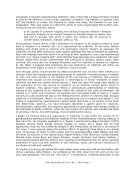
Weber‘s (1947) description of the relationship between a charismatic leader who possesses
sanctified authority and his followers. Weber represents charismatic authority with the idea
that it rests on devotion to the exceptional sanctity, heroism, or exemplary character of an
individual person, and of the normative patterns or order revealed or ordained by that
person. The leader‘s superhuman or supernatural endowment of wisdom or power is
legitimized by the followers‘ recognition of this authority as a duty. Weber specifies that the
duty is for those who are chosen, by virtue of this call and of its confirmation, to recognize
this quality. Their recognition stems from faith, born from their enthusiasm or through
necessity and their hope in the leader. Through transfer of sovereignty over one‘s life from
self to one‘s leader, the leader becomes the sovereign arbiter over the members, defining
and interpreting the meaning of every aspect of their cult lives.
Mannheim (1936) offers an important insight into ideological belief tied to group
membership and the interplay of sovereignty between the charismatic leader and her
followers:
The derivation of our meanings, whether they be true or false, plays an
indispensable role. We belong to a group … primarily because we see the
world and certain things in the world the way it does (i.e., in terms of the
means of the group). In every concept, in every concrete meaning, there is
contained a crystallization of the experiences of a group. (pp. 21–22)
Crystallization of the group experiences defines the group members‘ identification with the
leaders (Berger, 1995). A total institution such as a cult uses autocracy and the power of
labeling to identify its members, in contrast to a democracy, which invites collaborative
dialogue. Here we see the institutionalization of cult members who have no voice orders
and group policy dictate thought and behavior, with no room for original thought or
creativity. The development of a creative self within such a highly structured environment is
suppressed by the leader of the group, since only those who hold the power to name can
call an expression creative.
Case Studies
In this paper we propose two hypotheses: (1) Suppressive environments of total institutions
such as cults may be fertile ground for the birth of an sCS and (2) Former members of
cults may develop an SCS that is more resistant to the power dynamics in their new social
environments. We use two case studies to illustrate the conceptual models described above.
The Children of God
The Children of God (COG), later known as The Family of Love, The Family, and The Family
International, (hereafter referred to as the COG), began as a religious fundamentalist group
intent on following biblical principles. However, its membership drew primarily from the
young idealistic hippies and ex-drug addicts who emerged on the historical American
landscape during the late 1960s and early 1970s. The COG was started and led by a former
evangelical minister, David Berg, who became known among his followers as Moses David
(―Mo‖). As membership grew and COG communes spread throughout the United States and
then worldwide, Berg communicated with members through writings called the ―Mo Letters.‖
Berg was the absolute power figure in the COG (Kent, 1994), and his writings guided the
changes in the group from a typical sixties-style hippie commune in the 1960s to the
controversial group of the 1980s. He appointed faithful leadership to oversee his burgeoning
flock after the group continued to grow and start communal compounds, known as colonies,
in nearly every country in the world. If any leaders disobeyed his command, they were
quickly demoted or expelled from the group. During his 30-year reign, Berg‘s own adult
children were demoted from leadership and left the COG. After his death in 1994, his
Weber‘s (1947) description of the relationship between a charismatic leader who possesses
sanctified authority and his followers. Weber represents charismatic authority with the idea
that it rests on devotion to the exceptional sanctity, heroism, or exemplary character of an
individual person, and of the normative patterns or order revealed or ordained by that
person. The leader‘s superhuman or supernatural endowment of wisdom or power is
legitimized by the followers‘ recognition of this authority as a duty. Weber specifies that the
duty is for those who are chosen, by virtue of this call and of its confirmation, to recognize
this quality. Their recognition stems from faith, born from their enthusiasm or through
necessity and their hope in the leader. Through transfer of sovereignty over one‘s life from
self to one‘s leader, the leader becomes the sovereign arbiter over the members, defining
and interpreting the meaning of every aspect of their cult lives.
Mannheim (1936) offers an important insight into ideological belief tied to group
membership and the interplay of sovereignty between the charismatic leader and her
followers:
The derivation of our meanings, whether they be true or false, plays an
indispensable role. We belong to a group … primarily because we see the
world and certain things in the world the way it does (i.e., in terms of the
means of the group). In every concept, in every concrete meaning, there is
contained a crystallization of the experiences of a group. (pp. 21–22)
Crystallization of the group experiences defines the group members‘ identification with the
leaders (Berger, 1995). A total institution such as a cult uses autocracy and the power of
labeling to identify its members, in contrast to a democracy, which invites collaborative
dialogue. Here we see the institutionalization of cult members who have no voice orders
and group policy dictate thought and behavior, with no room for original thought or
creativity. The development of a creative self within such a highly structured environment is
suppressed by the leader of the group, since only those who hold the power to name can
call an expression creative.
Case Studies
In this paper we propose two hypotheses: (1) Suppressive environments of total institutions
such as cults may be fertile ground for the birth of an sCS and (2) Former members of
cults may develop an SCS that is more resistant to the power dynamics in their new social
environments. We use two case studies to illustrate the conceptual models described above.
The Children of God
The Children of God (COG), later known as The Family of Love, The Family, and The Family
International, (hereafter referred to as the COG), began as a religious fundamentalist group
intent on following biblical principles. However, its membership drew primarily from the
young idealistic hippies and ex-drug addicts who emerged on the historical American
landscape during the late 1960s and early 1970s. The COG was started and led by a former
evangelical minister, David Berg, who became known among his followers as Moses David
(―Mo‖). As membership grew and COG communes spread throughout the United States and
then worldwide, Berg communicated with members through writings called the ―Mo Letters.‖
Berg was the absolute power figure in the COG (Kent, 1994), and his writings guided the
changes in the group from a typical sixties-style hippie commune in the 1960s to the
controversial group of the 1980s. He appointed faithful leadership to oversee his burgeoning
flock after the group continued to grow and start communal compounds, known as colonies,
in nearly every country in the world. If any leaders disobeyed his command, they were
quickly demoted or expelled from the group. During his 30-year reign, Berg‘s own adult
children were demoted from leadership and left the COG. After his death in 1994, his