Recovery from Abusive Groups Page 79
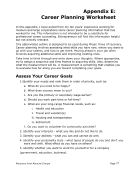
iv. Negotiating
v. Collaborating
b. Functional-what does it take to carry out the job?
i. Decision-making
ii. Running meetings
iii. Giving presentations
iv. Follow-through
c. Technical
i. Computer competence
ii. Analysis of data
d. Organizational
i. Understand how your department fits into the company-wide
organizational structure.
ii. Understand the roles and responsibilities of others. This will help
you get things done and identify inefficient processes.
iii. Understand the pressures or needs of your manager, such as
budget and policy constraints.
Opportunities for Career Development
Remember, you are building a career. Building takes time.
1. Remember that promotions and opportunities to change jobs take time.
Rarely is there an instant fix.
2. You have the responsibility to work with your manager to make it happen
for you. Don't expect your manager to "save you." Build a development
plan with the support of your manager and see it through.
3. Look for opportunities-stay abreast of what's happening in your industry.
4. Look for opportunities-stay abreast of what's happening in your company.
5. Network with other organizations and people. Build relationships that can
help you connect with people who can get things done. Also, build
relationships with people who can give you constructive feedback.
6. What are the future forces affecting your job? You don't need mystical
revelations to figure this out. You need to learn to evaluate your situation,
technological advancements, and the effect of the economy on your
company.
7. Diversify your job skill set. The economy is constantly changing. As time
allows, expand your skill set to ensure you're employable. Stay open to
change.
iv. Negotiating
v. Collaborating
b. Functional-what does it take to carry out the job?
i. Decision-making
ii. Running meetings
iii. Giving presentations
iv. Follow-through
c. Technical
i. Computer competence
ii. Analysis of data
d. Organizational
i. Understand how your department fits into the company-wide
organizational structure.
ii. Understand the roles and responsibilities of others. This will help
you get things done and identify inefficient processes.
iii. Understand the pressures or needs of your manager, such as
budget and policy constraints.
Opportunities for Career Development
Remember, you are building a career. Building takes time.
1. Remember that promotions and opportunities to change jobs take time.
Rarely is there an instant fix.
2. You have the responsibility to work with your manager to make it happen
for you. Don't expect your manager to "save you." Build a development
plan with the support of your manager and see it through.
3. Look for opportunities-stay abreast of what's happening in your industry.
4. Look for opportunities-stay abreast of what's happening in your company.
5. Network with other organizations and people. Build relationships that can
help you connect with people who can get things done. Also, build
relationships with people who can give you constructive feedback.
6. What are the future forces affecting your job? You don't need mystical
revelations to figure this out. You need to learn to evaluate your situation,
technological advancements, and the effect of the economy on your
company.
7. Diversify your job skill set. The economy is constantly changing. As time
allows, expand your skill set to ensure you're employable. Stay open to
change.