Recovery from Abusive Groups Page 4
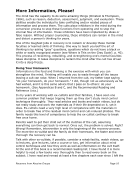
Buzz Words and Hot Buttons
I have tried not to use phrasing that might remind readers of their cult lingo
("loaded language"). Because there are at least several thousand cults, which
are changing and mutating constantly, it is impossible for me to avoid touching
off some buttons for some people. I am sorry about this. I have tried not to use
loaded words. If some of the phrasing I've used touches hot spots for you, you
may want to try using this problem as a chance to dismantle the cues. If you
should start floating or if you should feel shaky while reading any part of this
handbook, ask someone to talk with you about what you are experiencing. (See
Floating, p. 36.)
Factors In Recovery
Since 1980 I have talked with many ex-cultists, their families, friends, spouses,
and acquaintances in an informal counseling and supportive role not only as an
ex-cultist but from 1987 t 1990 as the New England Regional Director for
FOCUS, a nation 1 support group for ex-cultists. From these many conversations
and from my own experiences, it seems to me that a number of factors affect a
person's ability to recover and the rate of recovery:
• How emotionally developed and psychologically healthy the person was
before being recruited
• How severe the split was between the former self and the cult self
• Types of experiences within the cult, such as sexual, nutritional, physical,
emotional, psychic, an ritual abuse
• Type and quality of exit, whether
• Kicked out
• Forced deprogramming intervention
• Non-forced exit counseling intervention
• Walkaway
• Support of other ex-cultists, especially those from the same group
• Support and acceptance by family and friends
• Professional help received after exiting, such as:
• Individual and group counseling
• Residential recovery facility, i.e. "rehab"
• Medical attention
• State social services
• Legal services, particularly child custody
• Career and job placement services
• Time to heal and work through issues before taking on any major
commitments, such as school and/or career
• Mental discipline to reclaim (or develop) critical thinking faculties, even
Buzz Words and Hot Buttons
I have tried not to use phrasing that might remind readers of their cult lingo
("loaded language"). Because there are at least several thousand cults, which
are changing and mutating constantly, it is impossible for me to avoid touching
off some buttons for some people. I am sorry about this. I have tried not to use
loaded words. If some of the phrasing I've used touches hot spots for you, you
may want to try using this problem as a chance to dismantle the cues. If you
should start floating or if you should feel shaky while reading any part of this
handbook, ask someone to talk with you about what you are experiencing. (See
Floating, p. 36.)
Factors In Recovery
Since 1980 I have talked with many ex-cultists, their families, friends, spouses,
and acquaintances in an informal counseling and supportive role not only as an
ex-cultist but from 1987 t 1990 as the New England Regional Director for
FOCUS, a nation 1 support group for ex-cultists. From these many conversations
and from my own experiences, it seems to me that a number of factors affect a
person's ability to recover and the rate of recovery:
• How emotionally developed and psychologically healthy the person was
before being recruited
• How severe the split was between the former self and the cult self
• Types of experiences within the cult, such as sexual, nutritional, physical,
emotional, psychic, an ritual abuse
• Type and quality of exit, whether
• Kicked out
• Forced deprogramming intervention
• Non-forced exit counseling intervention
• Walkaway
• Support of other ex-cultists, especially those from the same group
• Support and acceptance by family and friends
• Professional help received after exiting, such as:
• Individual and group counseling
• Residential recovery facility, i.e. "rehab"
• Medical attention
• State social services
• Legal services, particularly child custody
• Career and job placement services
• Time to heal and work through issues before taking on any major
commitments, such as school and/or career
• Mental discipline to reclaim (or develop) critical thinking faculties, even