Recovery from Abusive Groups Page 74
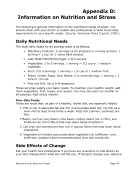
Appendix D:
Information on Nutrition and Stress
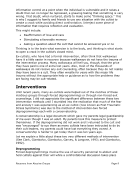
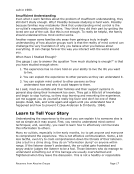
The following is general information on the nutritional needs of adults. You
should check with your doctor or health care professional to tailor these daily
requirements to your specific needs. (Source: American Dairy Council, 1990.)
Daily Nutritional Needs
The ideal daily intake for an average adult is as follows:
• Milk/Dairy Products: 2 servings (3 for pregnant or nursing women). 1
serving =1 cup (or 1 ounce hard cheese).
• Lean Meat/Fish/Poultry/Eggs: 2 to 6 ounces.
• Vegetables: 3 to 5 servings. 1 serving =1/2 cup or 1 medium
vegetable.
• Fruit: 2 to 4 servings. 1 serving =1/2 cup or 1 medium fruit.
• Bread, Cereal, Pasta, Rice, Beans: 6 or more servings. 1 serving =1
slice or 1/2 cup.
• Fats and Oils: Up to 6-8 teaspoons.
These servings supply your basic needs. To maintain your healthy weight, add
more vegetables, fruit, bread, and cereals. You may also want to consider an
all-purpose, high stress vitamin.
Four-Star Foods
These are foods that, as part of a healthy, lowfat diet, are especially helpful:
1. Fish is low in saturated fat and rich in polyunsaturated oils. Try fish as a
main dish at least three times a week. Fatty fish (salmon, sardines) are
fine.
2 Beans, such as navy beans, lima beans, kidney beans (as in chili), and
lentils are all rich in fibers that help lower blood cholesterol.
3. Oat bran and oatmeal are also rich in special fibers that help lower blood
cholesterol.
4. Vegetable oil includes polyunsaturated vegetable oils (safflower, corn,
sunflower, soybean) and monounsaturated olive and canola oils.
Side Effects of Change
Ask your health care professional if you have any questions or side effects as
your diet changes from what the cult fed you. If trying to change your eating or
Appendix D:
Information on Nutrition and Stress
The following is general information on the nutritional needs of adults. You
should check with your doctor or health care professional to tailor these daily
requirements to your specific needs. (Source: American Dairy Council, 1990.)
Daily Nutritional Needs
The ideal daily intake for an average adult is as follows:
• Milk/Dairy Products: 2 servings (3 for pregnant or nursing women). 1
serving =1 cup (or 1 ounce hard cheese).
• Lean Meat/Fish/Poultry/Eggs: 2 to 6 ounces.
• Vegetables: 3 to 5 servings. 1 serving =1/2 cup or 1 medium
vegetable.
• Fruit: 2 to 4 servings. 1 serving =1/2 cup or 1 medium fruit.
• Bread, Cereal, Pasta, Rice, Beans: 6 or more servings. 1 serving =1
slice or 1/2 cup.
• Fats and Oils: Up to 6-8 teaspoons.
These servings supply your basic needs. To maintain your healthy weight, add
more vegetables, fruit, bread, and cereals. You may also want to consider an
all-purpose, high stress vitamin.
Four-Star Foods
These are foods that, as part of a healthy, lowfat diet, are especially helpful:
1. Fish is low in saturated fat and rich in polyunsaturated oils. Try fish as a
main dish at least three times a week. Fatty fish (salmon, sardines) are
fine.
2 Beans, such as navy beans, lima beans, kidney beans (as in chili), and
lentils are all rich in fibers that help lower blood cholesterol.
3. Oat bran and oatmeal are also rich in special fibers that help lower blood
cholesterol.
4. Vegetable oil includes polyunsaturated vegetable oils (safflower, corn,
sunflower, soybean) and monounsaturated olive and canola oils.
Side Effects of Change
Ask your health care professional if you have any questions or side effects as
your diet changes from what the cult fed you. If trying to change your eating or