Recovery from Abusive Groups Page 72
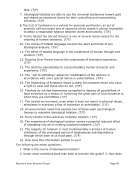
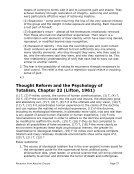
means of coming to terms with it and to overcome guilt and shame. They
achieve mastery through restoration of integrity. Lecturing and writing
were particularly effective ways of achieving mastery,
(2) Separation -some were mourning the loss of the very special intimacy
of the group and the delight in total exposure and sharing. Each mourned
a lost part of himself
(3) Expatriate's return -almost all felt themselves emotionally removed
from those who had not shared their experiences. Their return is a
confrontation with elements of their identity which have been long denied,
repressed, or modified beyond easy recognition
(4) Renewal of identity -this was the overriding task and could contain
much confusion as it was difficult to trust sufficiently any one among
many identity elements: who they thought they were, who they used to
be, who the reformers said they were, and who they wanted to be. This
new relationship [understanding of self] that each had to work out was
similar to another rebirth.
3. The fear is the possibility of risking its recurrence through reexposure to
total control. The relief is that such a repetition would relieve a troubling
sense of guilt.
4.?
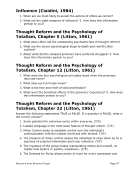
Thought Reform and the Psychology of
Totalism, Chapter 22 (Lifton, 1961)
(1) T, (2) F-milieu control, the control of human communication, (3) T, (4) T,
(5) T, (6) F-the world is divided into the pure and impure, the absolutely good
and absolutely evil, (7) T, (8) T, (9) F-it is the ultimate and only vision, (10) T,
(11) T, (12) F-it subordinates human experience to the claims of the doctrine
and can replace the realities of individual experience, (13) F-the doctrine,
including its mythological elements, is ultimately more valid, true and real than
is any aspect of actual human character or human experience, (14) F-new
rationalizations are required in order to adhere to the doctrine and people must
be modified to reaffirm the myth ,(15) T, (16) F-they do feel compelled to
destroy all possibilities of false existence, (17) T, (18) F-the more clearly an
environment expresses these eight psychological themes, the greater its
resemblance to ideological totalism, (19) F-no milieu ever achieves complete
totalism and many relatively moderate environments show some signs of it,
(20) T, (21) T, (22) ?
Essay questions:
1. The source of ideological totalism lies in the ever-present human quest for
the omnipotent guide-for the supernatural force, political party,
philosophical idea, great leader, or precise science-that will bring ultimate
solidarity to all men and eliminate the terror of death and nothingness.
means of coming to terms with it and to overcome guilt and shame. They
achieve mastery through restoration of integrity. Lecturing and writing
were particularly effective ways of achieving mastery,
(2) Separation -some were mourning the loss of the very special intimacy
of the group and the delight in total exposure and sharing. Each mourned
a lost part of himself
(3) Expatriate's return -almost all felt themselves emotionally removed
from those who had not shared their experiences. Their return is a
confrontation with elements of their identity which have been long denied,
repressed, or modified beyond easy recognition
(4) Renewal of identity -this was the overriding task and could contain
much confusion as it was difficult to trust sufficiently any one among
many identity elements: who they thought they were, who they used to
be, who the reformers said they were, and who they wanted to be. This
new relationship [understanding of self] that each had to work out was
similar to another rebirth.
3. The fear is the possibility of risking its recurrence through reexposure to
total control. The relief is that such a repetition would relieve a troubling
sense of guilt.
4.?
Thought Reform and the Psychology of
Totalism, Chapter 22 (Lifton, 1961)
(1) T, (2) F-milieu control, the control of human communication, (3) T, (4) T,
(5) T, (6) F-the world is divided into the pure and impure, the absolutely good
and absolutely evil, (7) T, (8) T, (9) F-it is the ultimate and only vision, (10) T,
(11) T, (12) F-it subordinates human experience to the claims of the doctrine
and can replace the realities of individual experience, (13) F-the doctrine,
including its mythological elements, is ultimately more valid, true and real than
is any aspect of actual human character or human experience, (14) F-new
rationalizations are required in order to adhere to the doctrine and people must
be modified to reaffirm the myth ,(15) T, (16) F-they do feel compelled to
destroy all possibilities of false existence, (17) T, (18) F-the more clearly an
environment expresses these eight psychological themes, the greater its
resemblance to ideological totalism, (19) F-no milieu ever achieves complete
totalism and many relatively moderate environments show some signs of it,
(20) T, (21) T, (22) ?
Essay questions:
1. The source of ideological totalism lies in the ever-present human quest for
the omnipotent guide-for the supernatural force, political party,
philosophical idea, great leader, or precise science-that will bring ultimate
solidarity to all men and eliminate the terror of death and nothingness.